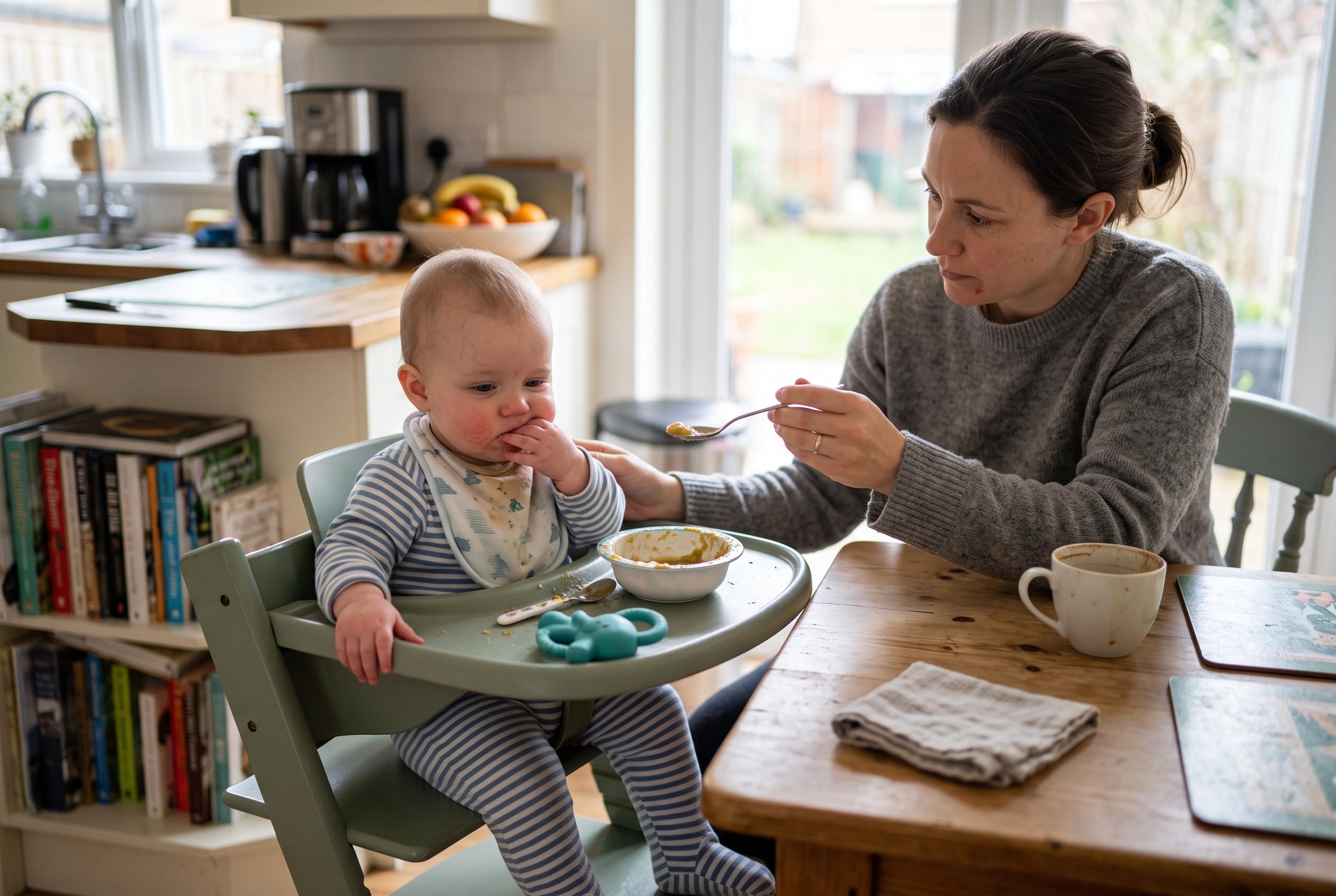

Sudden changes in a baby’s appetite are often part of normal development, influenced by teething, growth spurts, and distraction, according to health experts. Patience and observation are key, but persistent issues warrant medical advice.
It can be worrying when a baby who was feeding well suddenly turns away from food, but in many cases it is a normal phase rather than a sign of a bigger problem. BabyYumYum says several everyday factors can affect appetite, including teething, minor tummy upsets, rapid development, and simple distraction.
Teething is one of the most common reasons feeding patterns change. Johns Hopkins Medicine says sore, swollen gums can make babies fussier and less eager to eat, although teething itself does not cause a cold, rash, diarrhoea or fever. That means a baby who is drooling, unsettled and eating less may simply be uncomfortable rather than unwell.
Growth spurts can also change how much a baby wants to eat. Healthline and The Baby Sleep Site both note that these bursts of development often bring short-term shifts in feeding and sleep, with some babies seeming hungrier and others more unsettled. Colgate adds that growth spurts and teething can happen at the same time, which can make it harder to tell what is driving the change.
The important point, according to these sources, is that temporary appetite dips are often part of normal development. Patience, reassurance and watching for other symptoms usually matter more than panic. If a baby is persistently refusing feeds or seems unwell, parents should seek medical advice.
Disclaimer: This content is for informational purposes only and is not intended to be a substitute for professional medical judgment, advice, diagnosis, or treatment.