

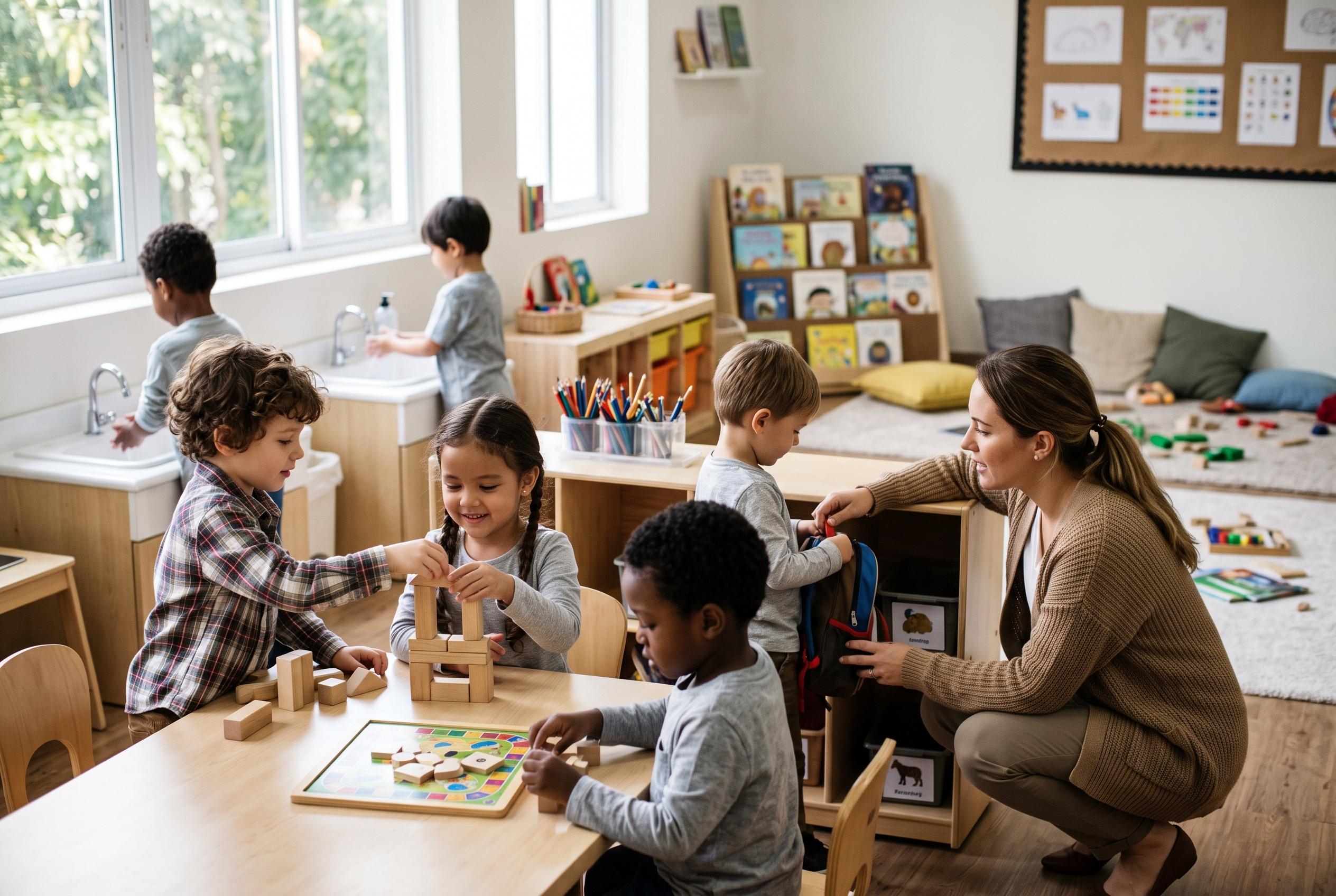

High-quality kindergarten programmes that emphasise play, social skills and independence are shown to foster not only immediate growth in language, social, emotional and cognitive skills but also long-term academic and life benefits, according to recent studies and expert insights.
A quality kindergarten does far more than keep young children occupied during the day. According to the National Association for the Education of Young Children, strong early years settings help children build language, social, emotional, cognitive and physical skills at the same time, creating a foundation that can support later learning and behaviour. The South Australian Department for Education says the years before school are especially important because they shape how children begin to understand the world around them.
In practice, that often starts with relationships. Children learn to take turns, listen, share materials and manage small disagreements with help from adults who guide rather than direct every moment. The result is not only better social confidence but also stronger emotional control. Victoria’s Department of Education and Training says these early gains in communication, cooperation and self-regulation are linked to better outcomes later in school and beyond.
Play-based learning is equally important. Story time, songs, drawing, block building and simple counting activities introduce literacy and numeracy in ways that feel natural to young children. NAEYC says teachers can use reading, talking, planning and discussion to deepen thinking, while hands-on play supports problem-solving and early reasoning. That approach helps children develop curiosity without the pressure of formal drills too soon.
High-quality kindergarten also encourages independence. Simple routines such as packing away toys, washing hands and preparing for meals teach children how to manage parts of the day on their own. Outdoor play, movement and rest periods support physical development and healthy habits, and Child Trends says children who arrive at school with good health and social skills tend to do better in reading and maths by the end of first grade. The broader evidence also suggests that early learning can have effects that last well beyond the first years of school. An OECD report says the benefits of strong early education may reappear later in schooling and continue into adulthood.
For parents and carers, the appeal of a quality kindergarten is straightforward: it offers children a safe place to grow in confidence, language, coordination and emotional maturity before they enter primary school. The most effective programmes do not rush children. They give them time, structure and skilled support at a stage when learning is happening everywhere, all at once.
Disclaimer: This content is for informational purposes only and is not intended to be a substitute for professional medical judgment, advice, diagnosis, or treatment.



