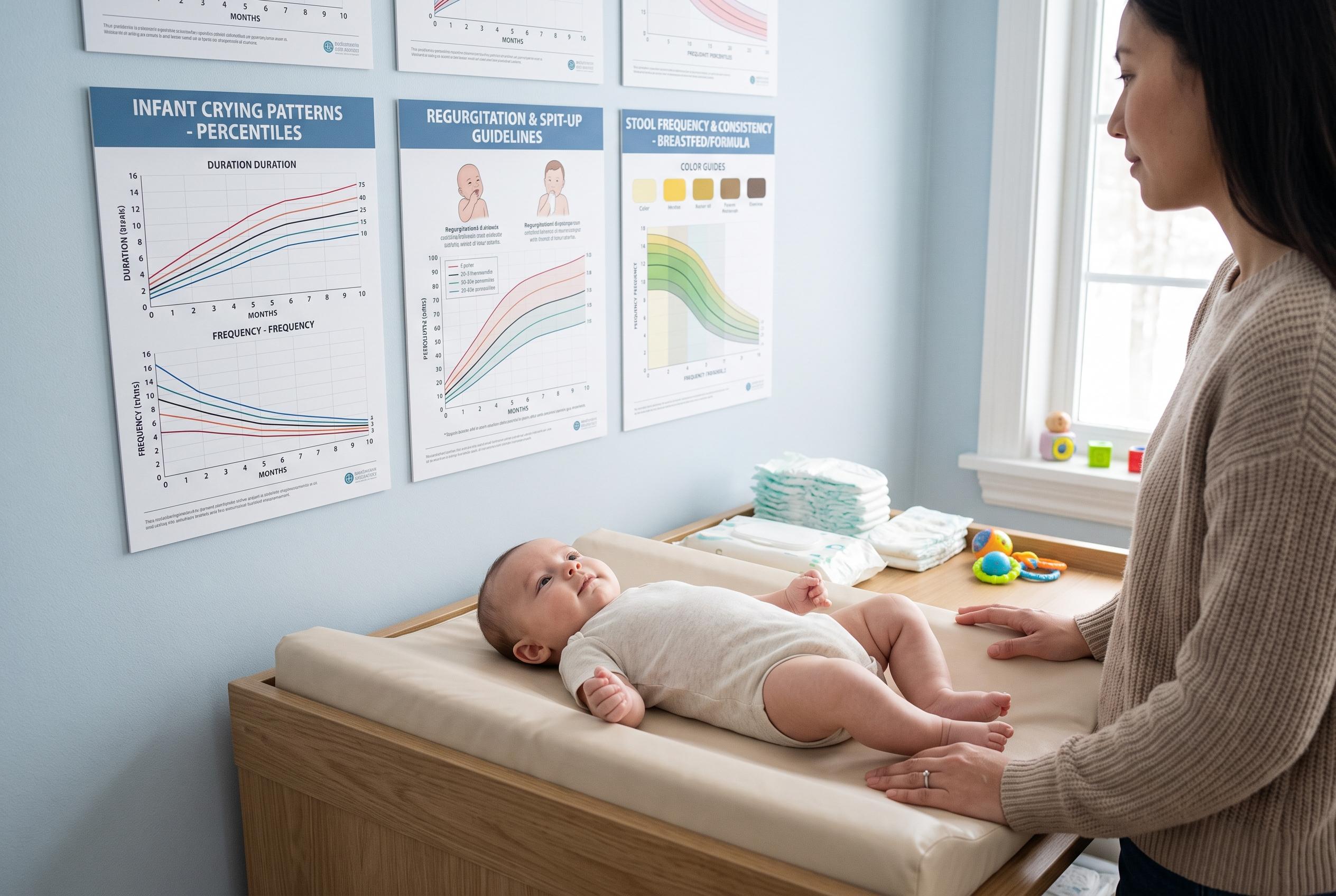

A recent study introduces standardised percentile charts for common infant behaviours, helping clinicians and parents distinguish normal development from signs requiring further attention, potentially reducing unnecessary interventions and anxieties.
A new study in Pediatric Research is giving doctors a more structured way to interpret some of the most common concerns in early infancy: crying, regurgitation, stool consistency and the Cow’s Milk-related Symptom Score, or CoMiSS™. By building percentile references for infants described as presumed healthy, the researchers aim to separate ordinary developmental variation from patterns that may justify closer clinical attention.
The idea is straightforward but important. Babies cry, spit up and pass stools that can look unusual to parents, yet these behaviours are often part of normal maturation. Without reference values, it can be difficult to know whether a symptom sits within a typical range or whether it may point to feeding problems, reflux disease or a cow’s milk-related issue. Percentiles, which show how one measurement compares with a broader group, are already widely used in child health to place an individual result in context rather than label it as normal or abnormal on its own.
According to the study, crying was one of the central measures because it changes rapidly in the first months of life and is closely tied to neurological development, feeding and sleep patterns. The researchers say a percentile curve could help clinicians recognise when crying is still within the range seen in healthy infants and when its duration or intensity may be unusual enough to merit further discussion.
Regurgitation was handled in the same way. Spitting up is common in infancy because the digestive system is still immature and babies spend much of the day lying down while taking in liquid feeds. The study’s approach may help reduce unnecessary concern about routine spit-up while still flagging cases where symptoms are persistent, severe or linked to poor growth or other warning signs.
Stool consistency is another area where parents often worry unnecessarily. Infant stools can vary widely in colour, texture and frequency depending on age and feeding method, and those differences are not automatically a sign of illness. By describing how stool patterns are distributed among presumed healthy infants, the study offers a clearer language for doctors and families, while also making it easier to compare research across settings.
The work also examines CoMiSS™, a symptom score designed to help clinicians assess whether an infant’s complaints might be related to cow’s milk. The tool combines several signs, rather than relying on a single symptom, which matters because crying, regurgitation and stool changes can overlap with ordinary infant behaviour. Earlier research, including a 2019 study in Nutrients and a 2024 paper in the same journal, has suggested CoMiSS can help identify infants who may respond to dietary changes, but the new reference data are intended to show what scores look like in healthy babies, not to make the score a stand-alone diagnosis.
That distinction is important, because the label “presumed healthy” still leaves room for uncertainty. Some infants in any reference group will cry more, regurgitate more or have less typical stools without having a serious problem, while others with underlying illness may not stand out on a single measure. The percentile charts, then, are best seen as a starting point for conversation and clinical judgement, not a trigger for automatic formula changes, medication or elimination diets.
The practical value may be considerable. Concerns about crying, spit-up and bowel movements are among the most common reasons parents seek medical advice in the first year of life. Better reference data could help clinicians reassure families when symptoms fall within expected limits and investigate sooner when they do not. It may also reduce unnecessary restriction of cow’s milk, which can complicate breastfeeding, affect maternal nutrition and add stress to family feeding routines when used without proper guidance.
Disclaimer: This content is for informational purposes only and is not intended to be a substitute for professional medical judgment, advice, diagnosis, or treatment.