

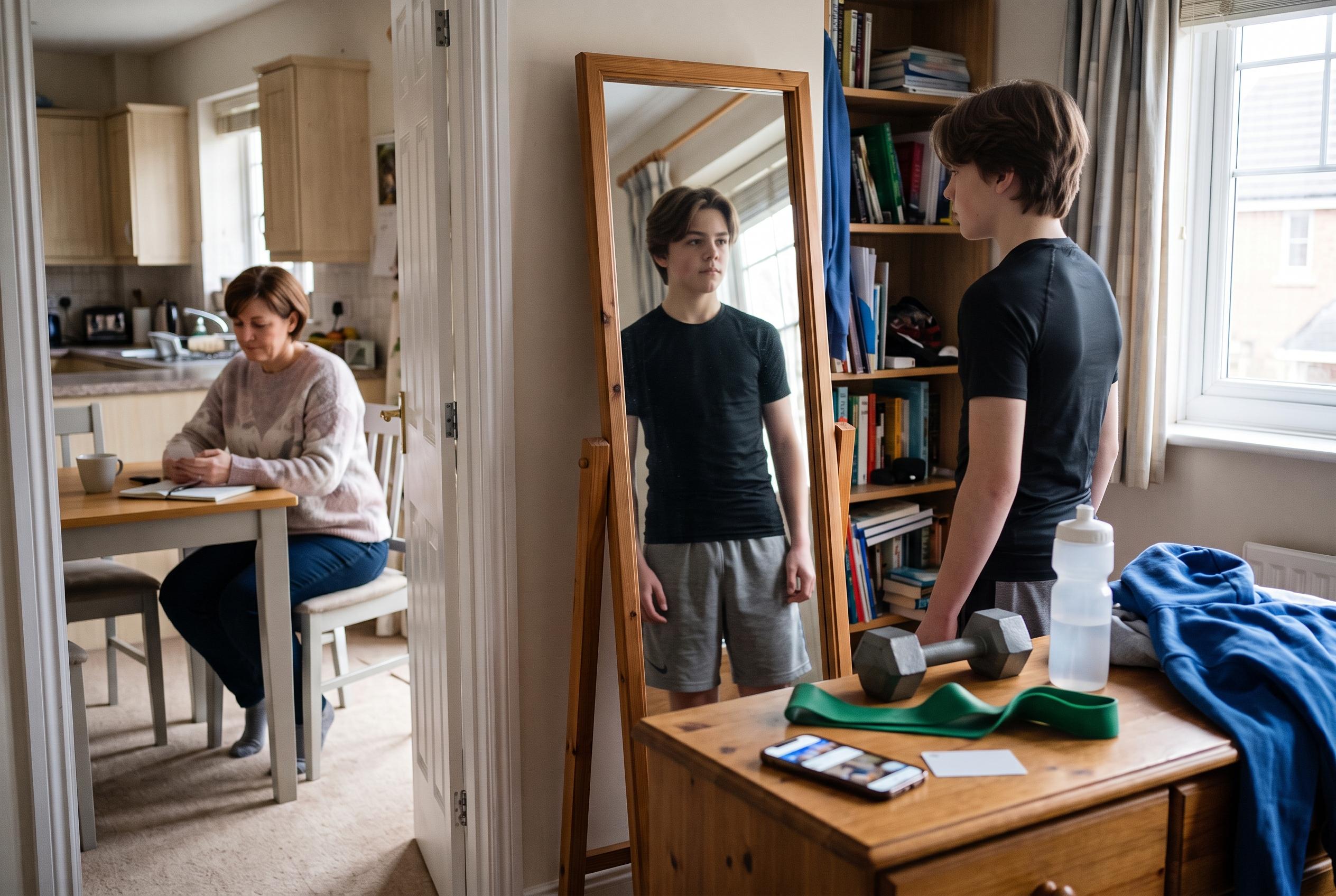

Paediatricians warn that muscle dysmorphia, a body-image disorder commonly seen in adolescent boys, is often overlooked but can lead to dangerous behaviours and long-term health issues, amplified by social media and societal pressures.
Paediatricians are warning families not to overlook muscle dysmorphia, a body-image disorder that can push teenage boys into compulsive exercise, extreme dieting and risky supplement use. The condition is often called “bigorexia” because those affected do not want to be thinner; they are convinced they are not muscular enough, even when others see them as fit or well-built.
That misunderstanding matters because muscle dysmorphia is not a passing phase or a simple vanity issue. According to clinical summaries from Healthline, Medical News Today and WebMD, it is classified as a form of body dysmorphic disorder, a mental health condition in which a person becomes fixated on perceived flaws in appearance. In boys and young men, the obsession typically centres on size, leanness and muscularity rather than weight loss. The Mayo Clinic notes that body dysmorphic disorder can drive repeated mirror checking, excessive grooming and reassurance-seeking, and can seriously disrupt daily life.
The problem often begins in adolescence, when body dissatisfaction and social pressure are especially intense. A review published on ScienceDirect says the condition commonly emerges in mid to late adolescence, with average onset around the late teens, and that this period may be particularly vulnerable because of rapid physical change and developing self-image. Healthline and Medical News Today both note that it is seen most often in males, particularly those drawn to weightlifting, bodybuilding or other appearance-focused sports.
What makes the disorder easy to miss is that some of its warning signs can look like healthy discipline. Teenagers may spend long hours in the gym, drink large amounts of protein shakes and talk constantly about training, macros or muscle gain. But when the behaviour becomes rigid, anxious or punitive, experts say it may signal something more serious. Warning signs include panic when a workout is missed, exercising through injury, frequent body checking in mirrors, measuring muscles, taking repeated progress photos, wearing baggy clothes to hide the body and cutting out whole food groups in favour of powders or supplements. In more severe cases, boys may turn to performance-enhancing substances or anabolic steroids, which can carry significant health risks.
Social media appears to intensify the pressure. Fitness feeds filled with heavily edited, aggressively lean or highly muscular influencers can create impossible standards for teenagers who are still developing physically. The summaries from Simply Psychology and WebMD also point to bullying, low self-esteem and social comparison as contributing factors. For some boys, building muscle becomes less about sport and more about armour: a way to seek control, status or protection from criticism and loneliness.
Parents are being urged to respond with calm and curiosity rather than criticism. That means avoiding dismissive remarks about how a child looks and instead asking how he feels about his routines, his food choices and the pressure he puts on himself. Experts cited in the source material recommend limiting exposure to triggering social media accounts and getting professional help early if the behaviour is starting to shape mood, friendships or school life. Cognitive behavioural therapy is among the most commonly recommended treatments, and in some cases medication may also be considered. The key message from clinicians is straightforward: when exercise and eating become driven by fear rather than health, the problem is no longer fitness.
Disclaimer: This content is for informational purposes only and is not intended to be a substitute for professional medical judgment, advice, diagnosis, or treatment.



