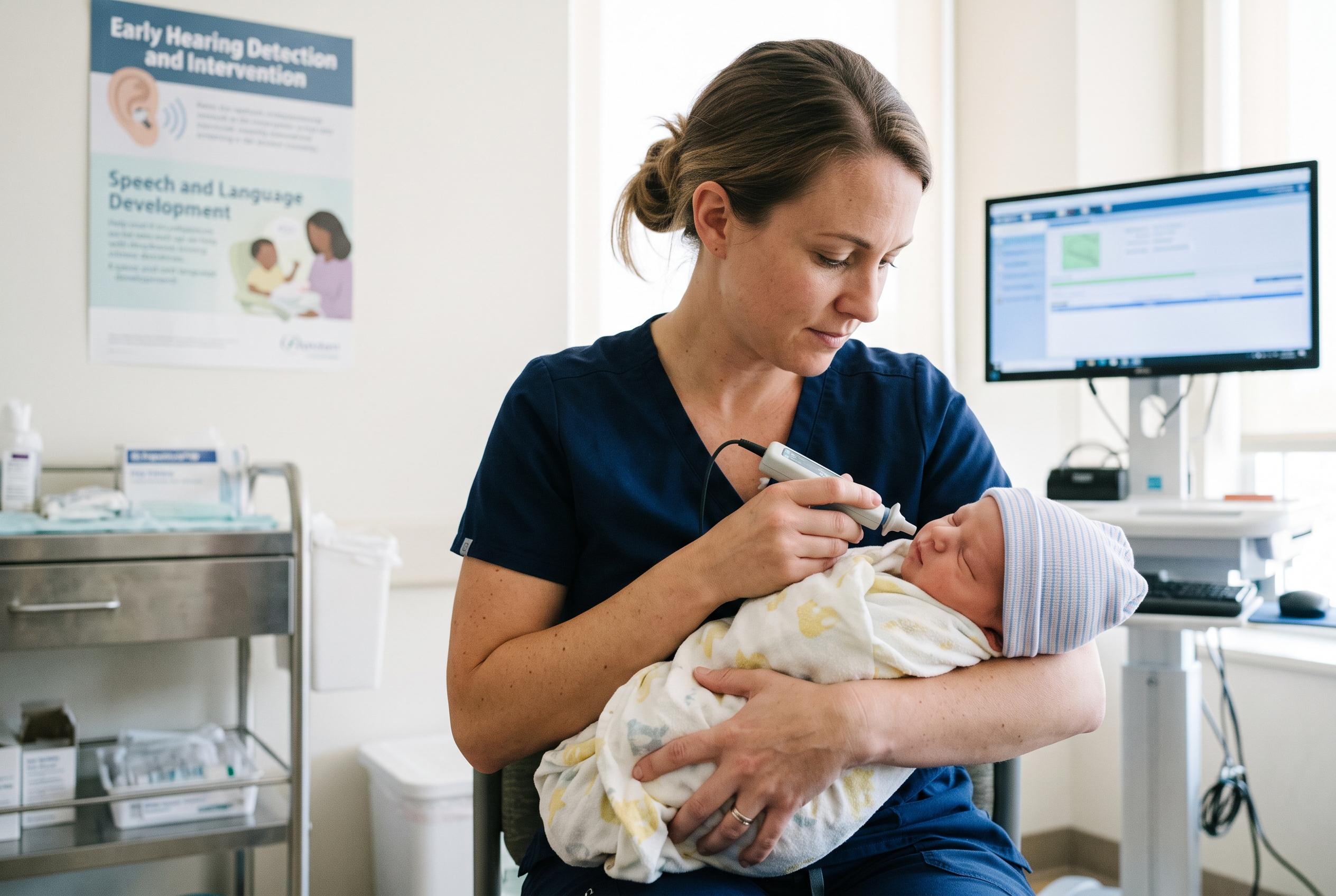

Newborn hearing screening and proactive parental steps are crucial in safeguarding children’s speech, language, and social skills, with experts emphasising early intervention and noise protection.
Newborn hearing care begins sooner than many parents realise. The Centers for Disease Control and Prevention says many babies are screened before leaving hospital, and that every child should be checked by one month of age, with follow-up testing by three months if they do not pass the first screen. Doctors say those early steps matter because hearing is closely tied to speech, language and social development.
After that first check, parents still play a central role. Typical hearing cues change across the first year: babies usually react to loud sounds in the first months, begin turning towards voices and noises later in infancy, and should respond to their name and simple words by around the end of the first year. A child who misses some of those signs does not necessarily have hearing loss, but the CDC and paediatric specialists say it is worth raising the concern with a doctor.
Protecting young ears is just as important as spotting problems. The National Institute on Deafness and Other Communication Disorders says repeated exposure to loud toys, high-volume devices and noisy events can damage hearing over time, and the CDC warns that even mild to moderate loss can affect learning and friendships. Practical steps include lowering the volume on televisions and music players, moving away from loud environments and using child-sized earmuffs or earplugs when noise cannot be avoided.
For older children, experts often point to simple habits that reduce risk, such as limiting headphone use, taking breaks from noise and keeping the volume down. Parents can also test toys before buying them and mute or avoid ones that sound overly loud. Johns Hopkins Medicine says noise-related hearing loss can be permanent, which is why prevention matters even when a child seems to hear well.
If there are concerns, a hearing assessment is usually quick and painless. Audiologists use age-appropriate tests to measure how a child hears different sounds, and if a loss is confirmed, families may be guided towards hearing aids, speech therapy and school support. The CDC says early intervention is key, including prompt evaluation after a failed screen and support before six months when possible, because earlier help improves language and educational outcomes.
Disclaimer: This content is for informational purposes only and is not intended to be a substitute for professional medical judgment, advice, diagnosis, or treatment.