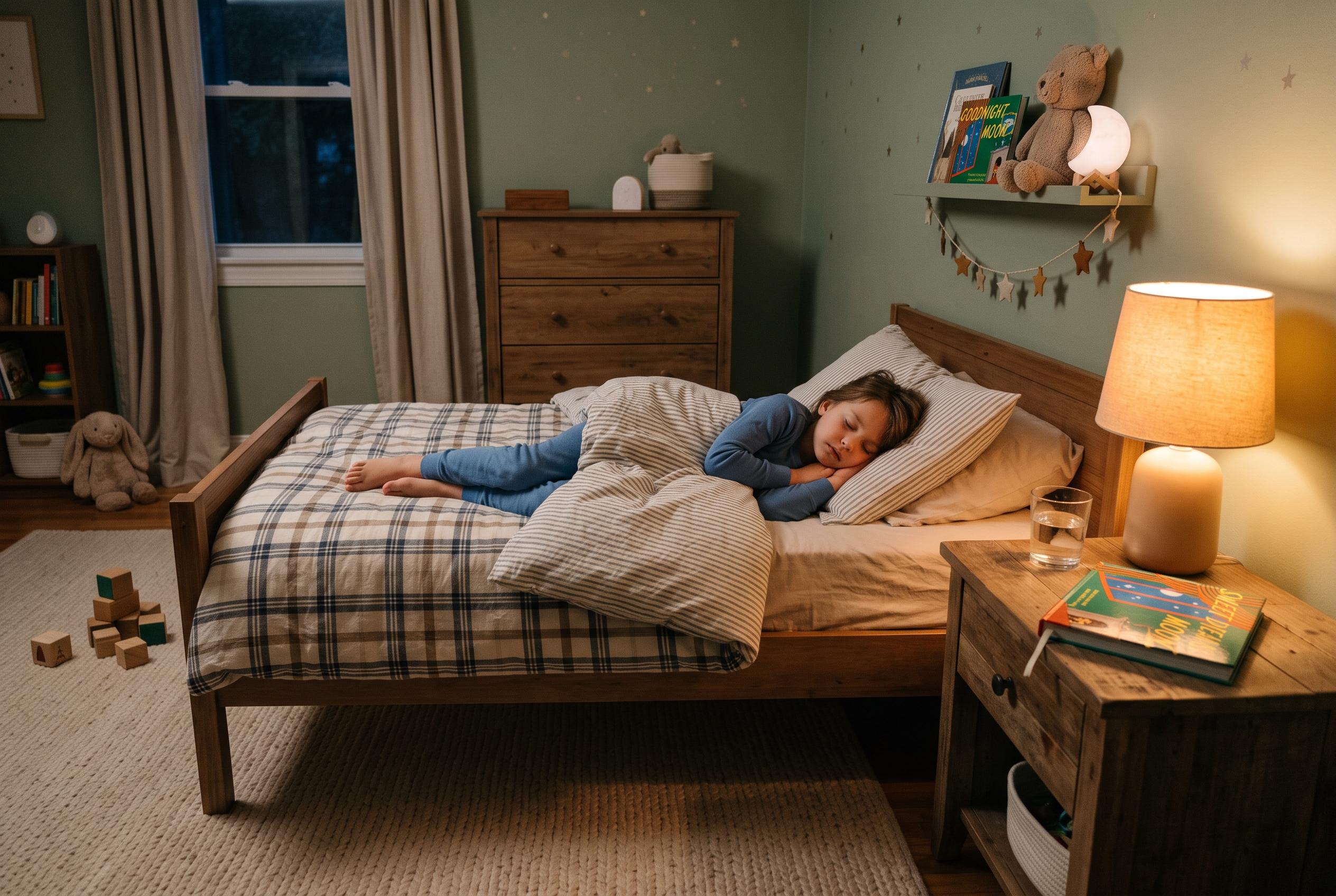

Emerging research underscores the importance of regular sleep schedules and calming bedtimes for children’s growth, behaviour, and academic success, urging parents to prioritise sleep as a foundational aspect of health.
Sleep is not just a nightly routine for children; it is one of the basic supports for healthy growth, learning and behaviour. The Sleep Foundation says adequate sleep helps children’s physical development, emotional well-being and brain function, while the Centres for Disease Control and Prevention links too little sleep with attention problems, poor school performance and wider health risks such as obesity and type 2 diabetes.
How much sleep a child needs depends on age. The American Academy of Sleep Medicine recommends 12 to 16 hours for babies aged four to 12 months, 11 to 14 hours for toddlers, 10 to 13 hours for preschoolers, 9 to 12 hours for school-age children and 8 to 10 hours for teenagers. Mayo Clinic Health System says signs of sleep loss can include lower engagement, trouble concentrating and weaker performance at school.
Experts say good sleep habits matter as much as total hours. Regular bedtimes, a quiet bedroom and a screen-free wind-down can all help children settle more easily. Reading before bed is often recommended because it is calm, predictable and free of the stimulation that comes from television, games or phones. Sleep Foundation guidance also stresses that persistent problems, such as difficulty falling asleep or daytime sleepiness, should be raised with a paediatrician.
Family routines may play a role too. The lead article cites research from New Zealand suggesting that shared family dinners were linked with better adolescent sleep, while a Korean study associated short sleep in school-age children and teenagers with long commutes and heavy evening homework. The article also notes that evidence on caffeine was less clear than many parents might expect, with total daily intake appearing more important than timing alone.
For parents and caregivers, the practical takeaway is straightforward: protect sleep as part of children’s health, not as an optional extra. Consistent bedtimes, calmer evenings and less screen time can make a meaningful difference, especially when paired with a bedroom environment that is cool, quiet and predictable. Where sleep problems persist, experts advise getting medical advice rather than assuming the issue will resolve on its own.
Disclaimer: This content is for informational purposes only and is not intended to be a substitute for professional medical judgment, advice, diagnosis, or treatment.