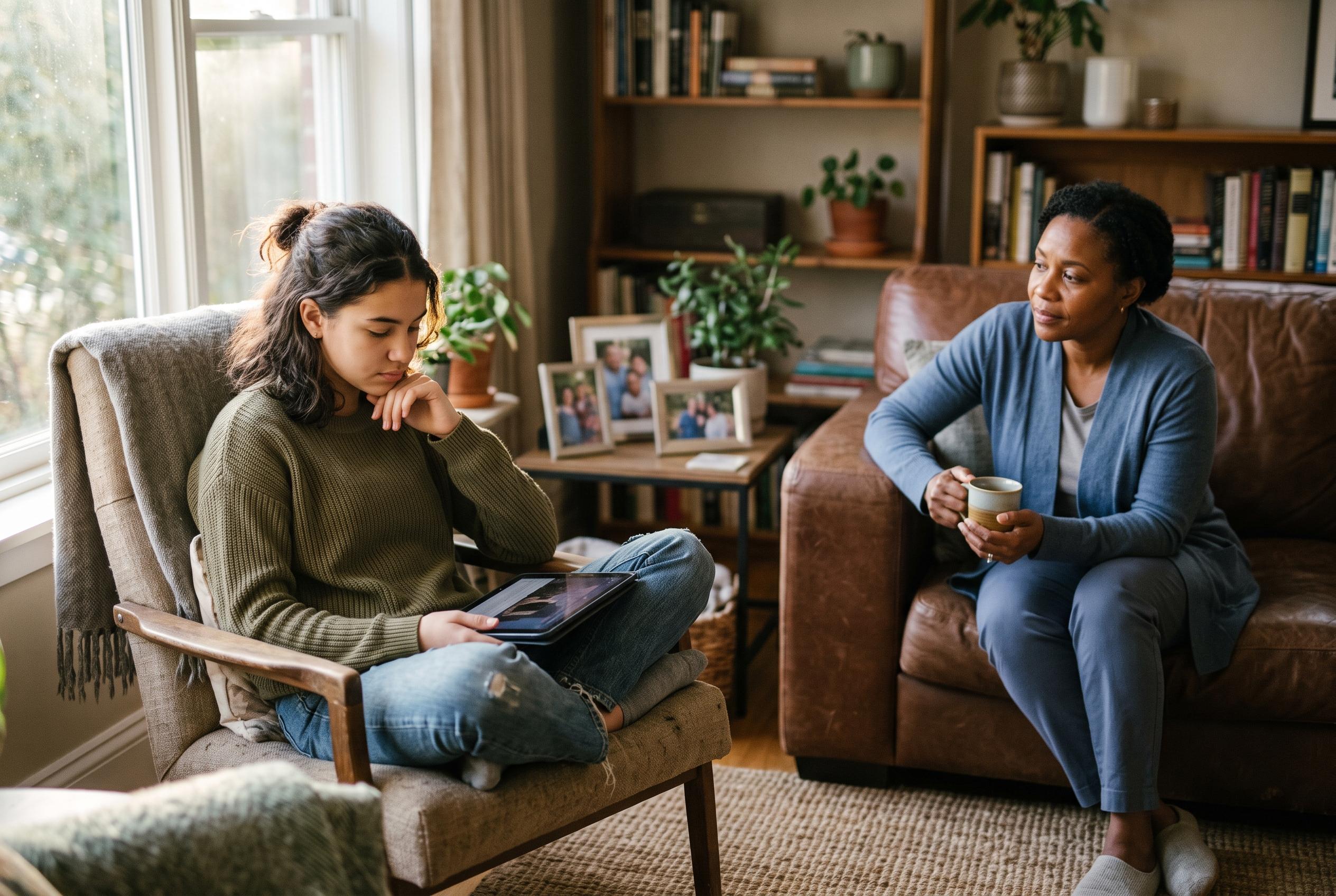

Child and adolescent psychiatrist emphasises that teen privacy is natural, but parents must stay vigilant to signs of serious mental health issues amid growing research linking social isolation with depression.
Adolescence often brings a stronger need for privacy, and a preference for spending time alone is not, by itself, a sign of a mental health problem, according to child and adolescent psychiatrist Sahar Dawood. Speaking on Extra News programme “Noon Al-Qimma”, Dawood said it is common for teenagers to retreat to their rooms or spend time on their phones, provided they are still going to school, keeping up with friends and engaging with family when needed.
Dawood stressed that parents should respect a teenager’s wish for personal space while still keeping communication open at home. That balance, she said, helps adults notice when isolation stops being ordinary teenage behaviour and starts to signal something more serious.
Research published in Springer journals supports that caution. One study found that increasing loneliness in adolescence can predict later depressive symptoms and lower overall well-being, while another linked loneliness and social exclusion to a range of negative mental health outcomes. Other studies have found that social isolation is associated with poorer psychological health and greater depressive symptoms in teenagers.
Warning signs include a sudden loss of interest in hobbies, marked mood changes, frequent crying or irritability, sleep or appetite disruption, falling school performance, refusal to attend school and neglect of personal appearance or hygiene. Studies also suggest that strong family ties, supportive friendships, community involvement and healthy sleep can help protect teenagers from the worst effects of isolation.
Disclaimer: This content is for informational purposes only and is not intended to be a substitute for professional medical judgment, advice, diagnosis, or treatment.