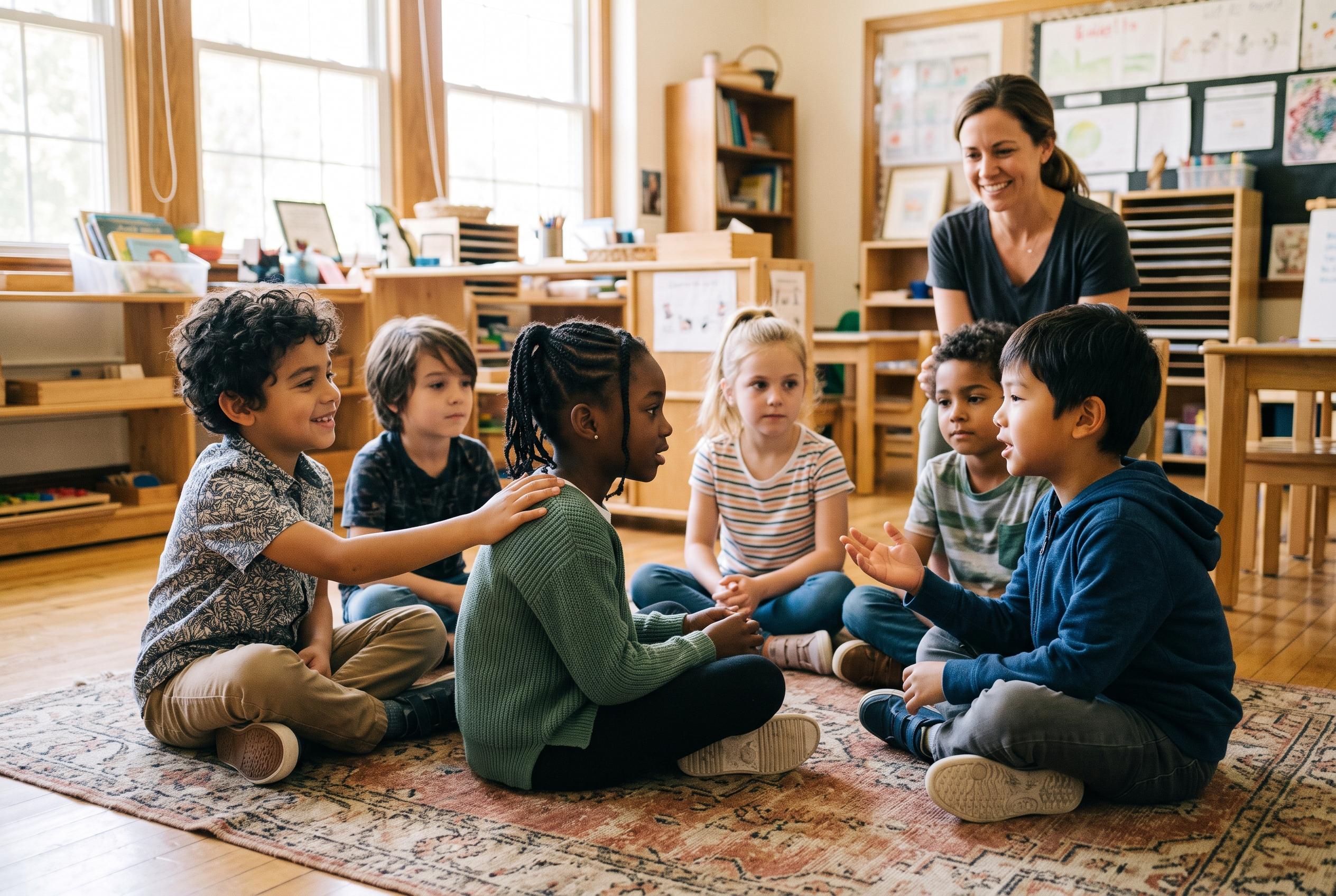

As the new school year starts, experts highlight the importance of emotional and behavioural skills such as curiosity, self-advocacy, organisation, patience, and empathy, which are crucial for academic and personal growth beyond traditional subjects.
As the new school year begins, families are often focused on timetables, uniforms, homework and the practicalities of daily routines. But educators and child-development experts increasingly stress that what children bring with them emotionally and behaviourally can matter as much as any pencil case or planner. Curiosity, confidence and resilience help students engage more fully with learning, and Harvard Graduate School of Education says curiosity is a powerful driver of deeper understanding and persistence. The ability to ask for help is just as important, with the Watson Institute and K12 Tutoring both noting that self-advocacy supports independence and academic growth.
Curiosity is one of the best foundations for learning because it keeps children involved when a subject becomes difficult. Harvard’s Elizabeth Bonawitz says wonder and questioning help students connect with material more deeply, while parents can encourage that instinct by asking open-ended questions and making space for exploration at home. A child who feels free to ask “why” is often more willing to keep going when answers do not come easily.
Knowing how to ask for help is another skill that can change a student’s experience at school. Guidance from the Watson Institute recommends teaching children to recognise when they need support, decide who can help, make the request clearly and politely, and express thanks afterwards. K12 Tutoring says many older students hesitate because they fear judgement or want to appear independent, which is why adults need to frame help-seeking as a strength rather than a weakness. KidsHealth makes a similar point, noting that many teenagers wrongly see needing support as a sign of failure.
Organisation, patience and adaptability also shape how well children manage the pressures of school life. While some students are naturally structured, even simple habits such as checking assignments each evening or keeping a dedicated homework space can ease stress and build confidence. Patience matters too, because not every task will come quickly, and children who learn to stay with a problem are usually better prepared for more demanding work. Adaptability is equally valuable when schedules change, friendships shift or a class takes an unexpected turn.
Beyond academics, children also need emotional awareness, problem-solving skills, digital responsibility, kindness and respect. These habits help them handle conflict, use technology safely and build healthy relationships with classmates and teachers. They also matter outside the classroom, which is why experts urge parents to talk regularly about feelings, online behaviour and the everyday choices that shape character. A strong school year is built not just on grades, but on the confidence, self-control and empathy children develop along the way.
Disclaimer: This content is for informational purposes only and is not intended to be a substitute for professional medical judgment, advice, diagnosis, or treatment.