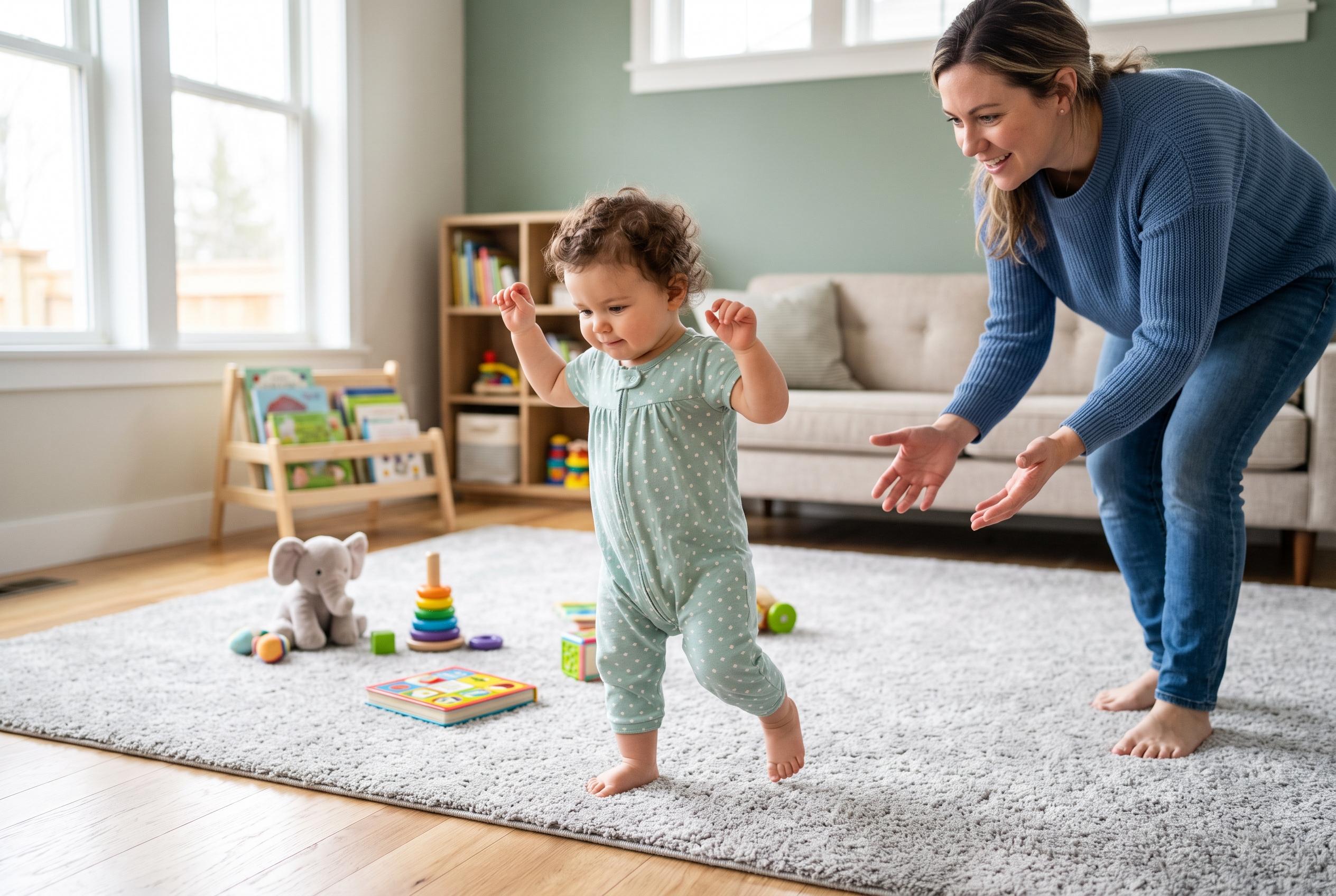

Emerging guidance highlights the broad normal range for baby walking, reassurring parents and encouraging support over pressure amid evolving developmental benchmarks.
Parents often worry when a toddler is slower to stand, cruise or take those first unsteady steps, but paediatric guidance suggests there is a wide normal range. SingHealth says most babies begin walking between 10 and 15 months, while Cleveland Clinic notes that some healthy children may not walk until 17 or 18 months. The key point is that walking is not a single deadline but the result of several earlier motor skills coming together.
Before a baby walks, they usually pass through a series of steps: sitting steadily, pulling to stand and cruising along furniture. SingHealth and Kids Clinic Singapore both describe cruising as an important milestone, often seen from about 8 to 12 months, because it helps build balance, leg strength and confidence. Cleveland Clinic adds that these stages are part of the normal path towards independent walking, rather than separate achievements to be rushed.
Children do not all reach this stage at the same pace. Cleveland Clinic says some babies walk as early as 9 months, while others take much longer, and Pregnancy, Birth and Baby places the usual range anywhere from 10 to 18 months. Factors such as temperament, muscle tone and how much time a child spends moving freely on the floor can all influence timing. That is why a cautious child may linger at cruising, while a bolder one may let go sooner.
There are, however, warning signs that should prompt a professional review. The Singapore-based guidance from SingHealth and Kids Clinic says parents should seek medical advice if milestones are clearly delayed, while Benchmark Physiotherapy highlights persistent toe walking and one-sided movement as possible red flags. A child who is not pulling to stand, seems unusually stiff or floppy, or shows clear asymmetry may need assessment by a paediatrician or physiotherapist.
Several sources also caution against baby walkers. SingHealth, Cleveland Clinic and Pregnancy, Birth and Baby all say these devices can delay the development of walking skills and may cause injuries. By contrast, push toys, safe floor time and barefoot play are commonly recommended because they let babies practise balance, weight-shifting and coordination more naturally.
For parents, the most useful approach is usually watchful support rather than pressure. The child’s progress through sitting, standing and cruising matters more than comparison with other children, and an 18-month review point is often used when walking has not yet begun. Benchmark Physiotherapy’s guidance reflects a broader clinical view: most late walkers are simply moving at their own pace, but structured assessment can help identify the small number with a genuine developmental issue.
Disclaimer: This content is for informational purposes only and is not intended to be a substitute for professional medical judgment, advice, diagnosis, or treatment.