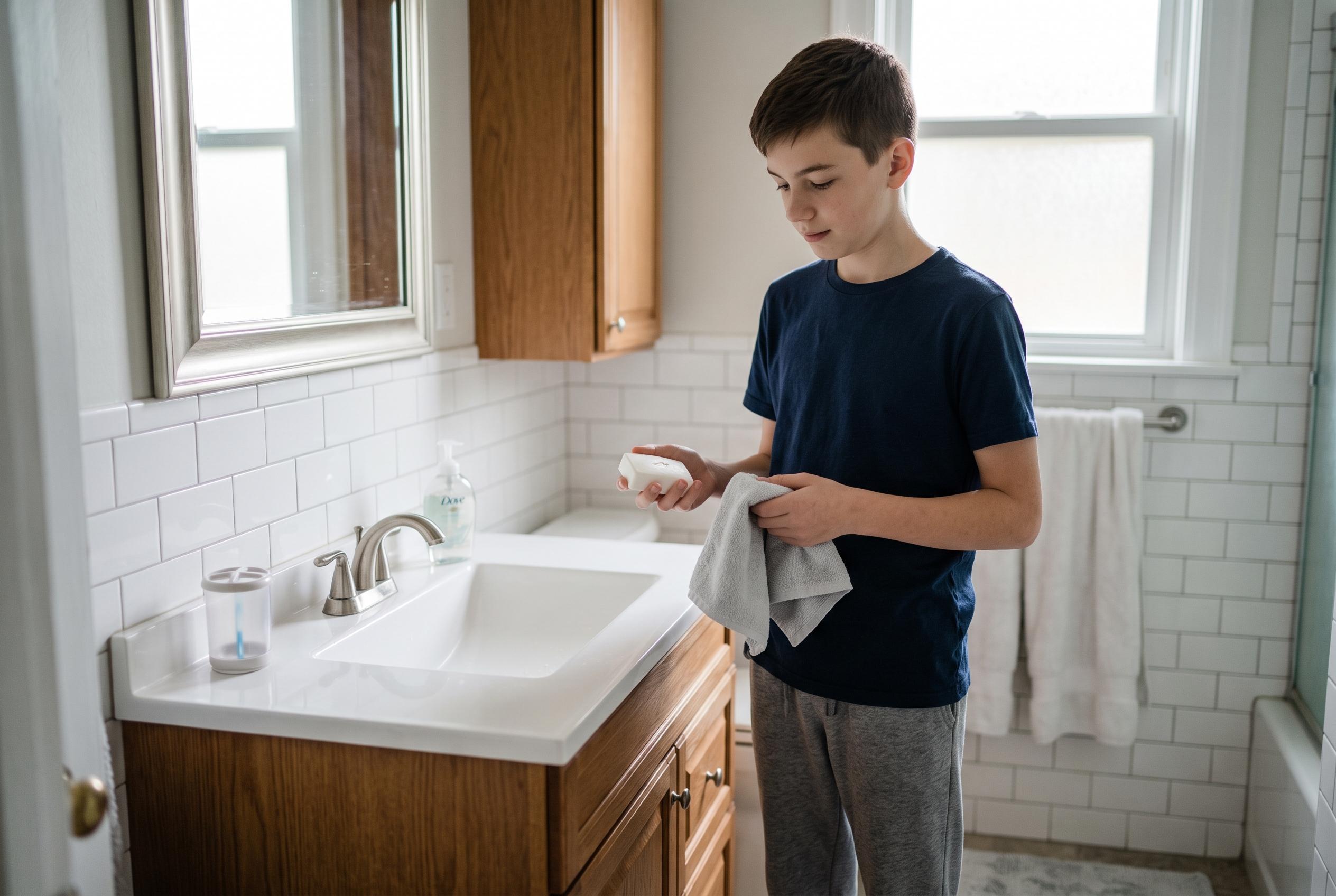

Experts recommend simple hygiene practices over fragrances for children experiencing body odour, emphasising safety and comfort during puberty’s onset.
Body odour in children is often one of the first visible signs that puberty has begun. According to Healthline and WebMD, it commonly appears around ages nine to 10, though it can start later, and the change is linked to rising hormone activity rather than to sweat itself. Sweat becomes a problem only when bacteria on the skin break it down, especially in the armpits and groin, creating the stronger smell that can worry children and parents alike.
The first response should usually be simple hygiene, not fragrance. Children’s hospitals cited in the related summaries say that daily bathing, washing after exercise or heavy sweating, and wearing clean clothes can make a noticeable difference. Mild soap and careful cleaning of areas that sweat most are often enough to reduce odour without introducing extra products too early.
Deodorant can be appropriate when a child is truly ready for it, but specialists advise choosing carefully. WebMD and KidsHealth both recommend mild formulas and warn against strong scents, while the British-style guidance in the lead article urges parents to avoid harsh ingredients that may irritate sensitive skin. Aerosol sprays are best avoided for younger children, with roll-ons, sticks or non-gas sprays generally seen as gentler options.
It is also important to distinguish deodorant from antiperspirant. Deodorants are designed to mask or neutralise odour, while antiperspirants reduce sweating by blocking sweat ducts with aluminium salts. For children, the goal is usually to control smell without interfering unnecessarily with a normal body function. If a new product causes redness, itching or a rash, it should be stopped and a doctor consulted.
Parents can also help with small everyday changes. Natural fibres allow the skin to breathe better than synthetic fabrics, and a balanced diet and good hydration may help some children feel fresher. If odour is unusually strong, persists despite good hygiene, or comes with excessive sweating, it is sensible to speak to a paediatrician to rule out an underlying problem. As the lead article notes, the aim is not to eliminate a normal sign of growing up, but to help children manage it comfortably and confidently.
Disclaimer: This content is for informational purposes only and is not intended to be a substitute for professional medical judgment, advice, diagnosis, or treatment.