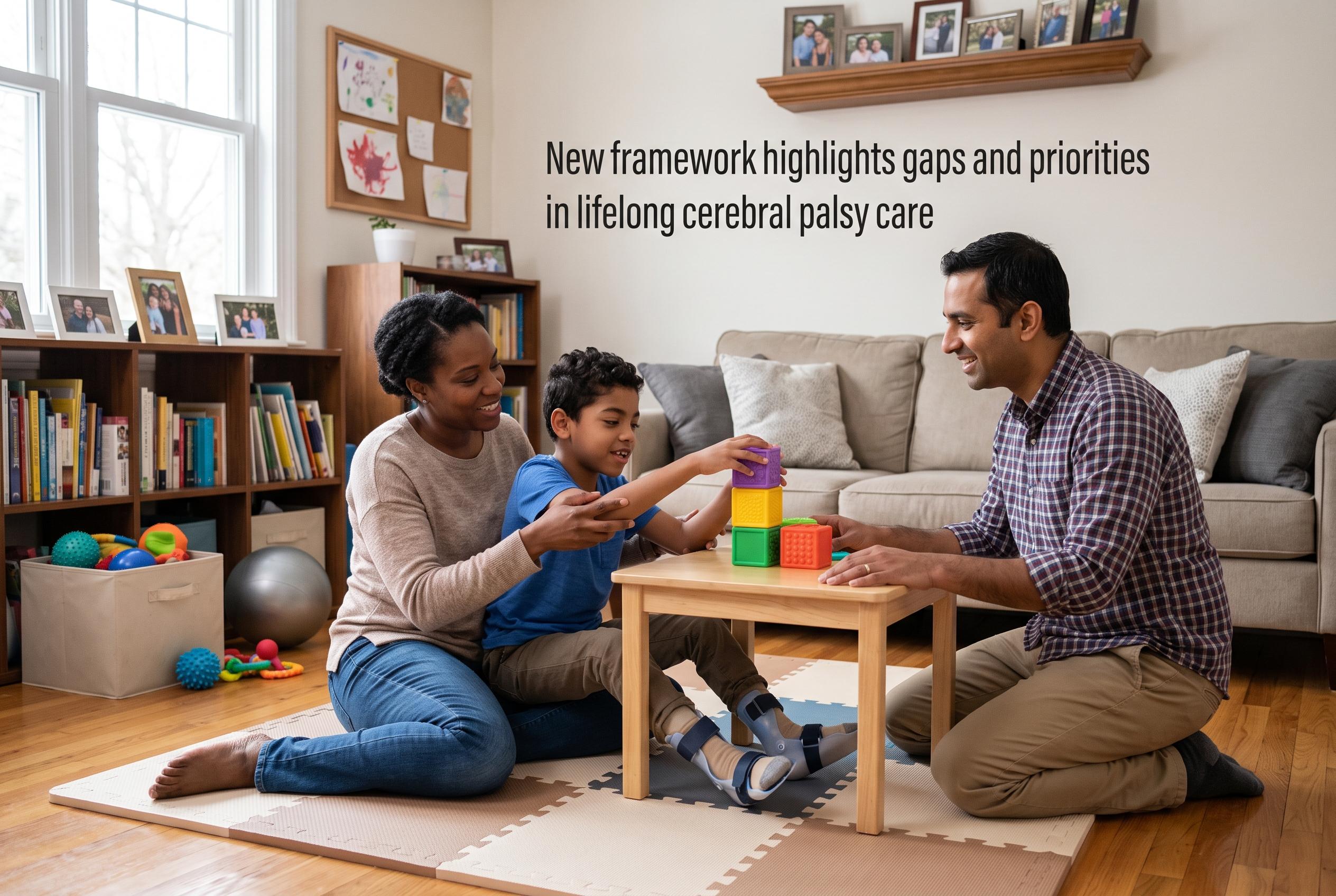

A recent study maps the essential components of effective cerebral palsy services across North America, revealing disparities especially in adult care and emphasising a family-centred, system-wide approach for consistent treatment.
A new study from the Cerebral Palsy Research Network suggests that high-quality cerebral palsy care is less about a single treatment and more about a system that can follow patients from childhood into adulthood. By examining 11 leading CP programmes across North America, researchers set out to identify the common building blocks of effective care and where services still fall short. The aim was practical as well as clinical: give hospitals, clinics and families a clearer picture of what comprehensive care should include.
Across the programmes, several elements appeared again and again. Most offered treatment for muscle tone, along with physical, occupational and speech therapy. Access to mobility equipment, orthotics, orthopedic monitoring, surgery and gait analysis also featured prominently. Many centres used multidisciplinary teams, bringing together neurologists, orthopedic surgeons, therapists and social workers, while some used arena-style appointments in which several specialists see a patient in one visit, a model designed to make care more coordinated and less burdensome for families.
Even so, the study found wide differences in what programmes can deliver. Some centres provide strong care coordination and a broad range of specialist services, while others have far fewer resources. The gaps are especially clear in adulthood, where access to CP services remains limited and the move from paediatric to adult care can be difficult. Mental health support, reproductive health and sexual health are also not consistently built into care, underscoring a persistent bias towards childhood treatment despite CP being a lifelong condition.
To help close those gaps, the researchers created a checklist that groups services into three tiers: essential services every programme should provide, core services commonly available at most centres and specialty services that require more advanced expertise or resources. The framework is meant to guide health systems as they strengthen CP programmes, but it also gives families a way to ask better questions and push for services they may need. In that sense, the study offers more than a map of current practice; it points towards a more consistent and family-centred model of care.
Disclaimer: This content is for informational purposes only and is not intended to be a substitute for professional medical judgment, advice, diagnosis, or treatment.