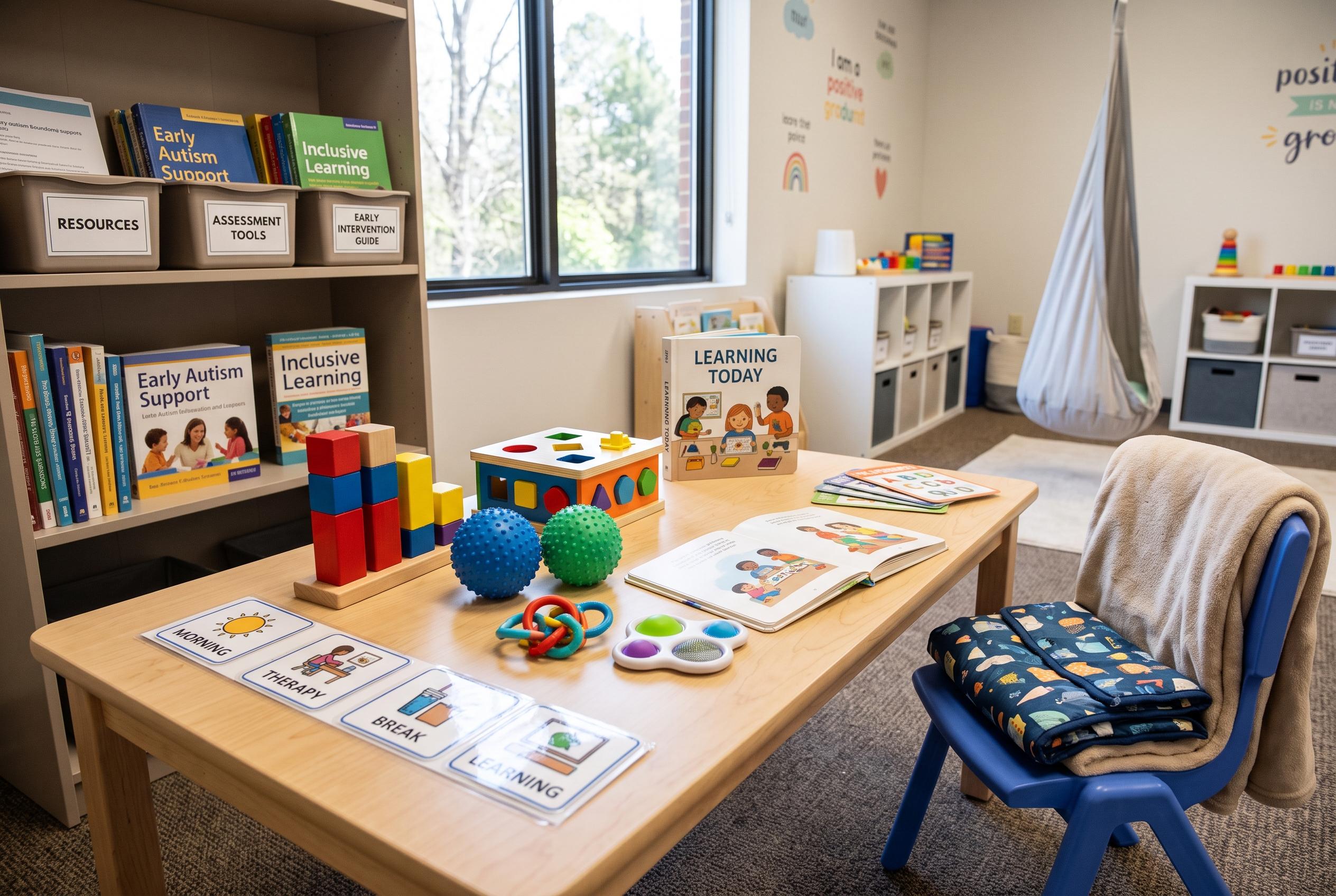

Recent CDC findings reveal a sharp increase in autism diagnoses among eight-year-olds, underscoring the critical role of early identification, support networks, and structured routines in improving outcomes for children on the spectrum.
For many families, autism first becomes visible not in infancy but in the early school years, when classroom routines, social demands and sensory overload can expose differences more sharply. The CDC says its latest ADDM Network data found autism spectrum disorder in about 1 in 31 eight-year-olds in 2022, with rates varying widely across U.S. communities and boys identified more often than girls. The agency also says children born in 2018 were nearly twice as likely to be identified by age four as those born in 2014, underscoring the value of earlier recognition and support.
Parents and caregivers are often the first to notice patterns that deserve attention. According to the National Institute of Mental Health, autism is marked by persistent social communication difficulties, repetitive behaviours and restricted interests, with signs often emerging in the first two years of life. In elementary-aged children, that may show up as limited eye contact, repeated phrases, intense attachment to routines, distress at small changes, or unusual reactions to sound, touch or other sensory input. None of those traits alone proves a diagnosis, but a cluster of them can be a reason to seek a professional evaluation.
The most useful next step is often to build a support network around the child rather than trying to manage everything alone. The CDC recommends early identification and access to services, and school systems can be an important part of that process through assessments, preschool classrooms, and special education supports. Families are also usually better served by a plan that draws in both medical and educational professionals, so that goals at home, in class and in therapy are aligned around the child’s strengths, challenges and learning style.
Structure can make daily life more manageable. Children on the spectrum often do best when mornings, evenings and transitions are predictable, and when changes are introduced gradually rather than at the last minute. Role-playing common situations such as visiting a shop, going to the doctor or eating in a restaurant can reduce anxiety before the real event. So can teaching coping skills for moments of stress, such as breathing exercises or a quiet space to reset, especially for children who react strongly to surprise or frustration.
Families also need to make room for differences that are not problems to be fixed. A child’s intense fascination with dinosaurs, vehicles or another favourite subject may be part of how they explore the world, not a habit to extinguish. Likewise, practical adjustments can help with sensory sensitivities, such as soft clothing, reduced noise, or headphones in busy places. Experts say these kinds of accommodations can support participation without forcing a child to cope in ways that are overwhelming.
Reward systems and community support can make a real difference too. Positive reinforcement often works better than punishment for encouraging routines, schoolwork and safe behaviour, while camps, sports and other adapted activities can give children social practice in settings designed for their needs. For many parents, the biggest change comes from connecting with other families who understand the pressures and the small victories. As the CDC’s data show, autism is common, but the right combination of early support, school help and home structure can make the early school years far more manageable for children and caregivers alike.
Disclaimer: This content is for informational purposes only and is not intended to be a substitute for professional medical judgment, advice, diagnosis, or treatment.