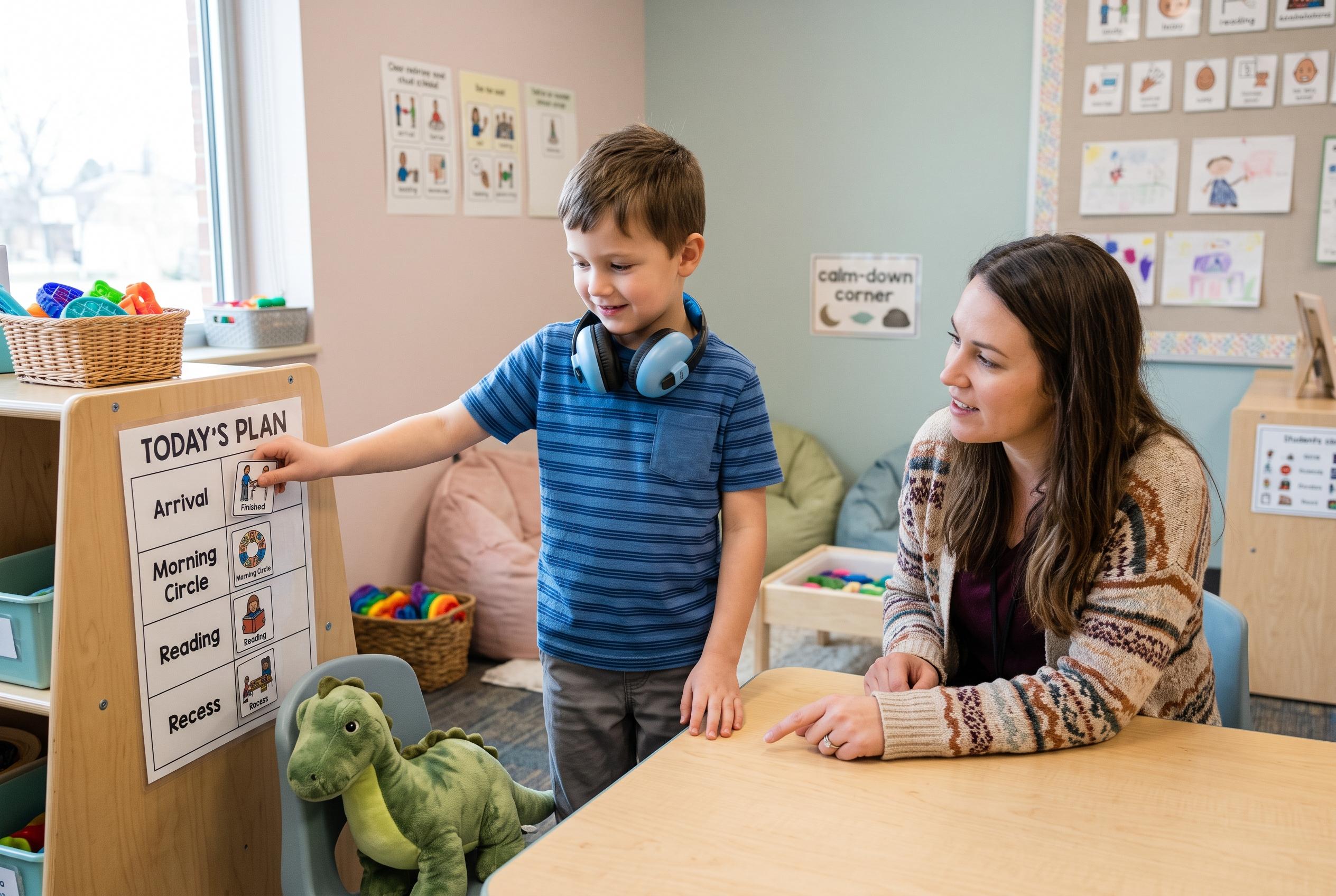

Experts highlight practical tips to help children with autism manage anxiety during the transition back to school, emphasising routine preparation, sensory management, and collaboration with teachers.
Children with autism often find the run-up to a new school year especially difficult because it can bring a sudden break in the routines that help them feel secure. According to the lead article, everyday changes such as earlier mornings, different transport arrangements, new classroom rules and unfamiliar teachers can be enough to unsettle a child who has grown used to a more predictable summer pattern. Related guidance from MindColor Autism and 14 News also points to the value of easing back into school routines before term starts, rather than waiting for the first day itself.
Sensory overload is another major pressure point. The school environment can be loud, bright and crowded, with bells, bus rides, cafeteria noise and unexpected physical contact all adding to a child’s stress. Autism Parenting Magazine and Autism Works both suggest that parents and schools can reduce that strain by preparing children for what they will encounter, whether that means visiting the building in advance, practising the route to class or identifying quieter spaces where a child can reset during the day.
The start of term can also create uncertainty around friendships, group work and how to ask for help. The lead article notes that children may struggle to explain what feels wrong, so distress can show up as withdrawal, repeated questions, sleep disruption or a refusal to leave home. That is why specialists recommend looking beyond the behaviour itself and asking practical questions about noise, lunch, the bathroom, the timetable or whether a task feels too hard. Psychology Today and Develop BC both underline that a clear plan and early preparation can help children feel more confident about new expectations.
Parents and caregivers are often most effective when they focus on small, concrete supports rather than trying to remove every source of anxiety. Visual schedules, social stories, gradual exposure to the school routine, sensory breaks and close communication with teachers can all make the transition smoother, according to MindColor Autism and the other guidance sources. The broader message is that anxiety should not be treated as an inevitable part of autism; if a child is struggling, the goal is to understand the trigger and adjust the environment, the routine or the support around them.
Disclaimer: This content is for informational purposes only and is not intended to be a substitute for professional medical judgment, advice, diagnosis, or treatment.