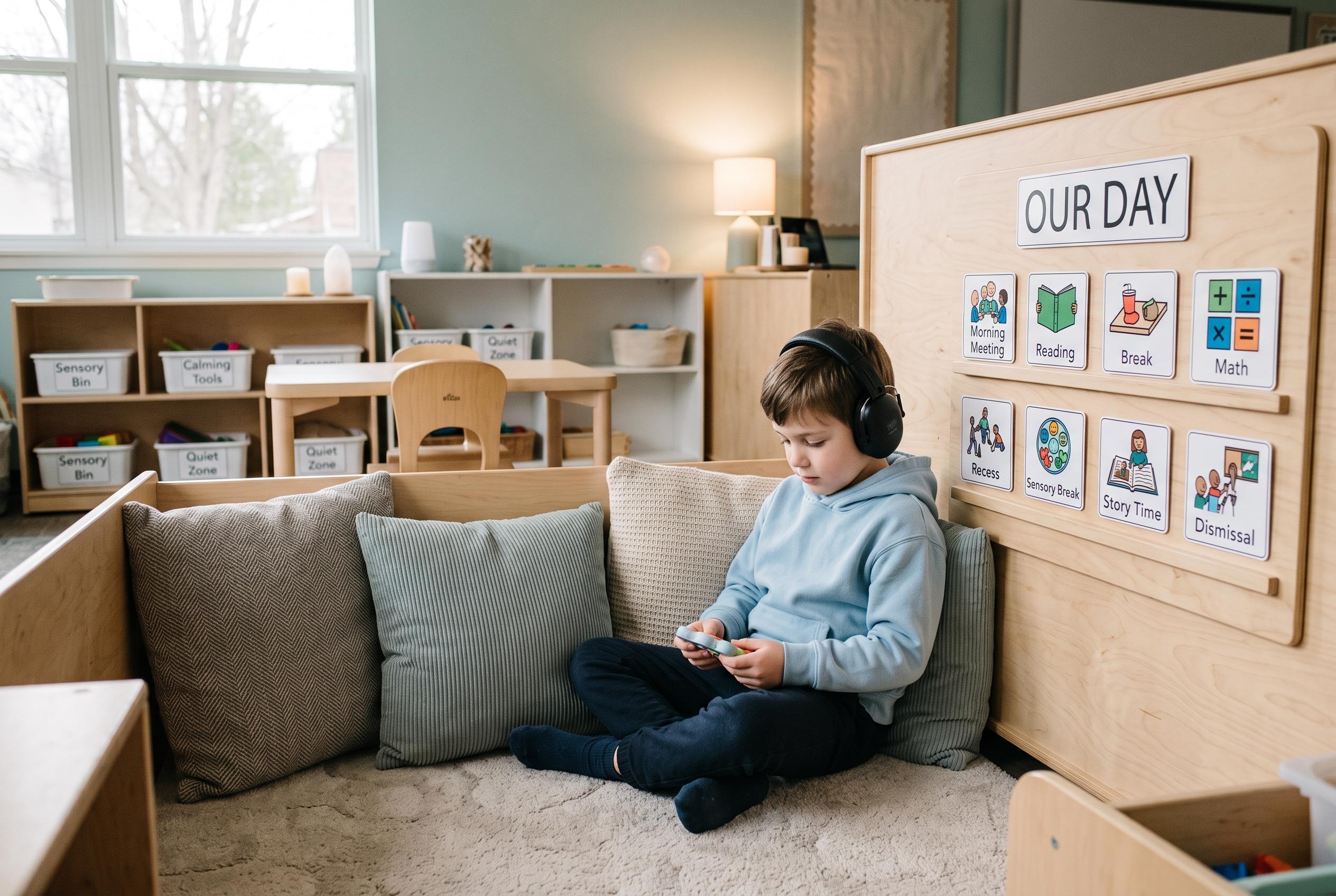

Experts highlight the importance of personalised adaptations over generic solutions in helping autistic children cope better with mainstream schooling, emphasising sensory-friendly environments and tailored strategies to reduce overwhelm.
When an autistic child appears overwhelmed by mainstream school, the problem is rarely a matter of wilfulness or poor parenting. More often, according to Dr Lucy Russell, the child is struggling with a build-up of academic pressure, social demands, sensory overload or the sheer effort of getting through the day. The National Autistic Society says support works best when it is shaped around the individual child, rather than autism being treated as a single, uniform experience.
That can make the warning signs easy to miss. Some children fall behind because they cannot process instructions quickly enough; others cope with the work but spend all their energy surviving noise, movement, bright lights and crowded corridors. Dr Russell says a child may seem fine in class and then unravel at home, where the pressure finally lifts. The National Autistic Society and the Autistic Girls Network both stress that schools should respond to a child’s specific sensory and learning needs, not assume that one adjustment will suit everyone.
Emotional distress can show up as avoidance, tearfulness, stomach aches, headaches, anger or withdrawal. School refusal, or emotionally based school avoidance, is not the same as simple defiance, according to guidance from autism organisations. It is often a sign that the child feels unsafe, overwhelmed or unable to cope. Dr Russell also warns that masking , hiding distress, copying peers or suppressing stimming , can leave children exhausted, with after-school meltdowns or shutdowns once they are back in a familiar place.
The practical response is to look closely at what is triggering the difficulty. Dr Russell recommends keeping a simple log of lessons, environments, adults present, sensory triggers and what helps the child recover. That can give parents and schools something concrete to discuss. The National Autistic Society similarly advises clear communication, sensory-friendly settings and tailored teaching strategies, while its guidance on sensory adjustments includes quiet spaces, flexible uniform and sensory tools where appropriate.
Schools in England have a legal duty to make reasonable adjustments for disabled pupils, and those changes do not depend on an education, health and care plan. That can include visual timetables, shorter instructions, extra processing time, a trusted adult, quieter transitions, movement breaks or a low-arousal response when a child is overwhelmed. The key, as several autism groups note, is that the adjustment should match the barrier the child is facing and be reviewed rather than left as a vague promise of support.
If ordinary support is not enough, families can ask for SEN Support to be reviewed and, if needed, request an education, health and care needs assessment. In some cases, a different placement or gradual return plan may be safer than insisting on immediate full-time attendance. The broader message from autism specialists is consistent: the aim is not to make a child mask harder, but to reduce the pressure that is stopping them from learning, relating and recovering well enough to cope.
Disclaimer: This content is for informational purposes only and is not intended to be a substitute for professional medical judgment, advice, diagnosis, or treatment.