

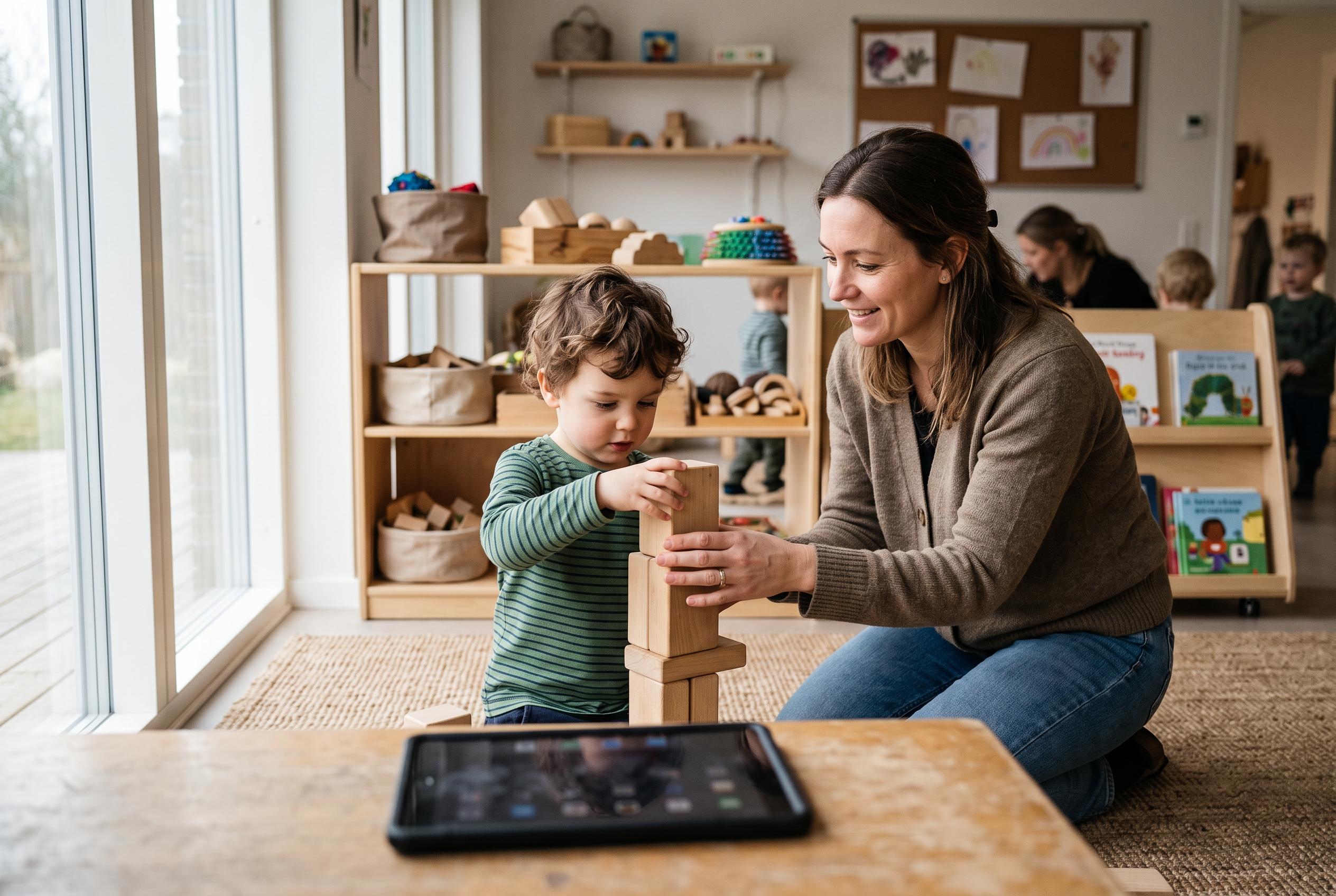

National’s plan to restrict screen use in early learning centres and enhance developmental reporting has divided advocates and academics, raising questions about technology’s role in early childhood development.
Early childhood education advocates have given a guarded welcome to National’s plan to ban screen time in early learning centres and tighten reporting on children’s progress, saying it could give parents a clearer picture of how young children are developing before they start school.
According to RNZ, the policy announced by National on Sunday is part of its “Set Up for Success” package and would also limit screen use in Years 1 to 3, while introducing clearer developmental reports for families. The Otago Daily Times, 1News and Scoop News all reported that the party wants to put more emphasis on books, handwriting, conversation and direct interaction with teachers and other children.
Tony Bracefield, who runs Clendon Christian Preschool in South Auckland, told RNZ his centre already operates in much the same way. He said children were “flourishing” under a model that keeps them engaged with teachers rather than devices, and he argued that simple testing at ages three, four and five can show whether children are progressing without relying on excessive paperwork.
Kelly Seaburg, chair of Advocates for Early Learning Excellence, said the proposal could improve consistency in the way progress is reported to parents. She told RNZ that New Zealand already has a “world-class curriculum”, but that feedback to families is often uneven, and that the most useful information is not just what a child can do, but what comes next.
But the plan has drawn caution from academics. Kiri Gould, a senior lecturer in early childhood education at the University of Auckland, told RNZ that a blanket ban on devices risks overlooking the ways technology can support learning when used well. She said the real issue is not simply whether screens are present, but whether they strengthen or crowd out relationships, play and exploration. Gould was also sceptical about the proposed School Start Check, saying Te Whāriki already sets out broad learning outcomes that recognise children develop at different rates.
Disclaimer: This content is for informational purposes only and is not intended to be a substitute for professional medical judgment, advice, diagnosis, or treatment.



