

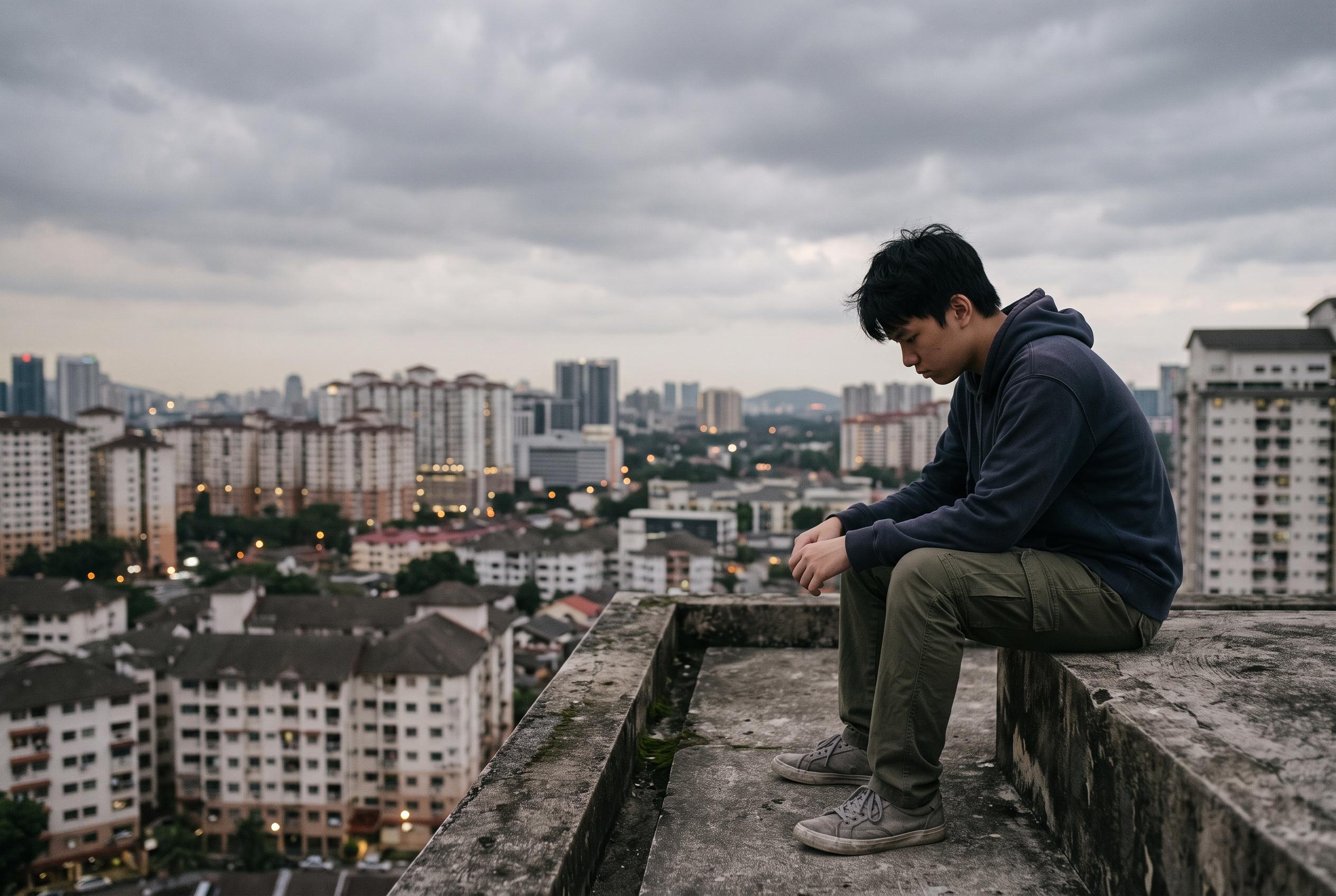

As Malaysia faces a doubling of child and teen mental health issues since 2019, experts call for comprehensive support systems to prevent rising youth suicides, highlighting urgent community and institutional interventions.
A child who seems to disappear at school may still be carrying a burden that no one can see.
World Suicide Prevention Day, marked on Sept 10, is meant to focus attention on people at risk rather than on remembrance alone. In Malaysia, that focus is increasingly turning to children and teenagers, after the National Health and Morbidity Survey 2023 found that one in six children aged five to 15 is likely to have mental health problems, double the rate recorded in 2019.
The same survey found that among 13- to 17-year-olds, one in four shows signs of depression, one in eight has experienced suicidal thoughts and one in 10 has attempted suicide. Bernama reported that the survey also estimated around one million Malaysians aged 15 and above are living with depression, with nearly half having thought about self-harm or suicide.
The scale of the problem is also visible in police figures. According to data cited by local reports, PDRM recorded 5,857 suicides between 2020 and October 2025, including 1,813 cases involving people aged 15 to 30. Other reports based on the same figures said more than 80% of the deaths involved men, underscoring concerns about young male vulnerability.
The human cost is not limited to the person who dies. A suicide can destabilise friends, classmates, teachers and siblings, and in some cases those left behind may face guilt, confusion or even their own crisis. The article’s example of a 13-year-old girl whose best friend tried to overdose the next day shows how quickly distress can spread through a peer group.
Experts increasingly stress that there is rarely a single cause. Instead, they look at risk factors and protective factors across the child, the family, the school and the wider community. Repeated exclusion, humiliation, gossip and online ridicule may not leave physical marks, but research involving nearly 27,500 Malaysian secondary school students found that bullied students were almost five times more likely to have attempted suicide than those who were not.
The practical response, psychologists say, is often simple but consistent. Parents are urged to ask specific questions about a child’s day, not just whether school was fine. Teachers are told to notice pupils who are often alone or who have lost a close friendship. Young people can help by including classmates who are usually left out and by telling a trusted adult if a friend speaks about wanting to die.
For schools and institutions, the need is broader: stronger counselling services, clearer crisis plans, better training for teachers and wider access to psychological first aid. The message is that suicide prevention cannot rest on one parent, one teacher or one friend. It depends on making sure young people are seen early, listened to properly and supported before distress becomes unbearable.
Disclaimer: This content is for informational purposes only and is not intended to be a substitute for professional medical judgment, advice, diagnosis, or treatment.



