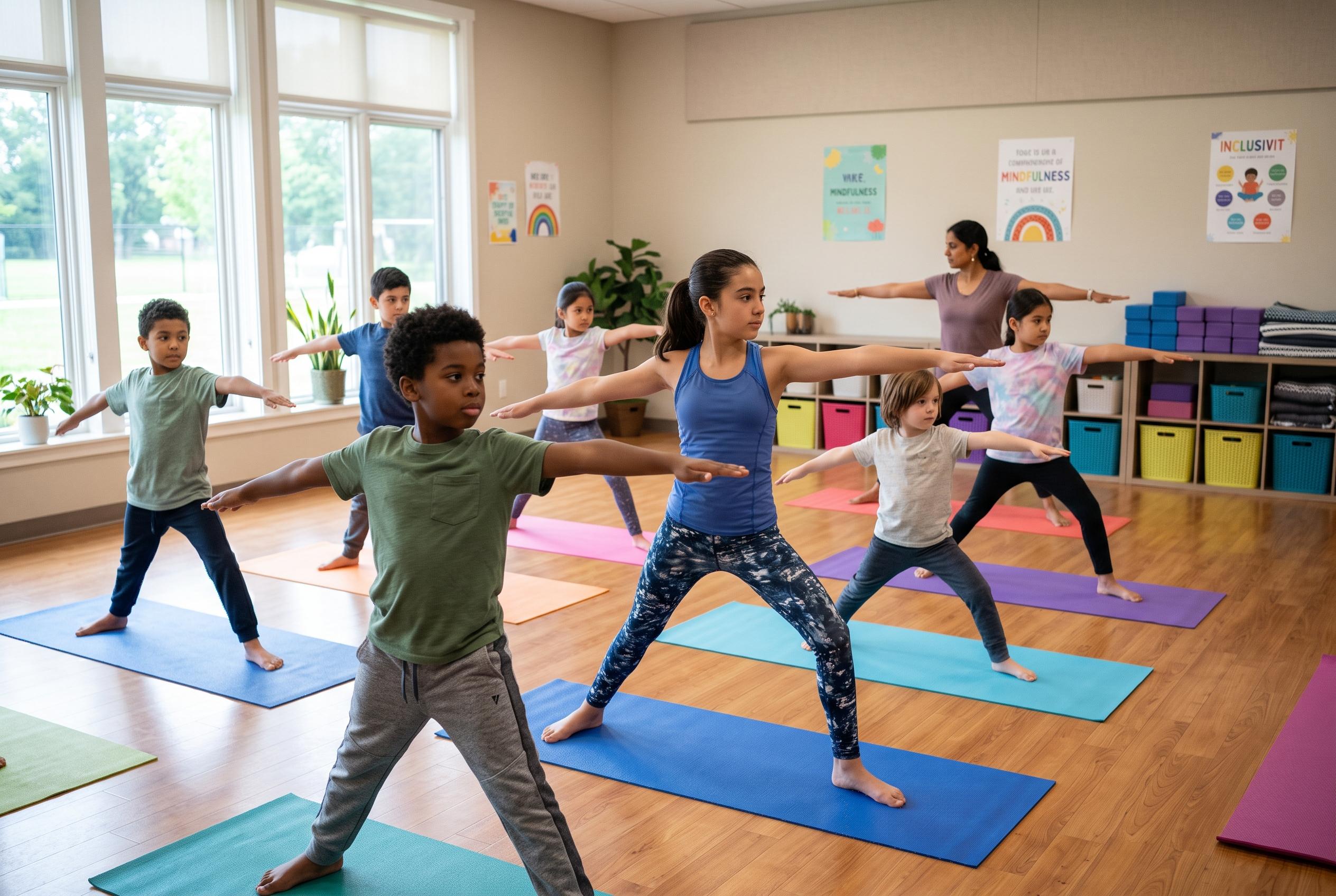

Early introduction to yoga can promote physical flexibility, emotional regulation, and attention skills in children and adolescents, offering a safe, adaptable practice that evolves with age and developmental needs.
Yoga can be a useful habit to introduce early in life because it supports more than flexibility alone. In childhood, when bodies, emotions and attention are all developing quickly, the practice can offer a calm, adaptable way to build movement skills, self-awareness and recovery from stress. According to the American Academy of Pediatrics, yoga is generally considered a safe and potentially helpful practice for children and adolescents when it is taught appropriately.
Unlike exercise that is built around speed or competition, yoga links movement with breathing, balance and stillness. That mix can make it feel playful for children while still helping them develop useful life skills. A child may be learning how to stretch or balance, but they are also learning how to pause, steady themselves and notice what their body is telling them.
The physical benefits can be broad. Yoga can support flexibility, mobility, strength, coordination and posture, especially for children who spend long hours sitting at school or in front of screens. The National Center for Complementary and Integrative Health says yoga may help with balance, tension relief and strength, while Cleveland Clinic notes that children’s classes have been linked with better stress control, attention and social connection.
Yoga may also help children manage feelings that they do not yet have words for. Breathing exercises, gentle poses and short relaxation routines can give them a concrete way to calm down when they are overwhelmed, frustrated or anxious. HealthyChildren.org says yoga can help children unplug from a fast-paced, tech-heavy world and learn to focus on the present moment. Cleveland Clinic also reports that school-based yoga programmes have been associated with reduced stress and stronger coping skills in younger pupils.
Attention and confidence can improve as well. Children practise listening, following sequences and returning to a task after wobbling or losing focus. That matters because yoga treats mistakes as part of learning rather than failure. Boys Town Pediatrics says the practice encourages children to focus on self-improvement and body care, not competition. That can be especially valuable for children who are shy, perfectionistic or easily discouraged.
The benefits can also extend into everyday routines. Short yoga breaks may help children reset after school, prepare for homework or settle before bed. The National Center for Complementary and Integrative Health says school-based yoga programmes have shown promise for adolescents, and it notes evidence that yoga can reduce anxiety in children and teenagers. For younger children, even a few minutes of simple movement and breathing can make the practice feel accessible and repeatable.
Age matters. Toddlers need play, story-based poses and very short sessions. Older children can follow simple sequences and begin learning breath control, focus and relaxation. Teenagers may use yoga for stress relief, strength, mobility and mental clarity. The main point is to keep the practice age-appropriate, non-judgmental and safe, rather than pushing children towards advanced poses or deep stretches.
That caution is important because yoga should support children, not pressure them. It is not a substitute for medical or mental health care, and it should never be used to silence normal feelings or turn calmness into another performance target. When taught well, though, yoga can become a lasting tool: a way for children to breathe through difficulty, recover from stress and build a kinder relationship with their own bodies.
Disclaimer: This content is for informational purposes only and is not intended to be a substitute for professional medical judgment, advice, diagnosis, or treatment.