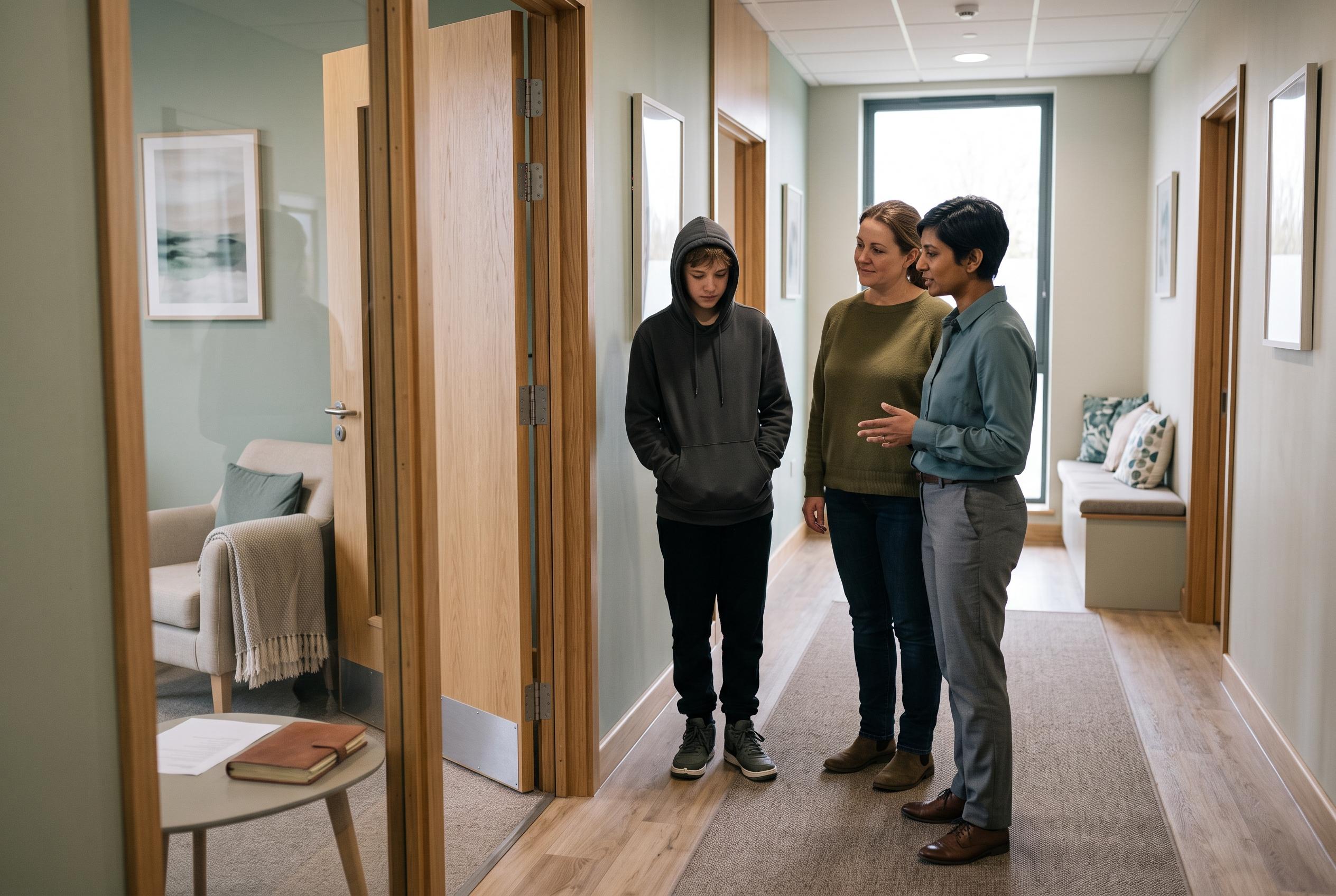

As youth mental health admissions soar, Norfolk’s new in-patient facility and community initiatives aim to transform support for vulnerable children and adolescents, highlighting the urgent need for integrated care.
Youth mental health is becoming impossible to ignore, and the loss of local support spaces is leaving too many children with nowhere to turn. The World Health Organisation says one in seven adolescents worldwide lives with a mental health condition, and the Royal College of Paediatrics and Child Health has reported a 36% rise in emergency department attendances in England by children and young people with mental health concerns since 2019. In 2025 alone, 75,491 children aged six to 17 were recorded at A&E with a mental health concern, up from 55,525 in 2019.
Those figures matter because distress in childhood rarely stays neatly contained. Anxiety, depression and behavioural disorders are among the leading causes of illness and disability in adolescence, according to the World Health Organisation, which also warns that untreated mental health conditions can affect physical health, relationships and opportunities well into adulthood. Suicide is the third leading cause of death among people aged 15 to 29, a stark reminder that early support is not optional.
The pressure on young people is also being compounded by wider anxieties at home and in society, including the cost of living and concerns about the climate. As Izzy Hollyhead argued, children often absorb those worries without having a safe outlet. For many, places such as youth clubs, dance classes and community centres are not a luxury but a vital source of friendship, structure and confidence. When those spaces disappear, the risk of loneliness, anti-social behaviour and a deeper crisis grows.
That is why developments in Norfolk are significant. A mental health care facility in Hellesdon opened in July, offering in-patient support for young people, along with a gym, a community hub and newly refurbished wards. The aim is to provide a safer setting for patients and reduce the need for placements far from home, which can be especially difficult for children and families already under strain.
YMCA Norfolk has also drawn recognition for its work, with its Professional Therapeutic Pathway winning the Global Community Wellbeing Impact Award at the YMCA World Council in Toronto earlier this year. The broader lesson is clear: mental health must be treated as part of health, education and social care, not as a separate concern to be dealt with only after a crisis has developed. Too many children are still coping in silence, and too many are reaching breaking point before help arrives.
Disclaimer: This content is for informational purposes only and is not intended to be a substitute for professional medical judgment, advice, diagnosis, or treatment.