

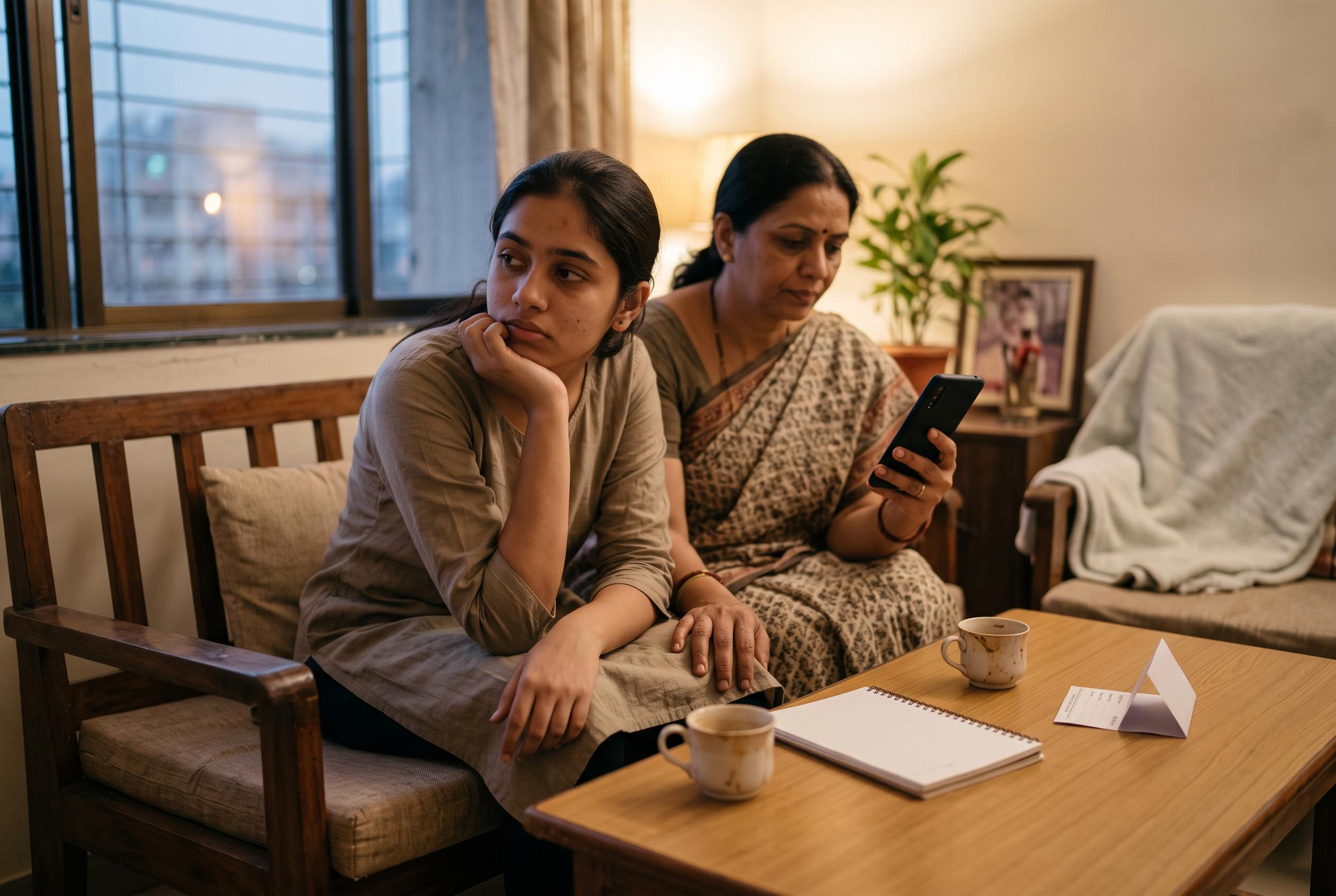

Despite efforts to improve access through telepsychiatry and task-sharing, India continues to face an overwhelming mental health treatment gap of over 80%, with young people particularly vulnerable.
Being told to “wait and see” can sound kind, but in mental healthcare it often delays help that is needed sooner. In India, that matters because the treatment gap for mental illness remains extraordinarily wide: recent reporting puts it at roughly 80 to 85 per cent, while research from the National Mental Health Survey has placed the overall gap at 84.5 per cent and above 85 per cent for depression and anxiety. That means most people who need care are still not getting it. Experts say the shortage is driven by stigma, low awareness and too few specialists, especially outside major cities.
The problem is not that distress always becomes illness. Some symptoms do ease with rest, support and time. But depression in particular often follows a pattern of relapse, and each untreated episode can make the next one more likely. A 2026 review on India’s mental health system said the country’s burden is being felt in both lives and economic losses, while the National Mental Health Survey found that about 10.6 per cent of adults were living with a mental disorder. The same review noted that India has only about 0.75 psychiatrists per 100,000 people, a figure that leaves large parts of the country badly served.
Anxiety follows a similar course. It may start as stress, but when it is ignored it can spread into sleep problems, poor concentration, physical tension and low mood. That is one reason clinicians warn against assuming a difficult period will simply disappear. The Indian Psychiatric Society has said that most people with psychiatric disorders do not receive timely or appropriate treatment, and separate reporting has pointed to treatment gaps of 70 to 90 per cent in several states. In practical terms, that means many families are trying to manage conditions that are already entrenched by the time help is finally sought.
Young people are among those most affected. Health reporting in India has repeatedly shown elevated levels of stress, anxiety and depressive symptoms among teenagers and college students, which is especially worrying because early problems often become long-term ones when they are not addressed. Mental health experts also say the cost is not only personal. Suicide remains a major cause of death among young Indians, and untreated illness can affect education, employment and family life for years.
There are signs of progress. Public programmes, telepsychiatry services and task-sharing with non-specialist workers are all being used to widen access, according to recent policy research. But experts say the system still loses too many people at each stage, from recognising symptoms to getting diagnosed and staying in care. The larger lesson is simple: if low mood, anxiety or stress is lingering, recurring or affecting daily life, waiting is not a plan. Assessment is.
Disclaimer: This content is for informational purposes only and is not intended to be a substitute for professional medical judgment, advice, diagnosis, or treatment.



