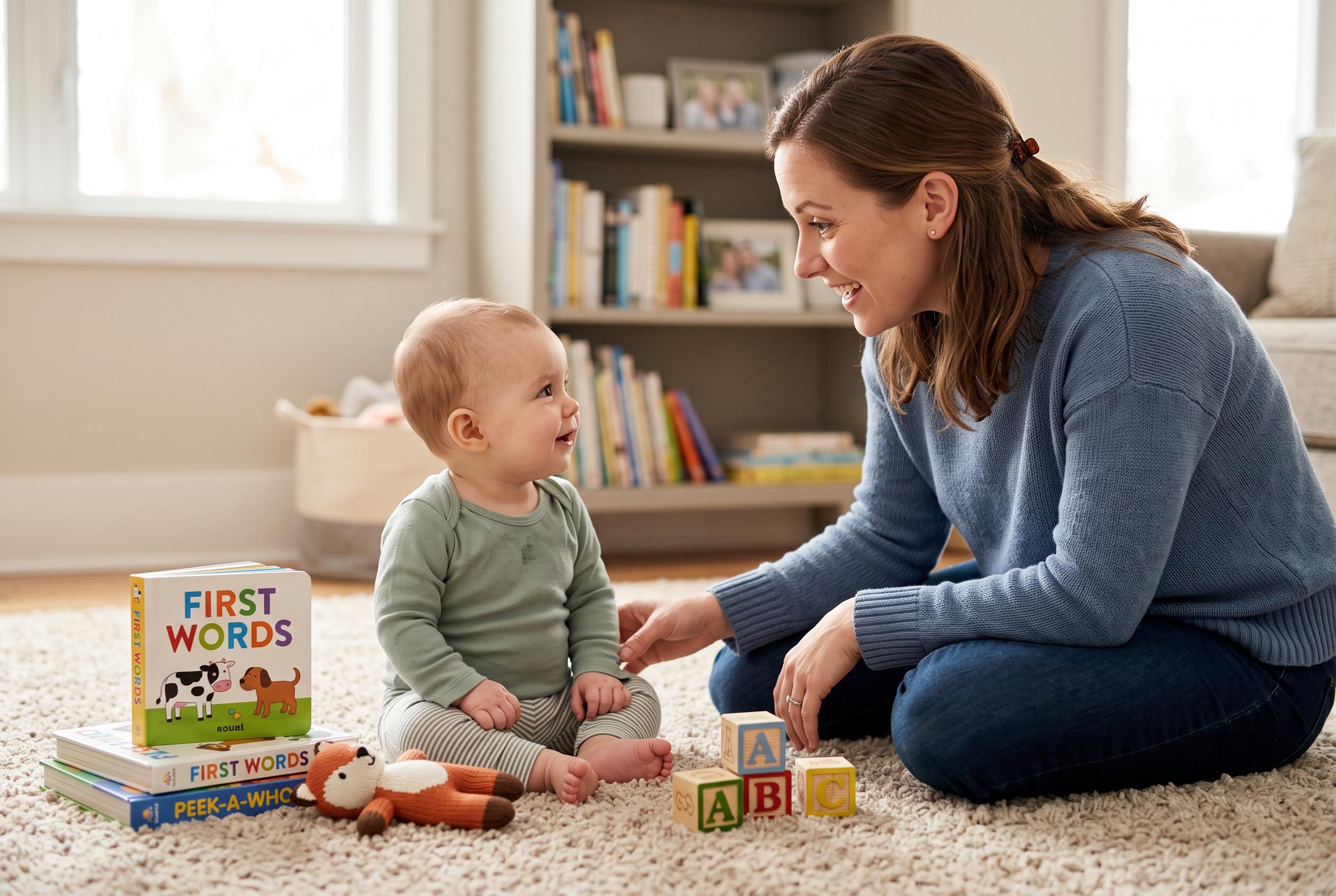

Research indicates that quick, mirrored responses from caregivers foster effective early communication, supporting language growth even among children with developmental delays.
Before babies can form words, they are already learning the rhythm of conversation. A coo, a babble or a squeal often draws an instant reply from a parent, and those quick exchanges may be doing far more than entertaining an infant. According to research co-authored by Martha Pelaez of Florida International University, those early back-and-forth sounds help train babies to take part in communication long before they speak.
The study, published in the Journal of Applied Behaviour Analysis, argues that language does not simply emerge in isolation. Instead, it grows out of repeated social exchanges, especially when adults mirror the sounds babies make. The researchers found that immediate imitation had the strongest effect, encouraging infants to vocalise more often and to produce sounds that were closer to speech. The benefits were seen not only among typically developing babies, but also among children with autism, Down syndrome and developmental delays.
Timing appears to be crucial. When caregivers respond at once, babies seem more alert, more engaged and more likely to answer again. A delayed reaction is much less effective. In the researchers’ view, that immediacy helps infants understand that their own vocalisations can affect the people around them, making those tiny exchanges the first building blocks of conversation. Research indexed by PubMed also found that parentese – the higher-pitched, more sing-song style many adults naturally use with babies – can prompt more speech-like vocalisations than standard adult speech.
That fits with guidance from the American Academy of Pediatrics, which notes that babies begin responding to familiar voices, turning towards sounds and experimenting with babbling in the earliest months of life. The Institute for Learning & Brain Sciences at the University of Washington says infant-directed speech, often called parentese, helps babies pay attention and supports later language learning. For families worried about speech delays, the message is encouraging: simple, responsive interaction can matter well before formal words arrive. As Pelaez put it in the study, “Talk with your baby, not just to your baby.” The broader lesson, researchers say, is that baby talk is not nonsense; it may be one of the earliest forms of teaching.
Disclaimer: This content is for informational purposes only and is not intended to be a substitute for professional medical judgment, advice, diagnosis, or treatment.