

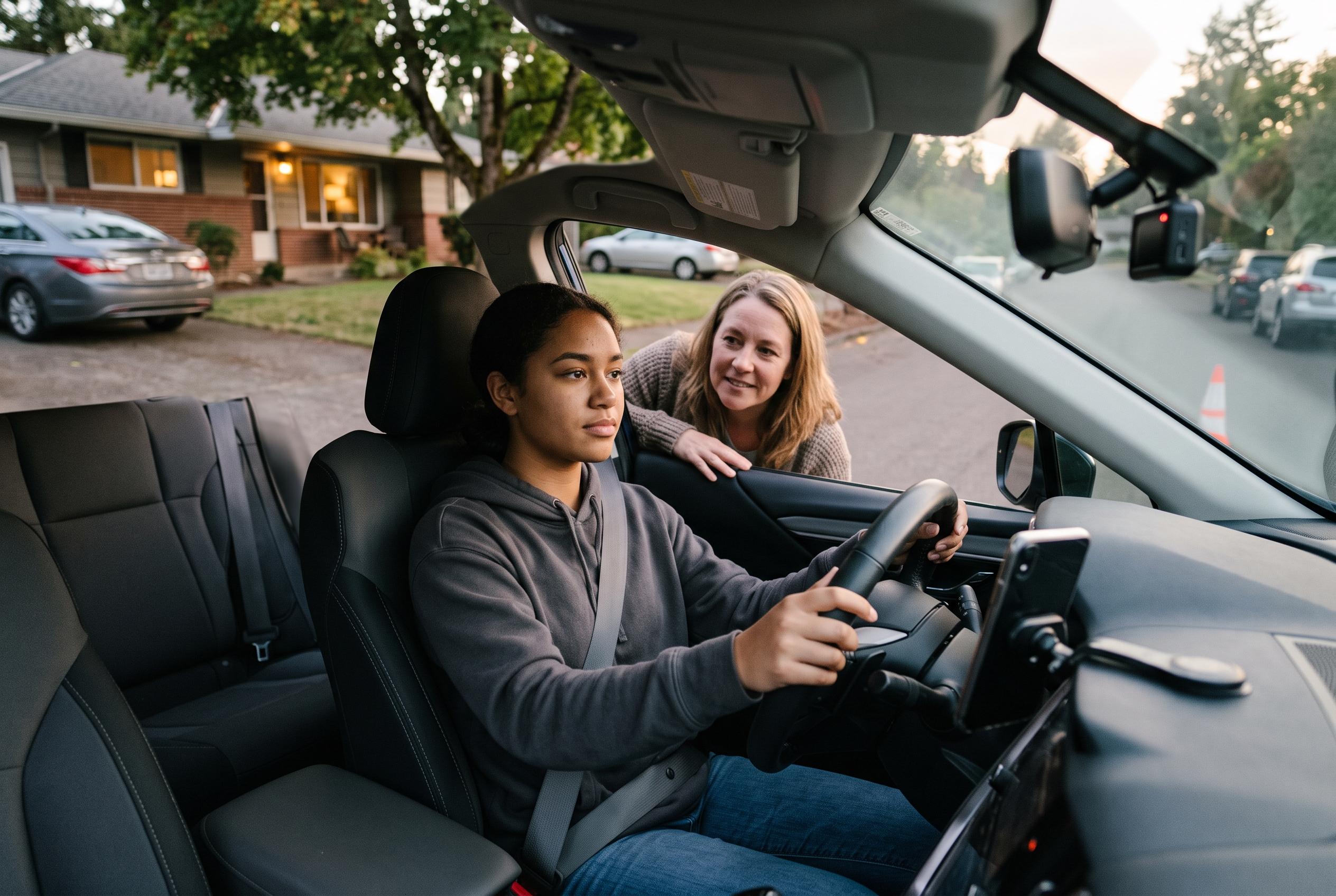

Effective parental guidance focusing on judgement, practice, and safety features can significantly reduce risks for teenage drivers, even after they pass their driving test.
Helping a teenager learn to drive is less about handing over the keys than teaching judgement, patience and restraint. Parents and guardians shape the process from the first practice session to the rules that govern passengers, phones, speed and night-time travel, and that influence can matter as much as the driving test itself. The National Highway Traffic Safety Administration says clear family rules and close parental involvement are central to keeping young drivers safe, while the National Safety Council advises parents to guide teens through the learning period in stages rather than rushing them into difficult situations.
The safest way to begin is usually with short, calm sessions in low-pressure settings. Empty car parks, quiet residential roads and familiar routes let learners focus on starting, stopping, steering and mirror checks without being overwhelmed. The National Safety Council recommends building skills gradually, and the same approach is echoed by the National Highway Traffic Safety Administration, which says parents should give instructions early, use steady language and avoid turning the lesson into a stream of criticism. Once basic control is improving, practice can expand to busier roads, different weather and, where local rules allow, driving after dark.
Parents often underestimate how much planning should go into a first car. A low purchase price can be misleading if insurance is steep, repairs are needed straight away or fuel economy is poor. Safety groups consistently point parents towards practical features such as electronic stability control, automatic emergency braking and a rear-view camera, alongside reliable crash-test information for the exact model year. The key is to consider the full cost of ownership, not just the sticker price, and to involve the teenager in that calculation so they understand that driving brings recurring expenses as well as freedom.
Insurance deserves the same level of care. The right cover depends on age, experience, vehicle choice, location and how often the car will be used, and insurers need accurate details about who will drive it most. The National Safety Council and government safety guides both stress the importance of comparing similar cover levels rather than chasing the lowest premium, because a cheaper policy may carry a far higher excess or narrower protection. Families should also check rules on overnight parking, commuting, modifications and annual mileage, and confirm what happens when learner status changes to full licensing.
The biggest risks for teen drivers are well known. The Centers for Disease Control and Prevention says motor vehicle crashes are the leading cause of death for U.S. teens aged 16 to 19, with inexperience, night-time driving and teenage passengers among the factors that raise crash risk. That is why family rules should be written down before solo driving begins. Seat belts, speed limits and phone-free driving should be non-negotiable, and parents should decide in advance how many passengers are allowed, which trips are permitted and when night driving will start. The CDC also recommends using graduated driver licensing laws, where they apply, because they phase in risk more slowly.
What parents model matters just as much as what they say. Teen drivers notice whether adults buckle up, check their speed and leave the phone alone. They also notice whether a parent treats mistakes as a chance to learn or as a reason to panic. A calm response makes it more likely that a young driver will call for help after a scrape, a missed turn or a minor collision, rather than trying to hide it. That conversation should include where insurance details are kept, how to contact roadside assistance and what information to gather at the scene.
Driving does not stop being a learning process once the test is passed. The CDC and other safety groups emphasise that the most dangerous habits often emerge after a teenager gains independence, particularly when confidence grows faster than judgement. Regular check-ins during the first year can help spot problems early, whether they involve late-night trips, distracted driving or overconfidence on unfamiliar roads. Parents can also use this stage to teach basic maintenance, such as checking tyre pressure, lights and fluid levels, so the teenager understands that safe driving depends on caring for the vehicle as well as operating it.
Disclaimer: This content is for informational purposes only and is not intended to be a substitute for professional medical judgment, advice, diagnosis, or treatment.



