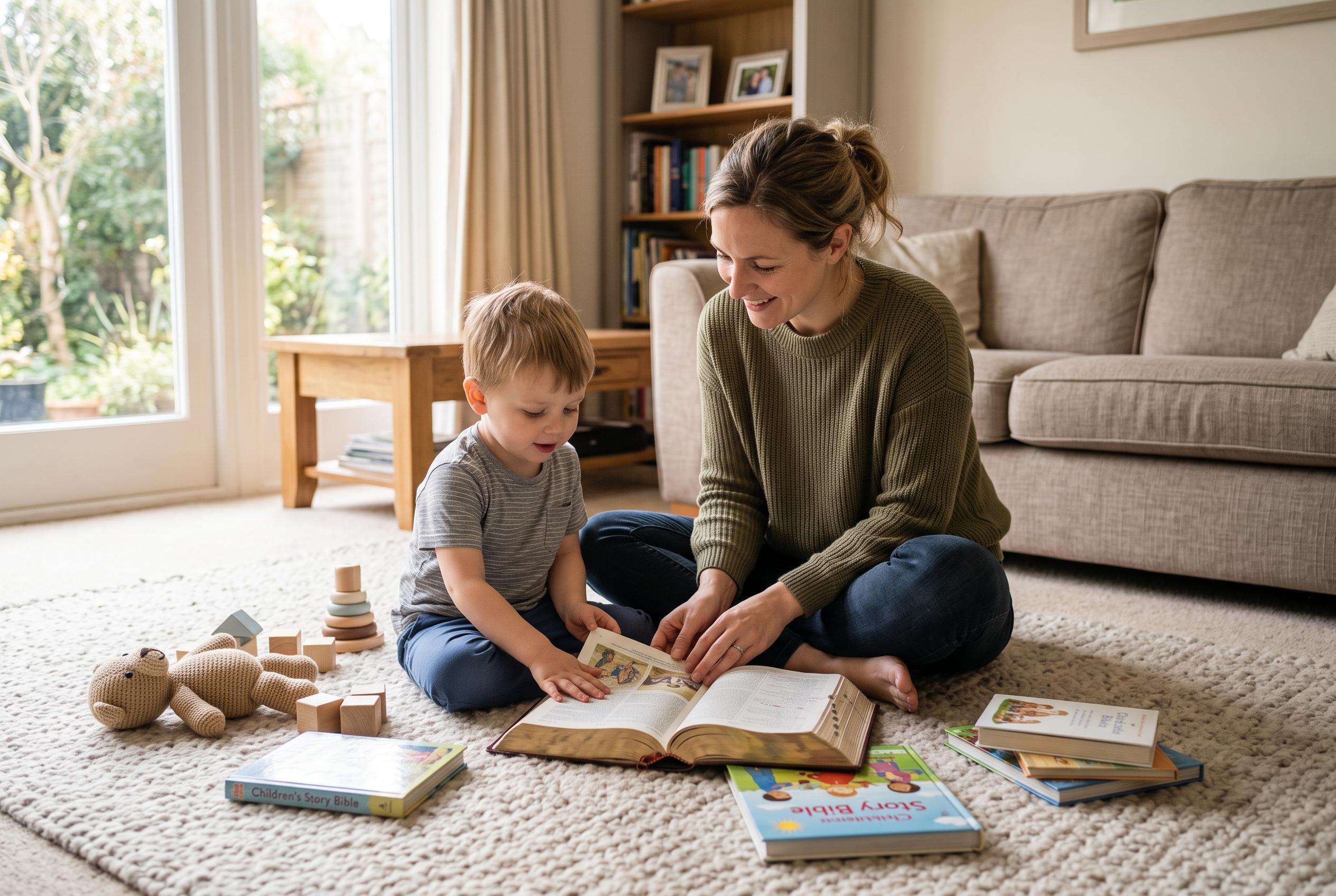

As anxiety among young people rises, Christian parents are encouraged to build resilience through faith, care, and consistency, providing children with a foundation of trust and calm in an unsettled world.
Parents trying to steady anxious children in an unsettled world are confronting a problem that is both deeply personal and increasingly common. The Adventist Review argues that constant exposure to violence, online cruelty, school pressure and relentless news can leave children feeling under siege, and research backs up the scale of the challenge: studies have found that anxiety disorders affect a substantial share of young people before adulthood. In that sense, the frightened child at the dinner table may be dealing with far more than ordinary worry. Yet the central message of the article is that Christian parents are not powerless, and that Scripture, care and consistency can still shape a calmer, more resilient home. The Adventist Review points to Paul’s words in 2 Timothy 1:7 as a foundation for that approach.
Psychologists draw a useful line between healthy fear and the more persistent dread of anxiety, and recent literature on child resilience helps explain why that distinction matters. A review in the National Library of Medicine says resilience is closely linked to mental well-being in children and adolescents, while another analysis found that school-based programmes can meaningfully strengthen resilience in young people. These findings support the article’s argument that children need more than reassurance in the moment; they need habits and relationships that help them recover when life is difficult. Researchers also continue to explore the brain pathways involved in resilience, though a recent review in ScienceDirect notes that the evidence remains uneven and the field is still developing.
The article also makes a point that is often overlooked in discussions about faith and mental health: resilience grows in relationship. Drawing on the work of attachment theorist John Bowlby, it argues that children who experience steady, responsive care from at least one adult are better able to face uncertainty without feeling abandoned. That insight aligns with the broader research on protective factors in childhood and adolescence, which suggests that support, belonging and a sense of purpose all matter. For Christian parents, the practical implication is simple but demanding: being calm, present and emotionally available can become a lived lesson in trust.
Rather than promising a quick fix, the article urges parents to think in terms of formation. It says children learn resilience when they are not rescued from every hard moment, when their feelings are acknowledged without panic and when prayer, gratitude and Scripture are woven into ordinary family life. That daily pattern, the article suggests, helps children see that faith is not merely a set of words but a way of meeting fear. The goal is not to deny the reality of anxiety but to give children a framework for meeting it without being ruled by it.
In the end, the article offers a pastoral answer to a modern problem: children can learn to live with courage, but they need adults who will model that courage first. The world may remain noisy and unstable, but a home shaped by steady love, clear purpose and trust in God can still become a place of peace. For parents wondering where to begin, the message is both modest and hopeful: stay close, stay prayerful and keep pointing children towards the God who, the article says, gives power, love and a sound mind.
Disclaimer: This content is for informational purposes only and is not intended to be a substitute for professional medical judgment, advice, diagnosis, or treatment.