

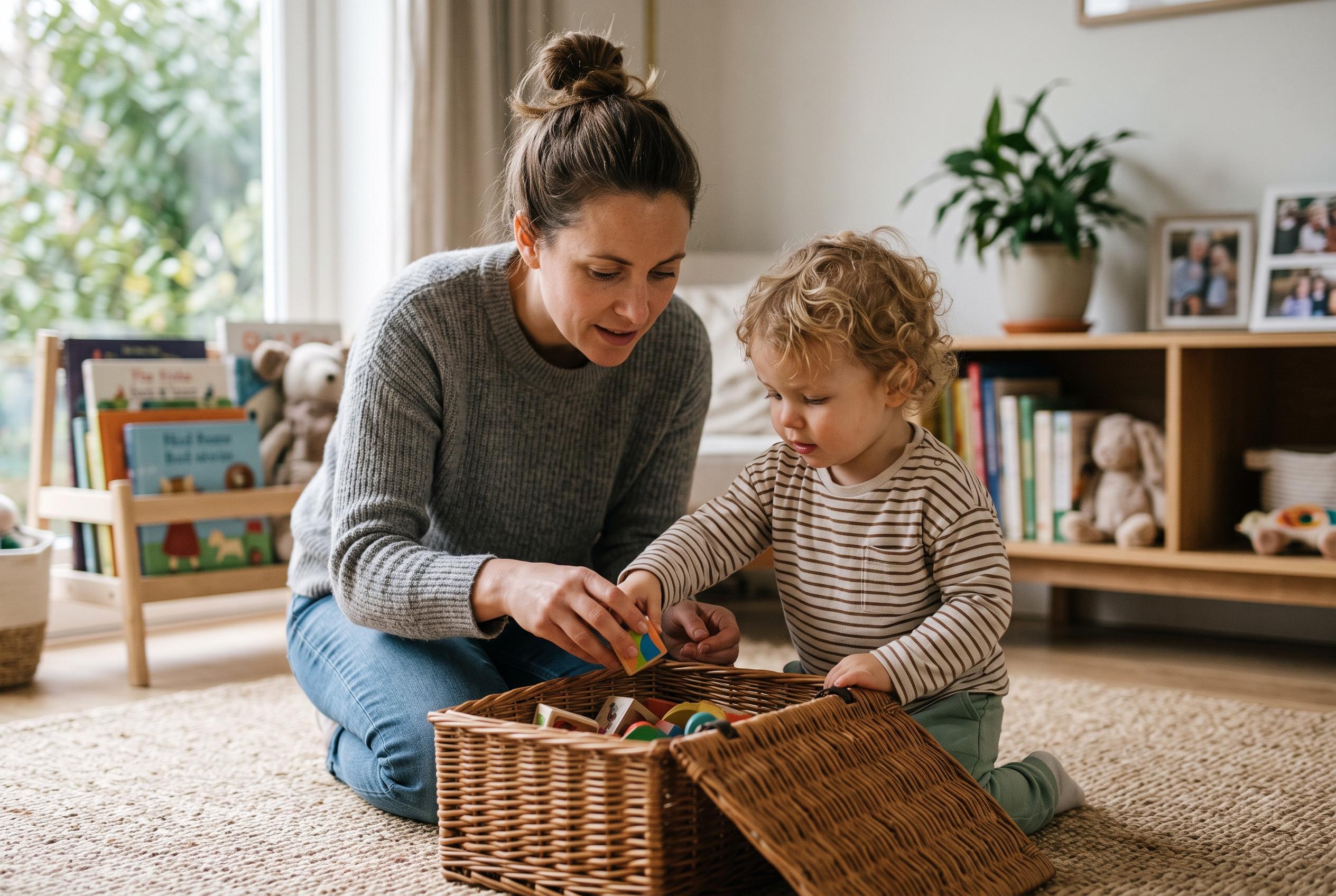

Simple tasks like tidying up and asking for help teach toddlers responsibility, patience, and social skills, laying the foundation for lifelong care and self-control.
Toddlers are often at their most exasperating when they insist on doing things for themselves. Toothpaste ends up on the sink, a shoe is on the wrong foot and the morning stretches out far longer than it should. Yet, as many parents know, those awkward little efforts are often where the real learning begins. Harvard Health has noted that clear requests, a little patience and praise can help children learn to put things away, while occupational therapists say that accessible storage, picture cues and calm routines can make tidying feel achievable rather than overwhelming.
That matters because the point is not merely to produce a tidier home. Small tasks such as putting a toy back in a basket, waiting while someone else finishes speaking or asking for help are early lessons in responsibility, patience and self-control. According to OberlinKids, even cleaning up can support brain development and self-regulation, helping children practise remembering where things belong, starting tasks and managing impulses. In other words, the work looks tiny, but the habits underneath it are not.
The same applies to asking for help. Young children often want independence, but they do not yet have the skills to do everything alone. Guides aimed at parents suggest teaching simple, polite phrases and a calm sequence for getting help, so a child learns that needing support is not a failure. That message can be especially powerful for toddlers, who are only beginning to understand the difference between struggling and giving up.
Routines also do a great deal of quiet work. A predictable order to the day can make transitions less stressful and help children understand what comes next. ASDA’s toddler guidance recommends keeping cleanup fun and building regular habits around household tasks, while occupational therapists point out that a familiar cue before tidying can reduce resistance. For a toddler, consistency is not boring; it is reassuring.
The social lessons are just as important. Waiting for a turn, hearing “please” and “thank you”, noticing when someone else is upset and learning how to repair after a mistake all help a child begin to understand that other people matter too. The Montessori approach described by IPC Education breaks asking for help into clear steps such as approach, wait, ask and thank, which reflects a broader truth: courtesy is not abstract for toddlers, but something they practise in repeated, ordinary exchanges.
That is why parents should be wary of turning these lessons into a scoreboard. Children do not master kindness, responsibility or independence in a straight line. They need repetition, reminders and a fair amount of grace. A toddler may share one day and snatch the next; say thank you in the morning and forget by teatime. The lesson is still taking root.
What matters most is not perfection, but practice. A child who is given a chance to try, to wait, to clean up, to name a feeling or to make amends is being shown how to live with other people. Those lessons may begin with toys on the floor or a half-fastened coat, but they point towards something much larger: a child learning how to move through the world with care.
Disclaimer: This content is for informational purposes only and is not intended to be a substitute for professional medical judgment, advice, diagnosis, or treatment.



