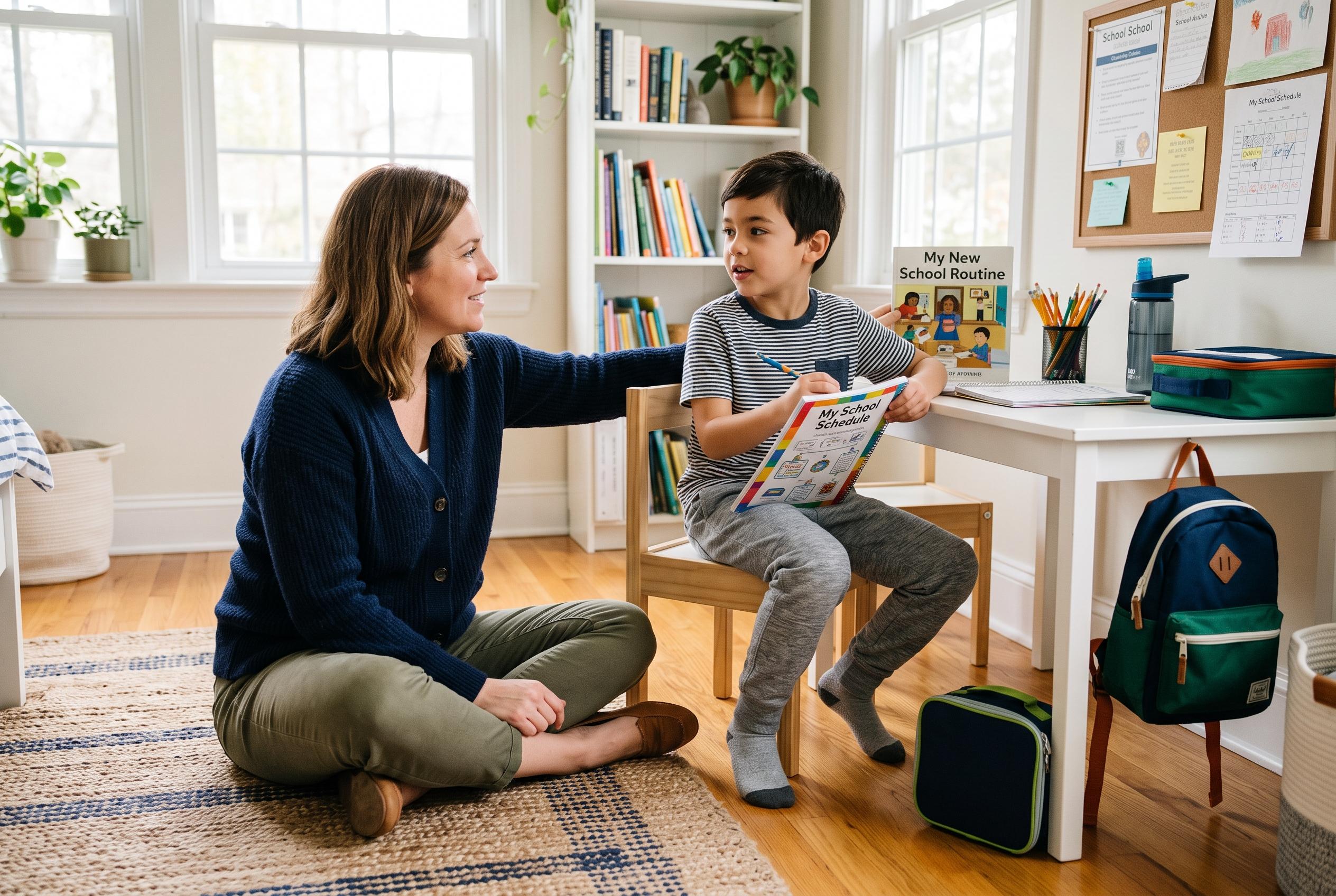

As children face the transition from summer freedom to the school routine, experts suggest reassurance, predictability, and open communication can help ease anxiety and support a smooth start to the new academic year.
As the new school year approaches, many children begin to feel the strain of changing from summer freedom to a tighter routine. Emily Mudd, a psychologist at Cleveland Clinic Children’s, said that anxiety at this time of year is common and should not always be seen as a problem to remove entirely. Instead, parents can help children learn that they can feel worried and still manage what comes next.
Experts say that reassurance works best when it is paired with predictability. Johns Hopkins Medicine recommends easing children back into school habits by adjusting sleep times before term starts, while Cleveland Clinic advises visiting the school in advance, meeting the teacher if possible and talking through what the day will look like. For younger children, especially those starting nursery, reception or the early years of primary school, practising the school run and separation from parents can make the transition feel less daunting.
Parents can also reduce anxiety by focusing attention on what the child is looking forward to, such as seeing friends again, joining favourite activities or getting to know a new classroom. Children’s Health says open-ended questions can help parents understand whether the pressure is social, academic or linked to safety concerns, and suggests steady routines, calm behaviour from adults and relaxation techniques to help children settle. Harvard Health likewise notes that sleep, routine and direct conversations about worries can all make a difference.
While first-day nerves are normal, repeated attempts to avoid school can be a sign that something deeper is going on. Cleveland Clinic has warned that staying home because of anxiety can reinforce the fear, and says parents should look out for patterns such as frequent complaints of illness, crying before school or regular visits to the school nurse. If a child keeps resisting school or the anxiety starts to disrupt daily life, experts say it is time to speak with a teacher, school counsellor or mental health professional.
Disclaimer: This content is for informational purposes only and is not intended to be a substitute for professional medical judgment, advice, diagnosis, or treatment.