

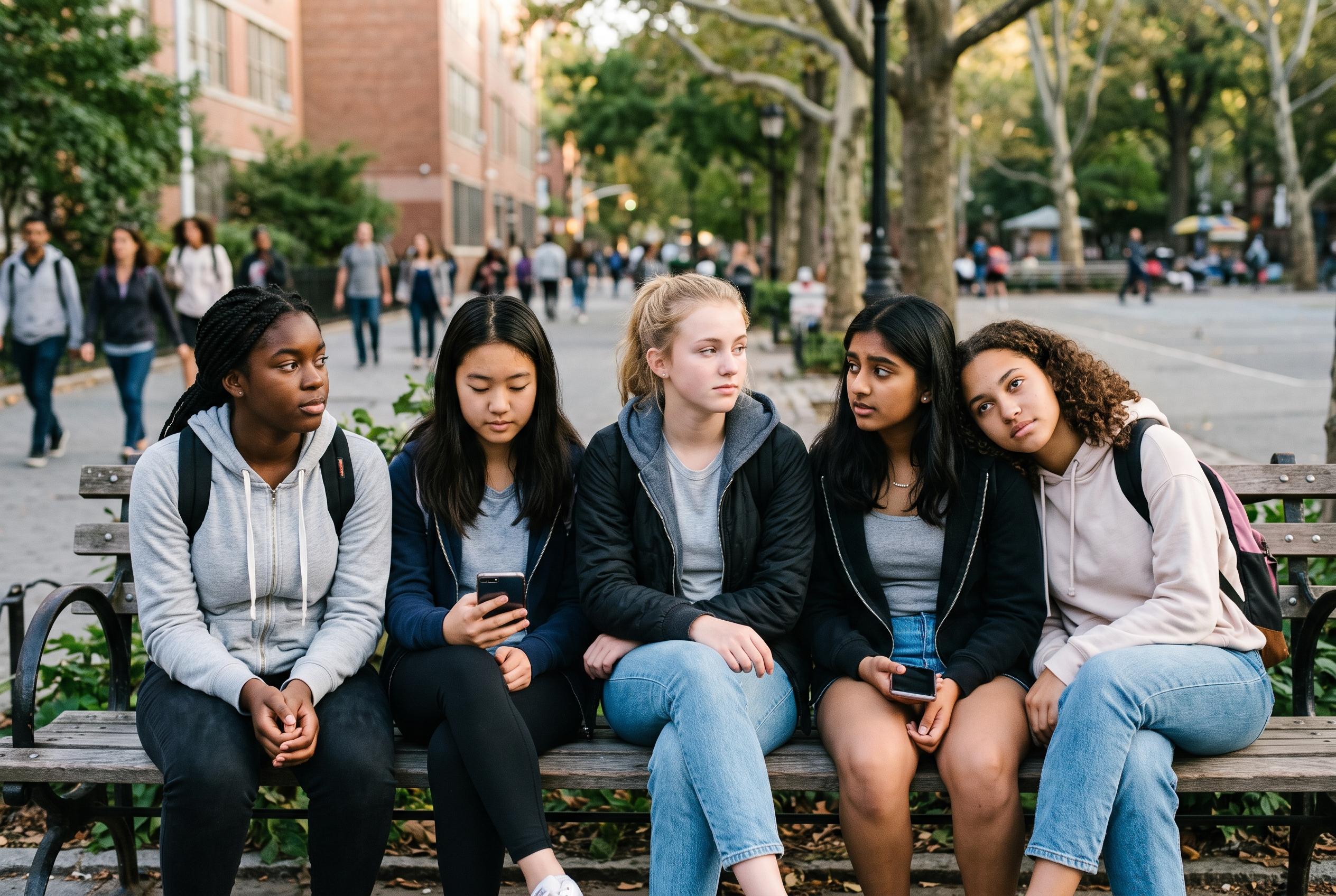

A survey of more than 1,000 US teenagers finds strong support for gender equality alongside poorer mental health, online sexual harassment and declining confidence in public leadership among girls.
Plan International USA says a new survey of US teenagers points to a worrying gap between young people’s strong support for gender equality and the pressures many face online and in daily life.
The organisation, working with the research firm PerryUndem, surveyed more than 1,000 people aged 10 to 19 and said older girls reported worse mental health than older boys, while a sizeable share of girls using social media said they had experienced sexual harassment online. The findings add to a broader body of research suggesting that online harms, from harassment to sleep disruption, are now a routine part of many teenagers’ digital lives. Stanford researchers recently described teen exposure to online harassment as widespread, while a Pew Research Center study found that experiences on major platforms often vary by gender and can affect well-being differently across groups.
The survey suggests that teenagers place a high value on being themselves and on feeling at peace, while traditional markers of adulthood such as marriage and parenthood rank far lower. But the report also says many young people are self-censoring online, with girls more likely than boys to avoid sharing opinions because they fear backlash. Pew has similarly found that teens still use social media largely for connection and entertainment, but that cyberbullying and heavy screen use can make those spaces feel less welcoming.
Plan International USA said the survey also points to a drop in civic ambition. The share of respondents who said they had considered running for elected office fell compared with the group it surveyed in 2018. The organisation argues that concern matters for the future of democratic participation, particularly if girls continue to feel discouraged from speaking publicly or taking on leadership roles.
The report links participation in team sports with stronger leadership confidence and better mental health among girls, but says involvement falls as they get older. That finding echoes wider public-health research showing that adolescent girls are facing significant mental health strain, with the Centres for Disease Control and Prevention reporting persistent sadness and hopelessness among a large share of teens. Separate studies published in medical journals have also highlighted the prevalence of image-based sexual abuse and coercive requests among young people, reinforcing concern about the risks faced by minors online.
Disclaimer: This content is for informational purposes only and is not intended to be a substitute for professional medical judgment, advice, diagnosis, or treatment.



