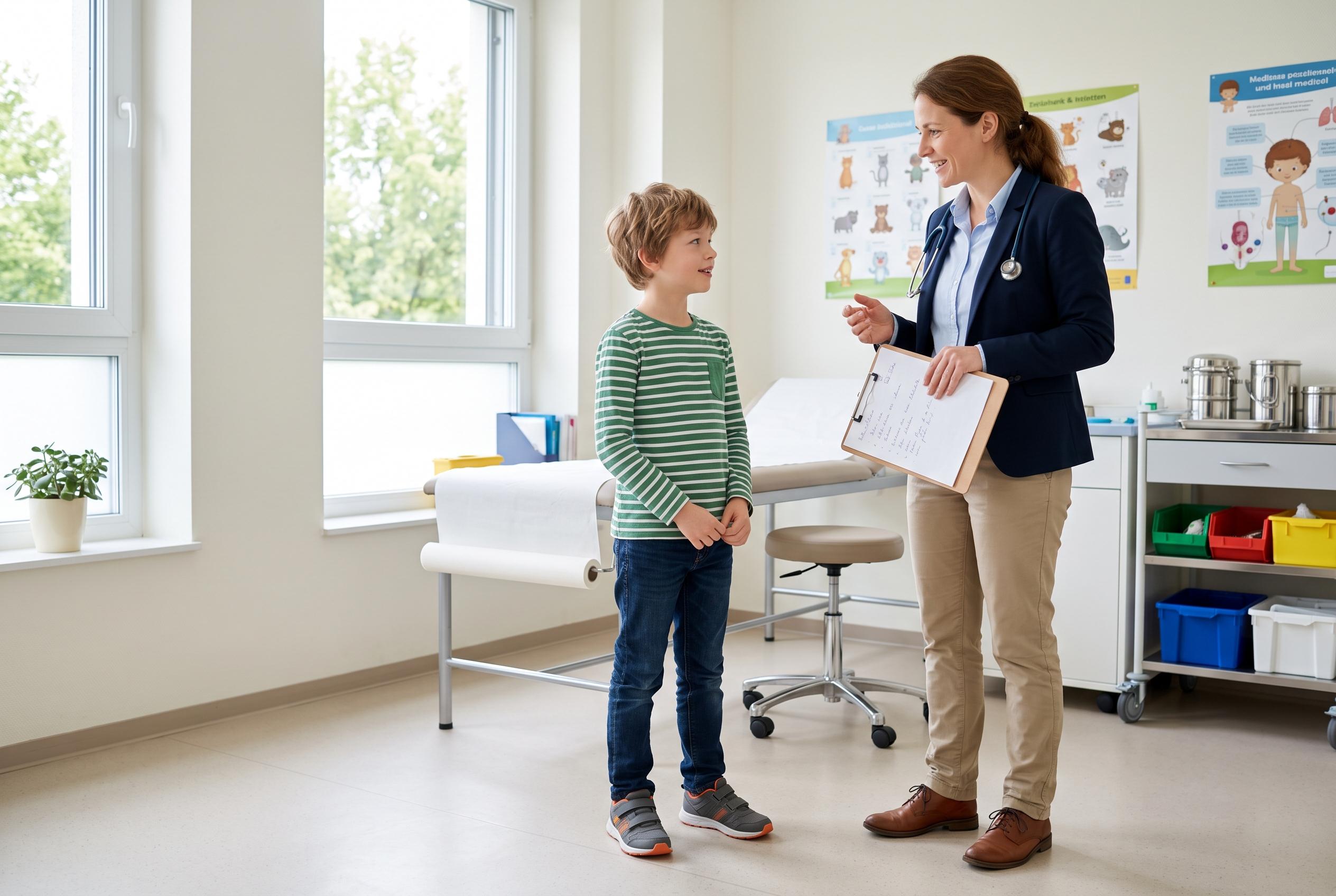

German health authorities have approved a new U10 examination for nine- and ten-year-olds, aiming to identify developmental and psychological issues early and improve vaccination coverage, filling a significant gap in the national screening programme.
German health authorities have approved a new preventive check-up for children aged nine and ten, in a move aimed at spotting developmental, physical and mental health concerns before the teenage years. The Gemeinsamer Bundesausschuss, or G-BA, which decides which treatments are covered by statutory health insurance, says the new U10 examination is intended to fill the long gap between the existing U9 check-up at around age five and the later youth assessment, J1.
According to the G-BA, the visit will focus on issues such as excess weight, physical activity, screen time and signs of psychological difficulty. Bernhard van Treeck, a G-BA member, said research pointed to “special risks” in this age group. The board also wants doctors to use the appointment to give vaccination advice, especially to improve uptake of the HPV jab, which protects against human papillomaviruses.
The change matters because Germany’s current statutory paediatric check-up system stops at U9 before resuming with adolescent examinations later on. The Federal Institute for Public Health says U1 to U3 cover the first days and weeks of life, U4 to U6 run to the end of the first year, and U7 to U9 continue until shortly after a child’s fifth birthday. In practice, that leaves a notable gap in routine publicly funded screening during the primary-school years.
The new check-up is not expected to reach doctors’ surgeries immediately. The G-BA decision must still go to the federal health ministry, which can raise objections before publication in the federal gazette and entry into force. Only after that will officials decide what doctors are paid for carrying out the examination, a process that could take another six months.
The proposal also reflects a broader debate over whether school-age children need more structured monitoring. In parts of Germany, some insurers already cover a voluntary U10 as an extra benefit for children around seven or eight, aimed at detecting learning, concentration and motor problems. But the newly approved version would become part of statutory health insurance, making it a formal entitlement for nine- and ten-year-olds rather than an optional add-on.
Disclaimer: This content is for informational purposes only and is not intended to be a substitute for professional medical judgment, advice, diagnosis, or treatment.