

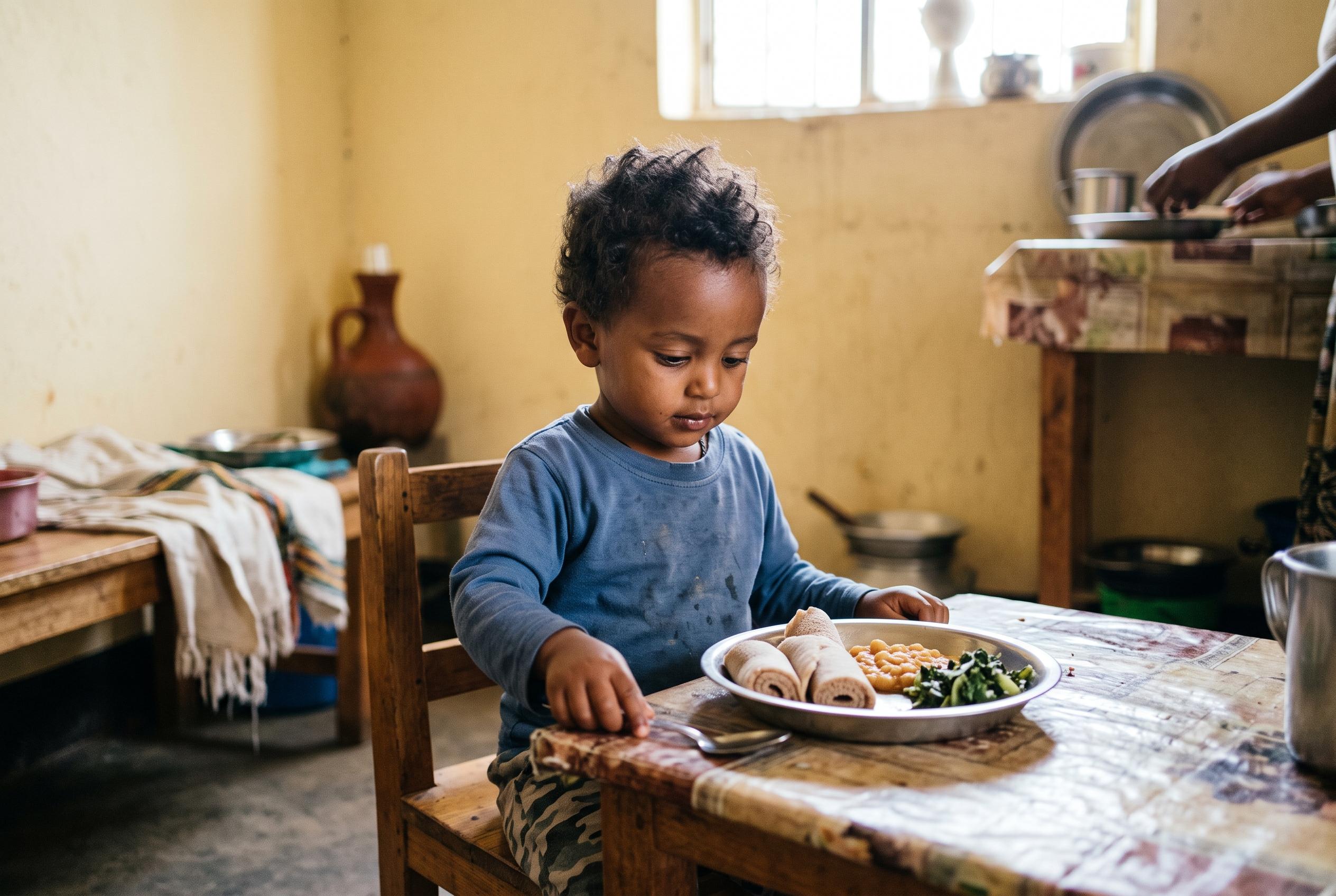

A meta-analysis of 13 studies found that only about 27% of Ethiopian children aged six to 23 months eat foods from enough food groups to support healthy growth.
A new meta-analysis suggests that fewer than three in 10 Ethiopian children aged 6 to 23 months are eating a diet varied enough to support healthy growth, a shortfall that public health experts say leaves many toddlers vulnerable during one of the most important stages of development. Published in Food Science & Nutrition, the review pooled evidence from 13 community-based studies and found that only about 27% of children met the World Health Organisation’s minimum dietary diversity standard, well below the global target of 40% coverage by 2030, according to the authors.
The World Health Organisation says minimum dietary diversity is reached when a child consumes foods from at least five of eight food groups over the previous day, including breast milk, grains, legumes, dairy, flesh foods, eggs and fruits and vegetables rich in vitamin A. The indicator is used alongside minimum meal frequency to assess whether young children are getting what they need during the transition from breast milk to family foods. WHO says inadequate diversity at this age raises the risk of malnutrition, micronutrient deficiencies and poor physical and cognitive development.
The Ethiopian review, led by researchers at Jimma University, followed recognised systematic-review standards and was based on 7,194 children across surveys published between 2018 and 2026. The authors report wide differences between regions, with the highest prevalence of adequate dietary diversity recorded in the Awi Zone of Amhara and the lowest in Aleta Wondo Town in the Southern Nations, Nationalities and Peoples’ Region. They say the spread likely reflects local food availability, family income, farming patterns, market access and feeding customs.
The data also point to a consistent pattern of social and health-related factors linked to better child diets. Older children were more likely to meet the standard, as were children whose mothers had more education. Antenatal and postnatal care attendance, maternal knowledge of food diversification, household wealth and, in some studies, fathers’ occupation were also associated with improved dietary diversity. The authors say these findings suggest that child feeding is shaped not only by household choice, but also by education, healthcare access and broader economic conditions.
The review’s authors argue that reversing the trend will require more than nutrition advice alone. They call for a broader response that includes better counselling on complementary feeding, stronger nutrition education, support for household food production, social protection, improved irrigation and better market access. The stakes are high: poor feeding practices in the first two years of life are closely linked to stunting and other forms of malnutrition, and the study’s authors say progress on child diets will be central to Ethiopia’s efforts to improve child health and meet global nutrition goals.
Disclaimer: This content is for informational purposes only and is not intended to be a substitute for professional medical judgment, advice, diagnosis, or treatment.



