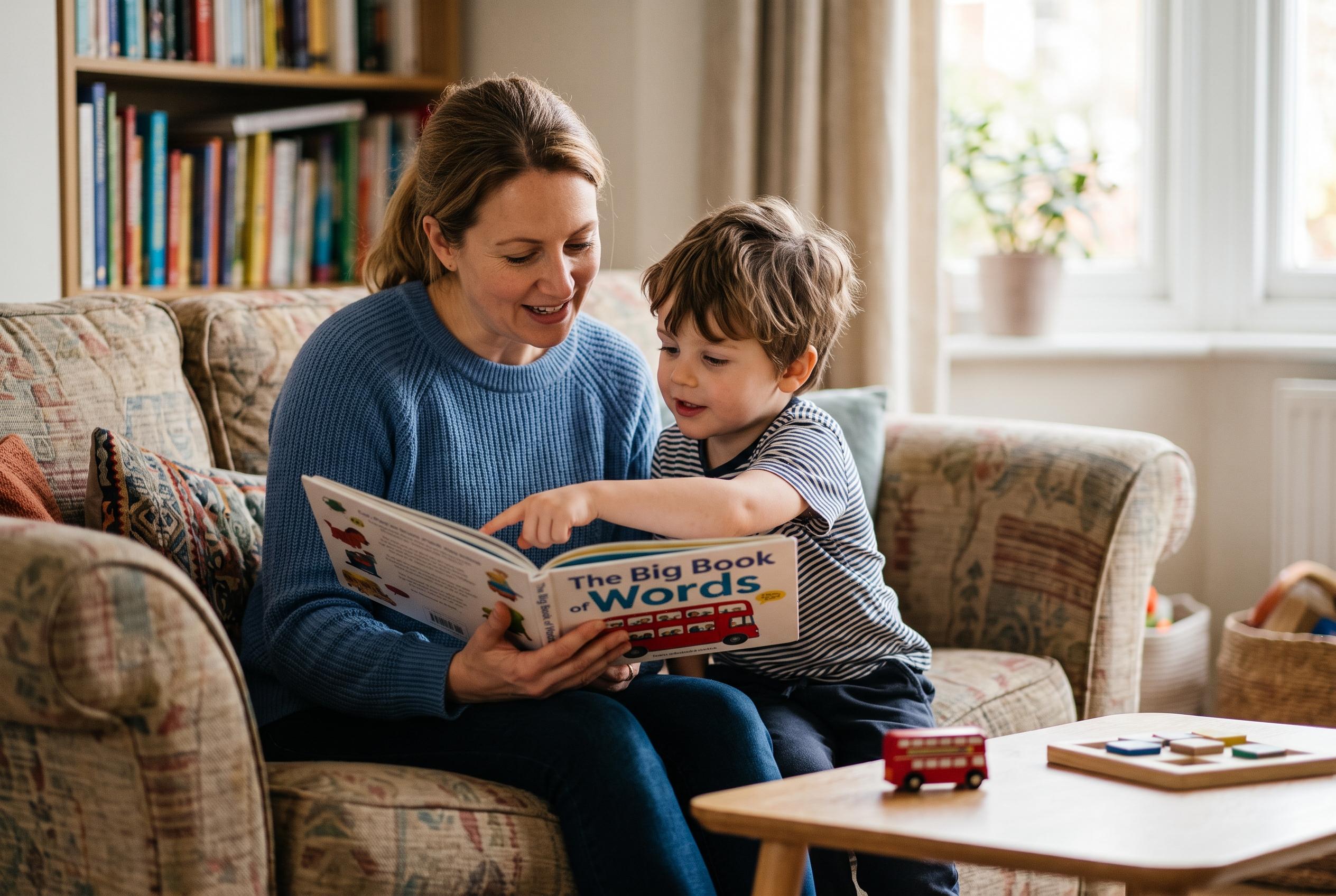

Simple daily activities and intentional conversation strategies, from reading to asking open-ended questions, can significantly boost children’s communication skills and confidence without formal lessons.
Helping children become confident communicators usually starts with ordinary family routines, not formal lessons. Parents can build language skills through the small exchanges that happen during meals, car journeys, bath time and bedtime, when children are often most relaxed and most willing to talk. The key is consistency: repeated, low-pressure conversations give children more chances to listen, answer and experiment with words.
Reading together is one of the simplest ways to encourage progress, but it works best as a shared conversation rather than a one-way performance. Asking a child to predict what happens next, describe pictures, or retell part of a familiar story helps build vocabulary and confidence. Child health guidance from HealthyChildren.org also notes that parents can strengthen communication by modelling clear speech, listening closely and helping children notice non-verbal cues such as facial expressions and body language.
Everyday narration can be just as useful. Rocky Mountain Human Services says that talking through routine tasks such as cooking, dressing or tidying up gives children repeated exposure to new words in a context they understand. Scholastic has made a similar point, suggesting that ordinary activities such as baking, looking at photographs and discussing family memories can turn everyday life into language practice without feeling formal or forced.
The way adults ask questions matters too. Open-ended prompts such as “What was your favourite part?” or “What do you think happens next?” usually invite more detail than questions that can be answered with a simple yes or no. India Tutor and Arizona Orthopaedic Physical Therapy both recommend this kind of back-and-forth exchange, alongside regular conversation, storytelling and pretend play, as practical ways to strengthen communication and social skills at home.
Shared screen time can also become a language-building moment when adults stay involved. Instead of letting a child watch passively, parents can ask what a character is feeling, what just happened, or what might happen next. That kind of guided conversation, supported by advice from Cortica, keeps children engaged while encouraging them to explain their thinking in their own words.
Equally important is patience. Children often need a few extra seconds to gather their thoughts, and rushing to fill the silence can make them less likely to try. Giving them time to finish a sentence shows that their ideas are worth hearing. While many children develop speech and language at different speeds, parents should speak with a paediatrician if a child is frequently hard to understand, struggles with simple instructions or becomes unusually frustrated when trying to communicate.
Disclaimer: This content is for informational purposes only and is not intended to be a substitute for professional medical judgment, advice, diagnosis, or treatment.