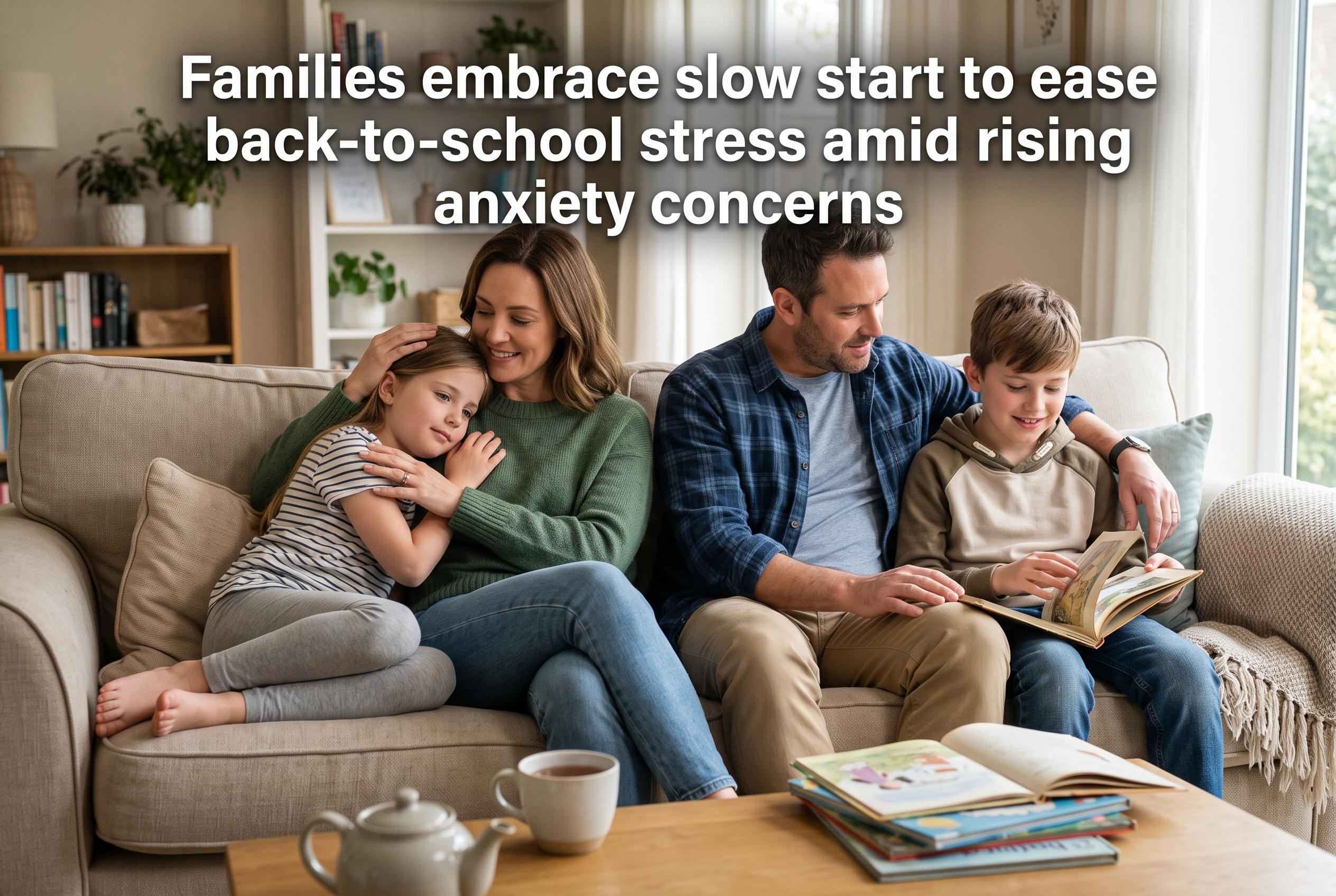

As families navigate the busy start of the school year, many are adopting a lower-key approach, prioritising routines, open conversations, and simple comforts to reduce anxiety and support wellbeing.
For many families, the start of the school year brings a familiar kind of strain: forms, messages, supply lists, new schedules and the pressure to make everything run smoothly from day one. Parents are often trying to manage the return of early alarms and tighter routines at the same time as they are spending more on clothes, sports kit and classroom supplies.
One mother says she has learned to protect the first few weeks of term by stripping back everything that is not essential. Her approach is simple: no extra social plans, no big outings and no attempt to recreate a full calendar before the family has settled into the new rhythm. The idea is to keep the household steady while everyone adjusts to new teachers, bus routes, coaches and academic demands.
That approach fits with wider advice from health and wellbeing specialists, who often recommend easing children back into routines gradually rather than trying to change everything at once. Guidance from groups including Rosecrance, SingleCare and Talkspace stresses predictable sleep, open conversation and preparation before the first day back as ways to reduce anxiety for both children and parents.
Support resources also point to the value of realistic expectations. Instead of treating every task as urgent, families are encouraged to focus on the basics: enough rest, regular meals, calm routines and time to talk about worries. Healthline and other wellbeing providers note that parents and teachers can help most by recognising stress early and giving children practical tools to manage it.
For this family, that means keeping the first month deliberately low-key. Simple comforts such as evening swims, quiet weekends, books and time outdoors are part of the plan until the new school routine feels normal again. The message is that the return to school does not have to be a rush towards more; for some families, a slower start is the healthiest way through.
Disclaimer: This content is for informational purposes only and is not intended to be a substitute for professional medical judgment, advice, diagnosis, or treatment.