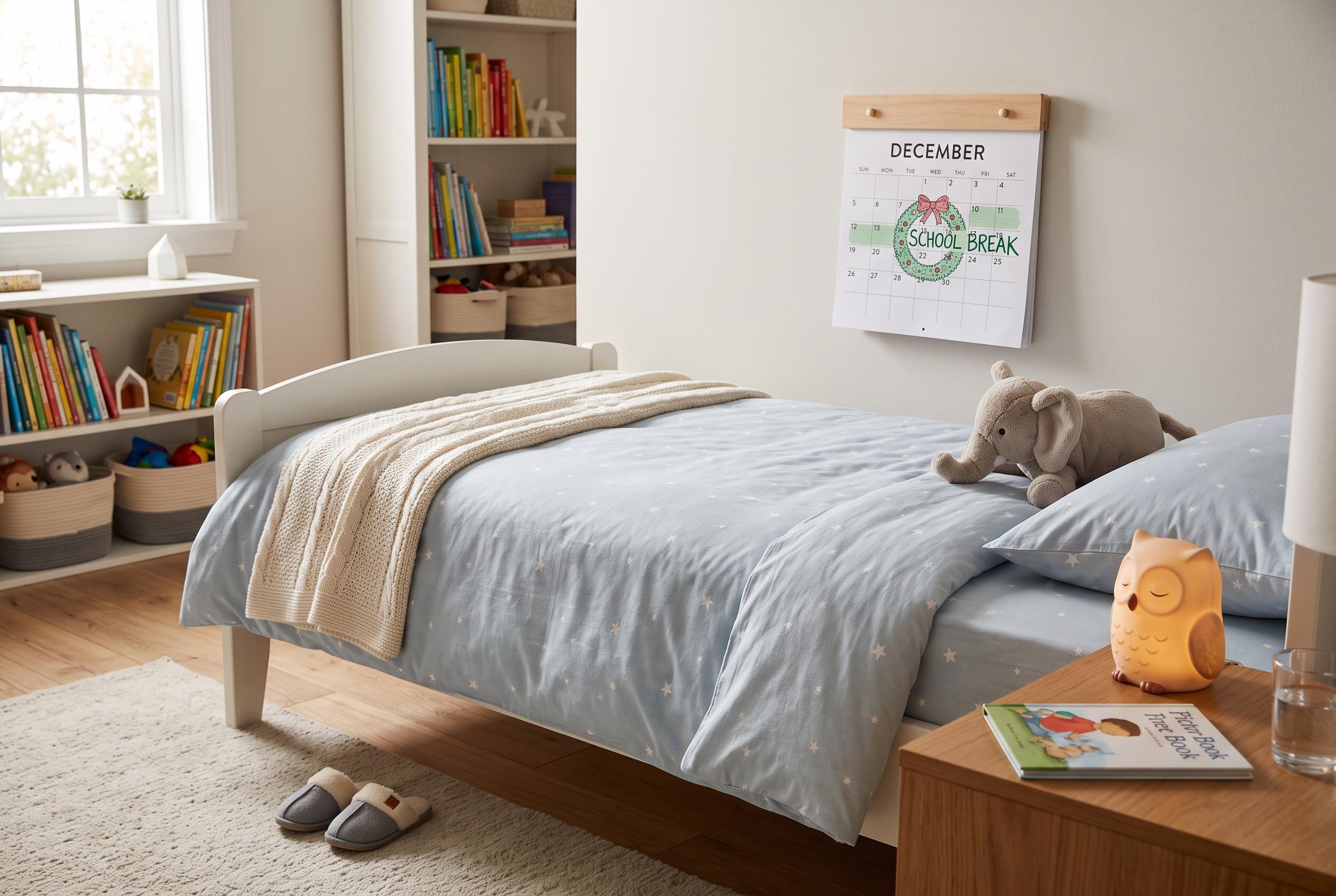

Sleep is vital for brain growth and emotional regulation in young people. Experts highlight concerns about holiday disruptions to sleep patterns and their potential long-term effects, urging parents to maintain consistent routines, especially during school breaks.
Sleep is doing far more than simply resting the body during childhood and adolescence: it is helping build the brain itself. During the first 20 years of life, neural pathways are formed and strengthened at a pace that shapes memory, emotional regulation and the ability to learn. Specialists say that makes sleep one of the most important, and most overlooked, parts of brain health. According to the National Institutes of Health, pre-teens who slept fewer than 9 hours a night showed differences in brain structure, along with more mood and thinking problems than those who slept enough.
That concern becomes especially relevant during school holidays, when bedtimes slip, wake-up times drift and screen use often stretches late into the night. The Ecuadorian report cites a 2026 National Centre for Health Statistics summary showing that regular bedtimes are far more common in younger children than in teenagers, while daytime tiredness rises in the older group. The CDC says insufficient sleep in children and adolescents is linked to attention and behaviour problems, poorer school performance and a higher risk of several health issues.
Experts also warn that the problem is not only the amount of screen time but where and how it is used. Research published in JAMA Pediatrics found that screen use in bed was associated with less sleep, with interactive activities such as video games having a stronger effect. The American Academy of Pediatrics and HealthyChildren.org both stress that regular sleep supports learning, memory, focus and emotional control as the brain develops.
For that reason, doctors recommend keeping holiday routines as steady as possible, with only modest changes to bedtimes and wake times, plus limits on devices before sleep. The CDC advises age-appropriate sleep lengths of 10 to 13 hours for pre-school children, 9 to 12 hours for those aged 6 to 12 and 8 to 10 hours for teenagers. Light exposure and physical activity during the day can help reset body clocks, while a gradual return to school hours in the final days of vacation can ease the transition.
Disclaimer: This content is for informational purposes only and is not intended to be a substitute for professional medical judgment, advice, diagnosis, or treatment.