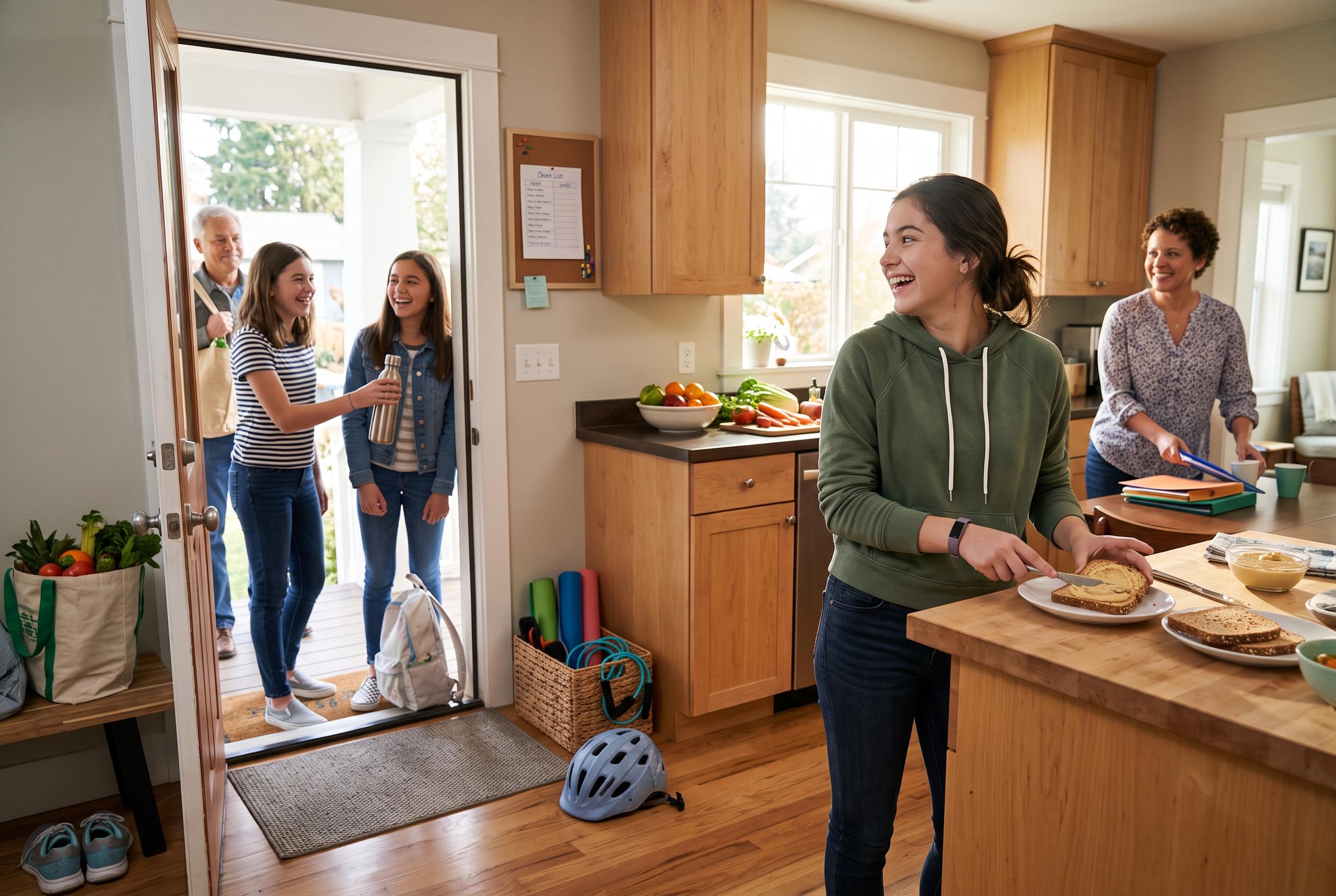

Promoting movement in teens is shifting away from formal sport towards social, practical, and enjoyable activities integrated into daily life, emphasising balance and accessibility.
Keeping teenagers active is often less about formal exercise and more about building movement into daily life. The shift from energetic younger children to adolescents who spend more time on phones, gaming and streaming can be abrupt, but it does not mean activity has to disappear. Walking into town, cycling to see friends, swimming, or spending a long day on your feet all count, and small practical details such as shoes that offer proper support can help make that movement more comfortable.
Health guidance for children and young people aged five to 18 says they should average at least 60 minutes of moderate to vigorous activity a day across the week, with muscle- and bone-strengthening exercise included several times a week. That sounds demanding at first glance, but the target can be met through ordinary routines as well as sport: active travel, PE, dancing, skateboarding and kicking a ball about all contribute.
The challenge for many families is that teenagers are not always motivated by the same things that worked when they were younger. Pushing organised sport on a young person who dislikes it is unlikely to succeed. A better approach is to find movement they actually enjoy, whether that means climbing, swimming, trampolining, tennis, paddleboarding, karting or simply walking with friends.
Social pressure can work both ways, and parents often notice that a suggestion from them is rejected only to be accepted when it comes from a friend. That is why teenage activity often happens most naturally through social plans: walking to meet someone, cycling to a friend’s house, heading to a court for a game, or meeting up for a swim. It is movement, but it does not always feel like exercise.
Family days out also need to evolve as children grow older. What entertained a six-year-old may not hold the attention of a 13- or 16-year-old, so activities that are active, competitive or slightly different tend to work best. Adventure golf, climbing, paddleboarding, theme parks and water-based trips can all make a day out feel more appealing to older children, especially when the outing includes food at the end.
Walking remains one of the simplest and most overlooked options. It is easier to sell when there is a clear reason to go, such as a meal, a new place to explore or a good view at the end. It also helps when the practical barriers are removed: bike tyres are inflated, trainers fit properly, courts are easy to find and teenagers are not automatically driven everywhere they could safely walk or cycle.
The bigger picture, though, is balance rather than perfection. Screens are part of teenage life, and they do not have to be treated as the enemy. A teenager who has spent the afternoon out with friends or been active at school is not necessarily doing anything wrong by gaming later. The aim is simply to keep movement normal, enjoyable and easy to repeat, so that staying active becomes part of everyday life rather than another argument with parents.
Disclaimer: This content is for informational purposes only and is not intended to be a substitute for professional medical judgment, advice, diagnosis, or treatment.