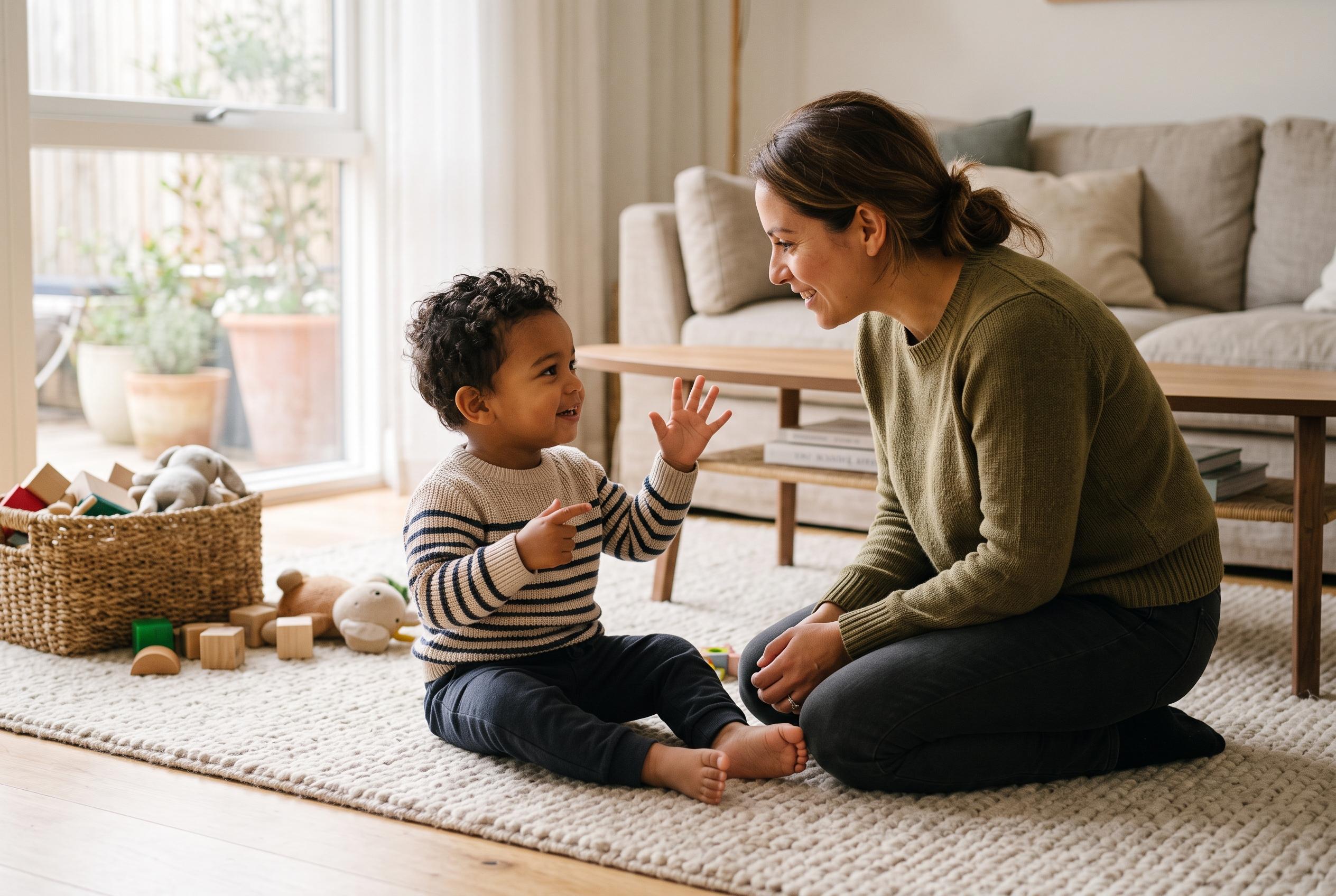

Experts emphasise the importance of assessing overall communication skills in two-year-olds, recognising that speech delay is multifaceted and early intervention can be crucial.
If a 2-year-old is not yet talking much, many parents hear conflicting advice: wait and see, boys are slower, or someone else’s child spoke late and turned out fine. But speech and language development is not always easy to judge from anecdotes alone. According to the Mayo Clinic and Johns Hopkins Medicine, many 2-year-olds are starting to use simple two-word phrases and have a vocabulary of roughly 50 to 100 words, though children develop at different rates.
What matters is not only how many words a child says, but how they communicate overall. A toddler may point, reach, bring a parent an object, take a hand and lead them somewhere, make sounds, or show understanding through play and interaction. Specialists stress that communication begins long before fluent speech, and a child who is not speaking much may still be finding effective ways to express needs, ideas and feelings.
A lack of speech can have several causes. Healthline, Medical News Today and other clinical resources note that some children have an expressive language delay, meaning they understand more than they can say, while others may have receptive language difficulties, in which understanding is affected too. Hearing problems, motor-planning issues, broader developmental differences and conditions such as autism can also play a role. That is why a speech-language pathologist often looks beyond the number of words a child uses and considers comprehension, imitation, play skills, social interaction and body coordination.
Parents should not feel they need a diagnosis before asking for help. Johns Hopkins Medicine and the Mayo Clinic both advise seeking professional input when a 2-year-old is not using two- to three-word phrases or has a very limited vocabulary. Early evaluation does not automatically mean a child will need long-term therapy, but it can clarify what is happening and whether speech therapy, developmental monitoring or broader support would help.
Some families may also be eligible for Early Intervention if a child is under 3, while private therapy can add another layer of support. In the approach described by Kid PT, clinic-based care can be useful because it creates new opportunities to communicate, play and problem-solve in ways that may not happen as easily at home. For parents, the key point is simple: if a child’s speech, understanding, play or regulation seems different, it is reasonable to ask for an assessment rather than waiting for absolute certainty.
Disclaimer: This content is for informational purposes only and is not intended to be a substitute for professional medical judgment, advice, diagnosis, or treatment.