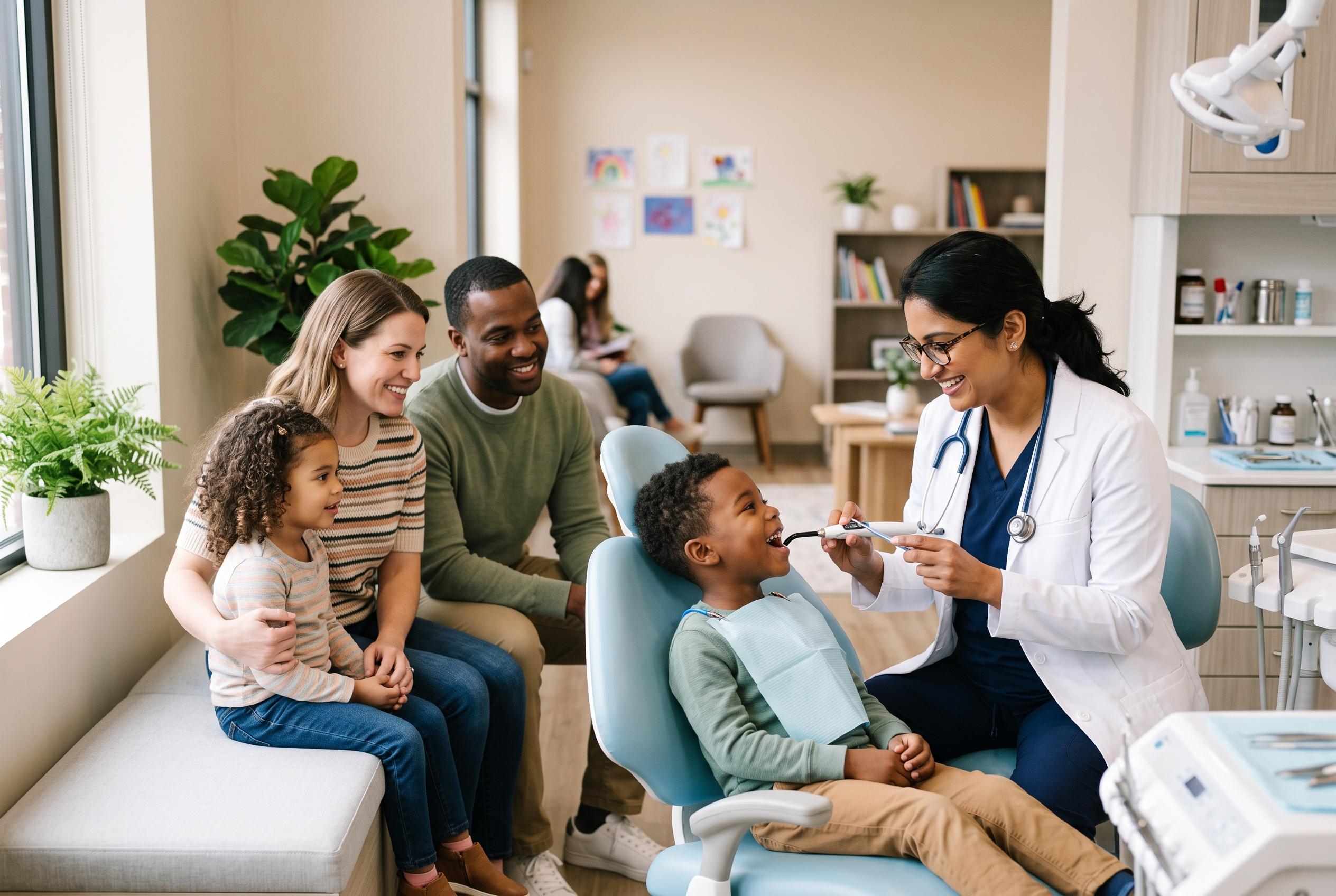

Experts recommend that children have an orthodontic evaluation by age 7 to identify potential issues early, facilitating growth-guided interventions and potentially reducing the need for later braces or surgery.
By the time many children are ready for braces in their pre-teen years, orthodontists say the most useful first appointment should usually have happened much earlier. Guidance from the American Association of Orthodontists, echoed by Johns Hopkins Medicine and Stanford Medicine Children’s Health, says children should have an orthodontic assessment by age 7, when a mix of baby and permanent teeth can show how the bite and jaws are developing. Boston Children’s Answers says that age is less about starting treatment immediately than spotting a problem while growth can still be guided.
That does not mean parents should sit tight until a seventh birthday if something already looks wrong. The AAO says families should book a visit as soon as a concern appears, and Cleveland Clinic similarly advises making an appointment any time a parent is worried about the appearance, health or function of a child’s teeth. Both sources note that many orthodontists will see children without a referral, even though a general dentist may also recommend one.
What specialists are looking for goes well beyond whether teeth look a bit crooked. The warning signs listed by the AAO include baby teeth falling out unusually early or late, difficulty chewing or biting, mouth breathing, speech problems, jaw shifting and front teeth that stick out. Johns Hopkins and Stanford add a broader medical list that can include missing teeth, extra teeth, overbites, underbites, open bites, incorrect jaw position and disorders affecting the jaw joint. The AAO also says some bite problems are inherited, while others are acquired through habits or health issues such as thumb-sucking, mouth breathing, abnormal swallowing, dental disease, poor oral hygiene, accidents or poor nutrition.
Early treatment, when it is needed, tends to focus on growth rather than cosmetics. Cleveland Clinic says childhood is often the right time for appliances such as a palate expander because facial bones are still developing and are easier to move. Under the right circumstances, the clinic says, an expander can widen the upper jaw and create space without tooth extractions. Boston Children’s Answers says other appliances may be used to break thumb-sucking habits or help the tongue rest in a healthier position.
Even so, an early check does not automatically lead to braces. Nemours KidsHealth says there is no single age that suits every child, although many are seen before 7 so problems can be picked up early. Stanford and Johns Hopkins say braces and similar treatment are most often ideal between 8 and 14, when many permanent teeth are in place but the mouth is still growing. Those hospitals also note that treatment later in life can be more complicated because the jaw has stopped developing; in some adult cases, jaw surgery may be part of the plan. Johns Hopkins adds that clear aligners are not appropriate for every orthodontic problem.
For parents and children, the first visit is usually more straightforward than the word “orthodontist” suggests. KidsHealth says an appointment often includes X-rays or computer images to show how teeth are erupting, plus an examination of the teeth, mouth and jaws. Some practices may still use a traditional mould, while Boston Children’s Answers says newer technology can create a 3D scan instead. The AAO says the first consultation should establish whether there is a problem, what the treatment choices are, how long care might take and what it is likely to cost.
The bigger reason not to leave concerns unchecked is that a poor bite can affect health as well as appearance. Cleveland Clinic says well-aligned teeth are easier to clean and can improve chewing and speech, while an aligned bite may lower the risk of cavities and gum disease. Stanford says correcting malocclusion can also help prevent tooth loss, speech difficulties, chewing problems and jaw trouble. That helps explain why clinicians talk about orthodontics as part of oral function, not simply a route to a straighter smile.
Families should also expect orthodontic care to be a process rather than a single fix. KidsHealth says braces commonly stay on for one to three years and are sometimes delivered in stages, with an expander or another appliance before braces and a retainer afterwards. Boston Children’s Answers says treatment can last from several months to several years, with reviews every four to six weeks in some cases. For children with complex medical needs, the same source says the best practices explain each step carefully and involve the family throughout. As Dr McDougall told Boston Children’s Answers: “Some conditions can be more difficult to treat when a child is older.”
Disclaimer: This content is for informational purposes only and is not intended to be a substitute for professional medical judgment, advice, diagnosis, or treatment.