

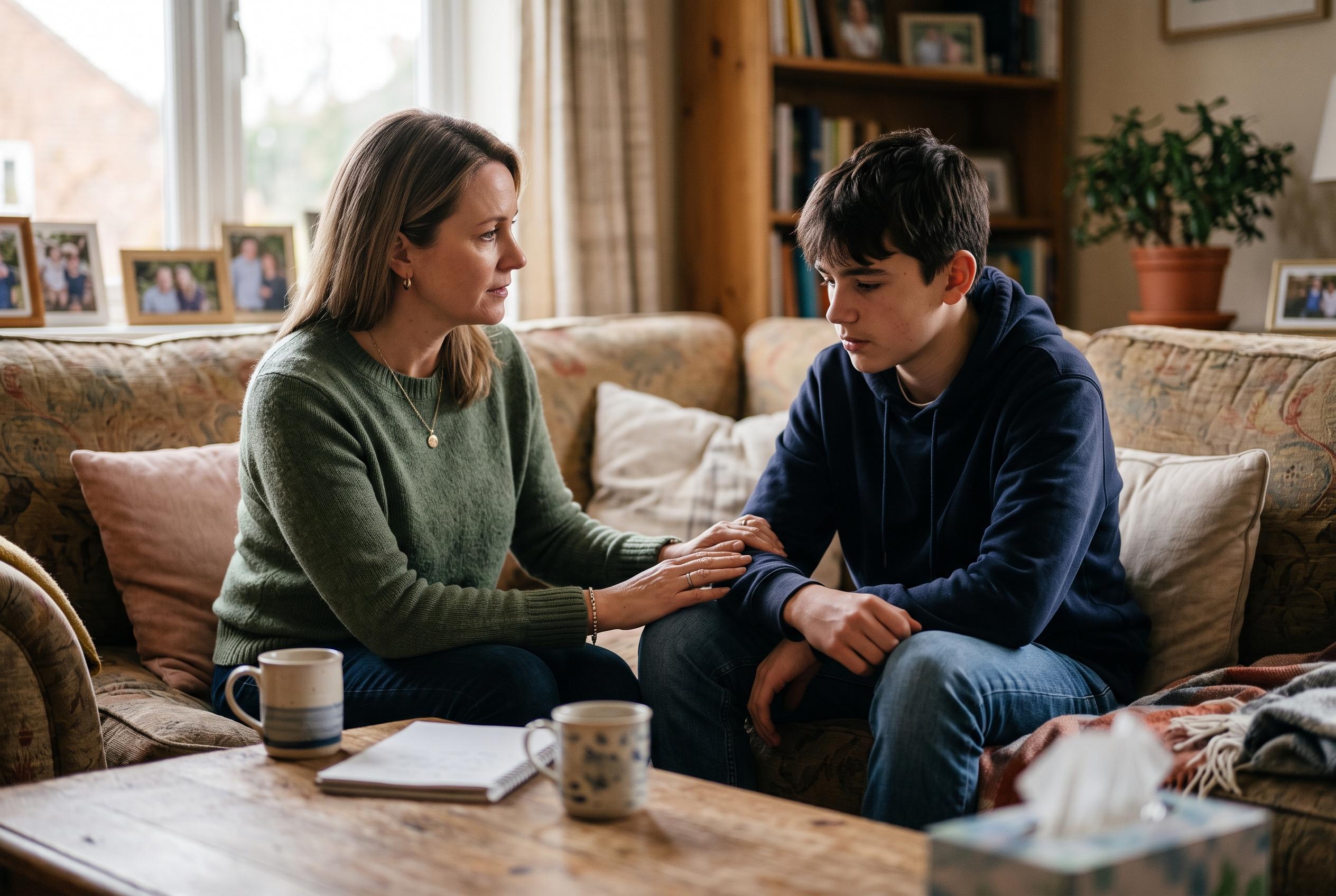

Parents should respond to signs of distress with calm conversation, careful listening and prompt professional support rather than relying on an app to identify a crisis.
When a teenager appears distressed and is turning to ChatGPT or another chatbot for comfort, parents should not wait for an automated warning before stepping in. The safer response is immediate human contact: start a calm conversation, look for signs that the problem is broader than what is happening on a screen, and seek help early rather than later. According to the American Psychological Association, psychologists have raised concern about people using chatbots as though they were therapists, while the American Academy of Pediatrics advises parents to begin the conversation themselves and listen without judgement.
If there is any immediate physical danger or medical emergency in the United States, call 911. For emotional distress or a mental health crisis, call or text 988; the 988 Suicide & Crisis Lifeline is available around the clock, and parents can also contact it about a loved one. The National Institute of Mental Health says warning signs can include talking about wanting to die, feeling hopeless or empty, pulling away from friends and family, and taking more risks. It also says that when these behaviours are new or have intensified, help should be sought as soon as possible.
That means parents should name what they have noticed, then give their teenager room to respond. If suicide is a concern, the NIMH says it is appropriate to ask directly whether the young person is thinking about it; doing so does not increase suicidal thoughts or actions. The goal is not to argue with the child, challenge every feeling or turn the conversation into a debate about artificial intelligence. It is to understand what the teenager is experiencing and connect them with support.
If a chatbot has become part of the story, parents can ask what the teen is looking for from it and how those exchanges make them feel afterwards. A reassuring reply from an app should not be treated as evidence that a young person is safe. Instead, concerns about depression, self-harm or references to suicide should be raised promptly with the child’s primary care doctor, and school counsellors or licensed mental health professionals can also help guide the next steps.
Health professionals can work with families to build a safety plan, including warning signs, coping strategies and emergency contacts. The American Academy of Pediatrics recommends planning for what to do if things worsen, while the NIMH also advises reducing access to lethal means. After the first conversation or appointment, parents should keep checking in, because connection to care is only the beginning. The NIMH stresses that supportive follow-up matters, and that ongoing contact can be part of recovery.
For many families, faith communities may also be part of the response. Prayer, pastoral care and trusted church relationships can provide added support, but they should complement, not replace, professional help when a teenager may be at risk. Parents do not need permission from an app to notice that their child is hurting. What matters most is a calm first conversation, careful listening and a quick move towards real-world support.
Disclaimer: This content is for informational purposes only and is not intended to be a substitute for professional medical judgment, advice, diagnosis, or treatment.



