

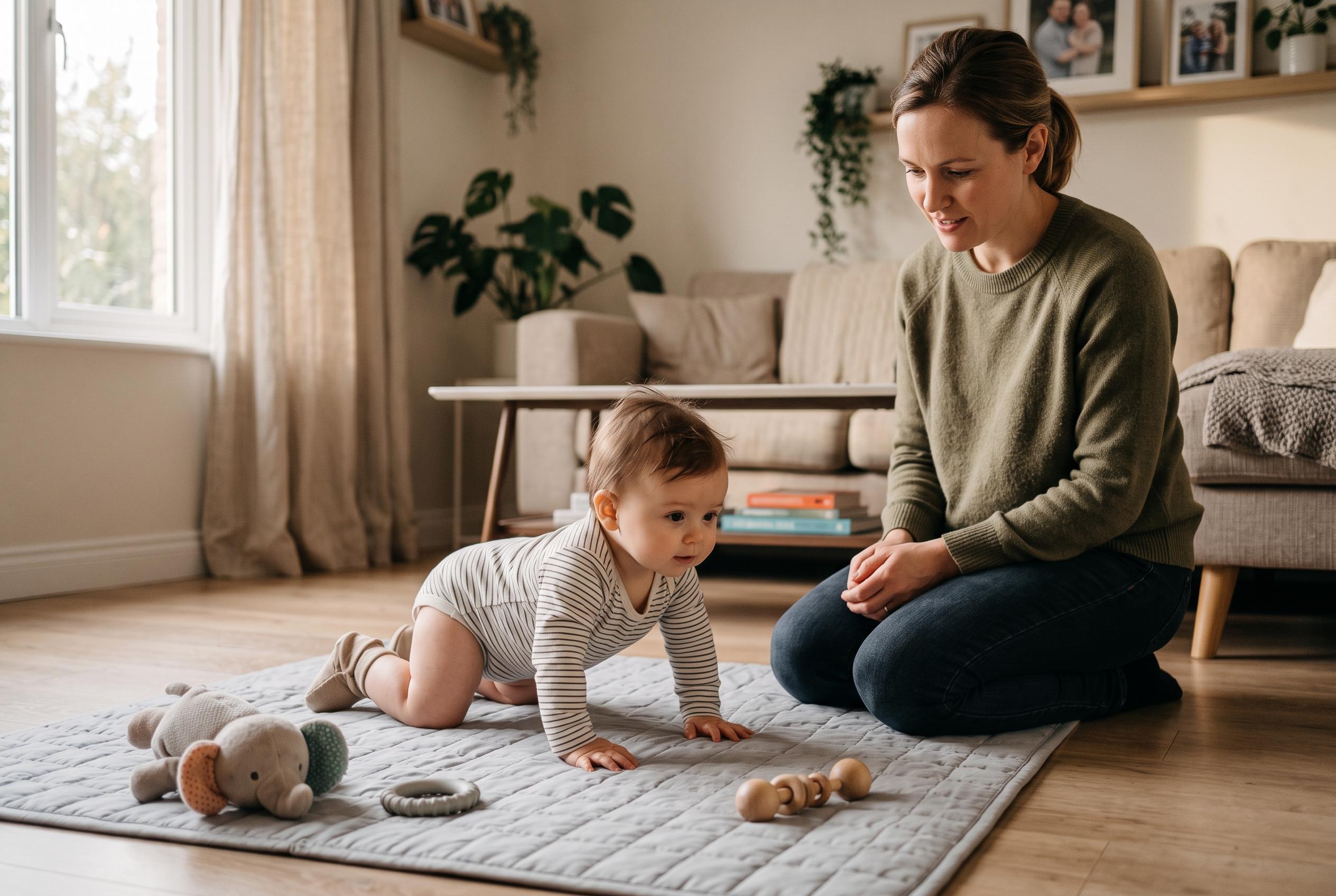

Although crawling was removed from the CDC’s developmental milestone checklist in 2022, ongoing research and expert opinions highlight its enduring significance for motor, cognitive, and sensory development in babies, prompting a renewed discussion among health professionals and parents.
Crawling may no longer appear on the Centres for Disease Control and Prevention’s developmental milestone checklist, but that does not make it unimportant. The CDC says its milestone lists are meant as communication tools, not a ranking of what matters most, and the change was designed to improve screening by focusing on skills that most children reach by a given age. Even so, many paediatric therapists continue to treat crawling as a meaningful step in early development.
The timing of crawling varies widely. Cleveland Clinic says many babies begin between seven and ten months, although some start earlier, some later and some use different movement patterns altogether. The clinic notes that belly crawling and hands-and-knees crawling are both common, and that opportunity, motivation and physical development can all shape when a child begins to move independently.
That variability is one reason crawling was removed from the CDC list in 2022, but the decision has not settled the debate. ScienceInsights reported that paediatric physical therapists broadly disagreed with dropping crawling from the checklist, arguing that it remains a useful marker of development. In a 2024 survey published in the journal Pediatric Physical Therapy, 92% of the 420 therapists questioned said hands-and-knees crawling matters for development, and 79% disagreed with its removal from the CDC’s list.
Therapists say crawling matters because it asks a baby’s body to work in a coordinated, weight-bearing way. Cleveland Clinic describes it as a full-body activity that strengthens the hands, arms, shoulders, hips, legs and core. TEIS Early Intervention says crawling also helps build trunk stability, trains both sides of the body to work together and supports the hand strength and shoulder control that later help with feeding and fine motor skills.
It is also a key moment for coordination and exploration. Pathways.org says crawling opens up a baby’s world by giving them more freedom to move, look around and experience space on their own terms. The organisation links crawling to brain development, sensory learning, play, executive function and visual tracking, while TEIS notes that babies are learning to shift their gaze between the floor and more distant objects as they move.
Parents do not need to force a single “correct” style of crawling. The American Academy of Pediatrics recognises several common patterns, and what matters most is whether both sides of the body are doing the work. Persistent asymmetry, such as always dragging one leg, relying heavily on one arm or consistently turning the head the same way, can be worth discussing with a paediatrician. TEIS also notes that babies who seem very stiff, very floppy or unable to take weight through their arms may benefit from early assessment.
There are simple ways to encourage crawling at home. Experts recommend plenty of tummy time, placing toys slightly to the side to prompt movement, practising rocking on hands and knees and giving babies safe floor time rather than prolonged time in seats, swings or other containers. Pathways.org and TEIS both say supervised play on different surfaces, including carpet, blankets and outdoor grass, can also help, and baby walkers should be avoided. If a child is not crawling or seems stuck in one movement pattern, early intervention therapies can provide targeted support.
Disclaimer: This content is for informational purposes only and is not intended to be a substitute for professional medical judgment, advice, diagnosis, or treatment.



