

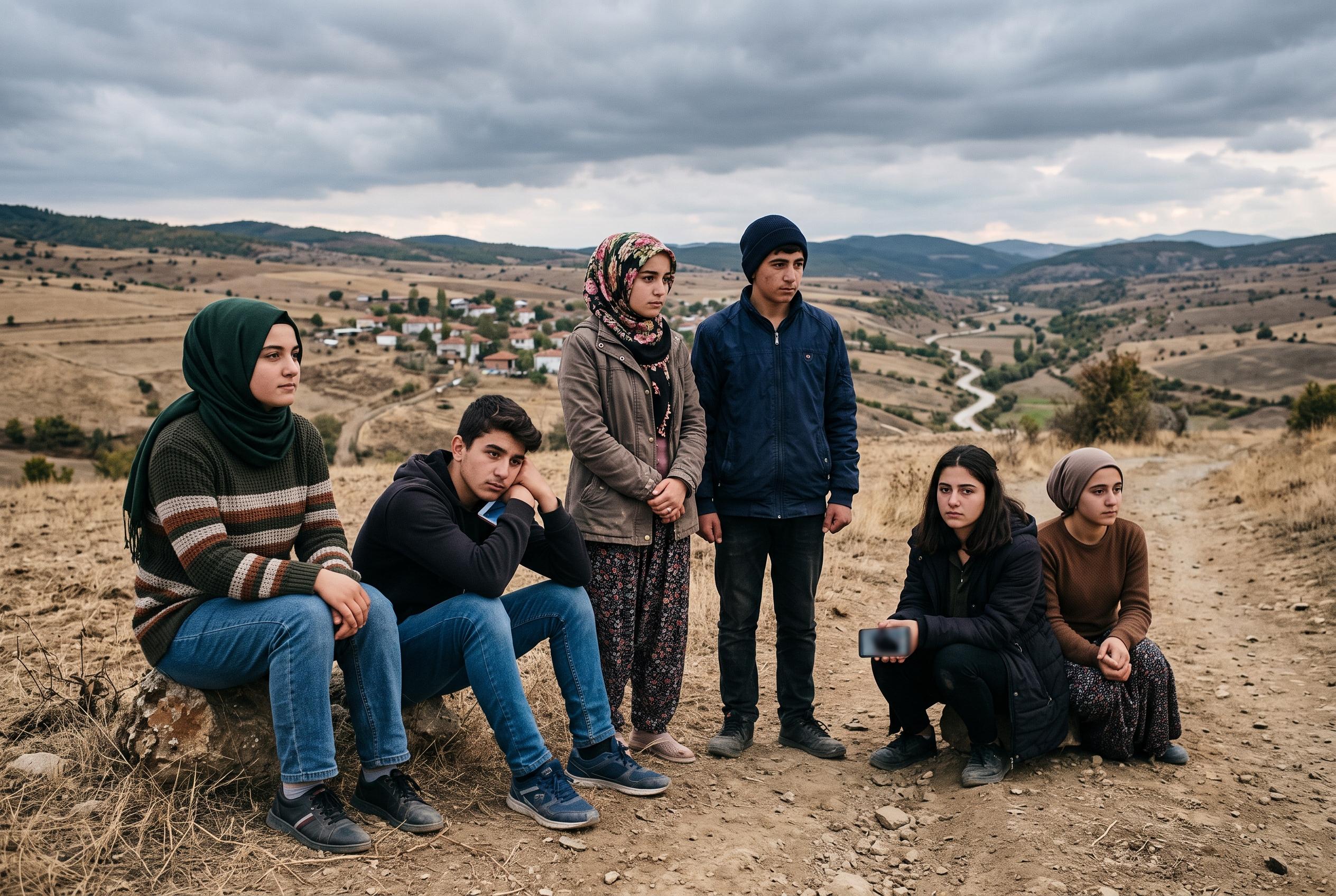

A study of 782 pupils in rural Samsun province finds that climate-related fear is strongly associated with generalised anxiety, with girls, heavy social media users and those exposed to extreme weather reporting the greatest concern.
A new study from rural Türkiye suggests that climate worry is not just an abstract concern for teenagers watching the news from afar. Among 782 high school students in Vezirköprü, a district in Samsun province, researchers found a strong link between climate-related fear and broader anxiety symptoms, with nearly half of the students scoring above the usual clinical threshold for generalised anxiety.
The research, published in BMC Public Health and led by public health specialist Yasin Sağlam, surveyed pupils in grades 9 to 12 across public high schools in the district between April and June 2026. Students completed standard questionnaires measuring both climate change worry and generalised anxiety. The findings showed an average climate worry score that was well above the middle of the scale used in the study, alongside an average anxiety score that was high enough to raise concern in a population of adolescents. Parents or guardians gave written consent for students under 18, and the study was approved by an ethics committee at Samsun University.
What stood out most was the close relationship between the two measures. Students who reported greater climate worry also tended to report more generalised anxiety symptoms. The association was strong enough to suggest that climate concern and mental health are intertwined for many adolescents, although the cross-sectional design means the study cannot show which comes first. That uncertainty matters. It may be that anxious teenagers are more likely to dwell on climate threats, that climate fear feeds broader anxiety, or that both are shaped by the same underlying pressures. Either way, the result fits a growing international body of research showing that climate-related distress is a real psychological issue for young people, not a niche or purely ideological one.
The Turkish study also found clear patterns in who was most affected. Girls reported higher levels of climate worry than boys, a trend seen in other recent research. Heavy social media use was another strong predictor, with students spending more than six hours a day on social platforms showing the highest worry scores. Reporting a recent extreme weather event in the local area was also linked with greater concern. Those findings echo broader evidence from Europe, Australia and China, where studies have found that climate anxiety often rises alongside repeated exposure to climate news, environmental risks and worry about the future. A 2026 review in European Child & Adolescent Psychiatry found wide variation in reported rates of climate-related anxiety and worry across studies, underscoring both the scale of the issue and the lack of standardised measurement.
The rural setting is important. Much of the discussion about eco-anxiety has focused on urban or highly connected young people, but this study suggests that adolescents outside major cities are far from immune. In fact, direct experience of severe weather may make climate change feel even more immediate in places where farming, water supplies and local livelihoods can be sensitive to heat, drought or flooding. The author argues that schools should respond with mental health support and climate literacy programmes, especially for girls and heavy social media users. That approach would also align with other recent research, including an Italian study in Youth & Society that found a small but significant group of adolescents with high levels of climate worry and emotional distress, and concluded that interventions should strengthen emotion regulation and psychological resilience.
For public health specialists, the broader message is hard to ignore. Adolescent anxiety is already a major concern, and climate change is adding another layer of stress at a time when many young people are already struggling. The Turkish study offers a useful reminder that climate change is not only a physical or environmental challenge, but also a mental health issue that is being felt by teenagers in everyday life. As extreme weather becomes more common and climate coverage continues to saturate digital spaces, researchers say understanding how young people absorb and process these threats will be crucial for designing support that is both practical and timely.
Disclaimer: This content is for informational purposes only and is not intended to be a substitute for professional medical judgment, advice, diagnosis, or treatment.



