

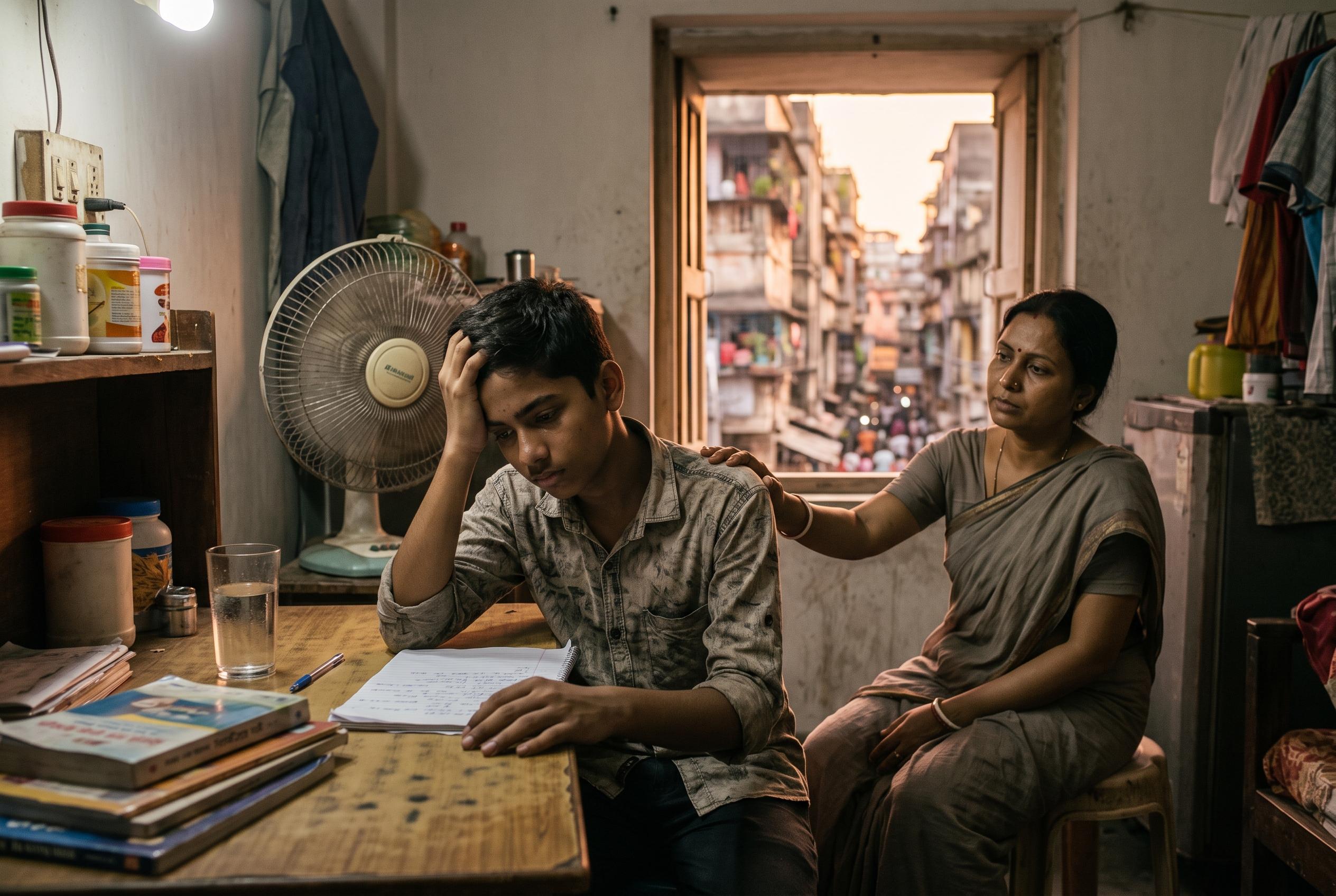

As extreme heat and social inequality exacerbate stress among Indian students, experts call for a systemic approach integrating environmental, social, and mental health policies to prevent crisis and build resilience.
For a student sitting an exam in 45C heat, the strain may go far beyond ordinary nerves. Extreme temperatures can make concentration harder, reduce performance and deepen the sense that success is tied to a single make-or-break moment. In India, where academic competition is intense and many young people already face pressure from family expectations and limited chances for recovery after failure, the latest debate over youth mental health is increasingly widening to include climate, inequality and the conditions in which children and adolescents live and learn.
According to Aastha Sethi, a senior officer for policy and advocacy at United for Global Mental Health in Mumbai, the mistake is to treat a systemic problem as if it were only a clinical one. The organisation says there is evidence that rising temperatures can affect exam performance and contribute to stress-related illness among students. That argument sits at the centre of a new United Nations report, Youth Mental Health and Well-Being in an Uncertain World: A Global Call to Action, which urges governments to move away from viewing mental health solely through the lens of individual treatment and towards the wider social, economic and environmental pressures shaping young lives.
The report sets out a Youth Mental Health and Well-being Ecosystem Model, arguing that wellbeing is influenced by much more than counselling or psychiatric care. School life, housing, family stability, friendships, work, digital spaces, conflict, climate and access to community activities all shape how young people cope. Michael A. Lindsey, dean of the NYU Silver School of Social Work and an academic reviewer of the report, says too often adults overlook basic pressures such as safety, food insecurity, housing problems and other sources of chronic stress. The point is not that care is unnecessary, but that care alone cannot address every cause of distress.
The same broader view is especially relevant in India. The National Mental Health Survey, carried out by NIMHANS with support from the Ministry of Health and Family Welfare, found that 7.3% of adolescents aged 13 to 17 had a mental disorder and estimated that nearly 9.8 million young Indians required active intervention. The survey, based on data from 12 states in 2015-16, is dated, but it still showed sharp gaps: prevalence was higher in urban areas than in rural ones, and nearly four in five people with mental health conditions had not received treatment after symptoms began. A 2026 study in PLOS Global Public Health, drawing on mortality data from 2001 to 2019, also estimated that about one in four suicide deaths worldwide occurred in India, with nearly half of those deaths in the 15 to 29 age group.
That is why several experts are urging prevention before crisis. Ramesh Raghavan of the NYU Silver School of Social Work describes this as building “social vaccines”, meaning environments and support systems that reduce harm before a child or teenager reaches breaking point. In practice, that can mean school meal programmes, safer classrooms, stable housing, decent work, opportunities for sport and recreation, and digital spaces that do not amplify isolation or abuse. The United Nations University’s Revati Phalkey says the ecosystem approach can help governments stop treating mental health as an isolated problem and instead build it into policy across sectors. Nandita Bhatla of WorldBeing India puts it more plainly: young people’s mental health is not peripheral to development, but central to it, especially as climate change and extreme heat add new layers of stress.
Disclaimer: This content is for informational purposes only and is not intended to be a substitute for professional medical judgment, advice, diagnosis, or treatment.



