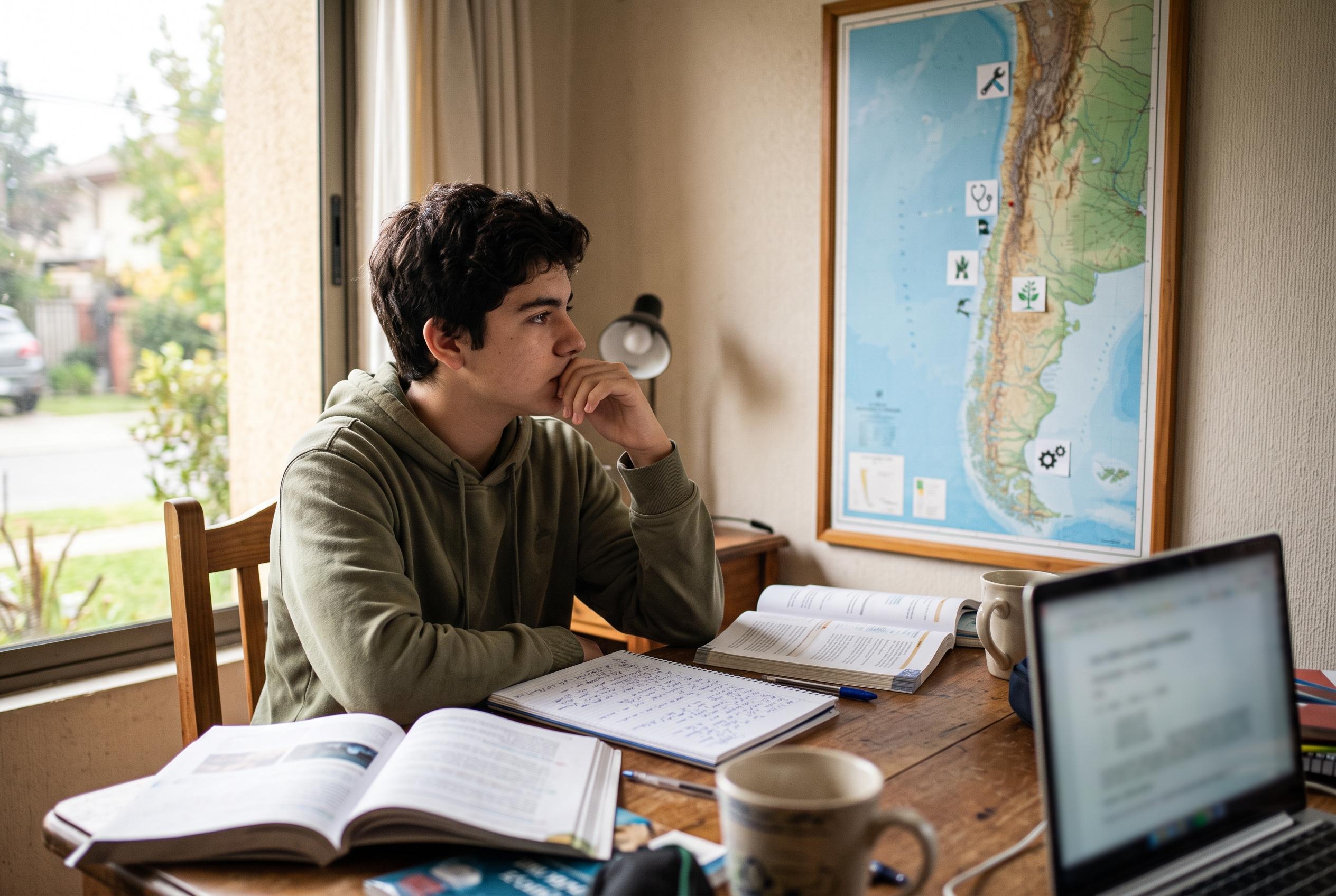

New research indicates Chilean teenagers face unprecedented pressure when choosing careers, with over 75% showing signs of anxiety and depression, raising concerns about the impact on their wellbeing and the need for earlier, flexible guidance.
Chilean adolescents are approaching career choice with a level of pressure that experts say is harming their wellbeing. New findings from Edumetrics suggest that many students see the decision about what to study after secondary school not as a routine next step, but as a defining moment that feels almost impossible to get wrong. That anxiety matters, because the country is already dealing with high levels of distress among young people.
Edumetrics analysed more than 3,500 students in the third and fourth years of secondary school and found that 65.6% viewed vocational choice as a decision with life-changing consequences. At the same time, 79% showed a stable set of interests, which suggests the problem is not always a lack of direction. Rather, many teenagers appear to know what they like, yet still doubt their ability to choose with confidence.
That gap between interest and certainty comes amid wider concerns about adolescent mental health. Chile’s 2024 ELPI survey, published by the Ministry of Social Development and Family, found that 75% of 14- to 18-year-olds showed some level of anxiety or depression symptoms, while 26.5% had moderate to severe symptoms. The same survey, according to the ministry’s observatory, is part of a long-running study that tracks more than 10,000 children and adolescents across the country.
Susana Valenzuela, co-founder of Edumetrics, said there is a crucial difference between being unsure and feeling overwhelmed by the choice. In comments to The Clinic, she said many students are not lacking interests so much as fearing that one wrong decision will shape their entire future. Sergio Gómez, a career coach at Edumetrics, added that when the process feels final, some young people avoid it altogether rather than face the pressure.
The data also points to the role of outside expectations. Edumetrics found that 34.8% of students faced strong external conflict linked to pressure from family, friends and school. Another 34% struggled to process information about themselves well enough to connect interests with abilities, and 15% showed active avoidance of the decision-making process. Experts say that is why vocational guidance needs to begin earlier, and why it should leave room for change rather than treat first choices as irreversible.
Disclaimer: This content is for informational purposes only and is not intended to be a substitute for professional medical judgment, advice, diagnosis, or treatment.