

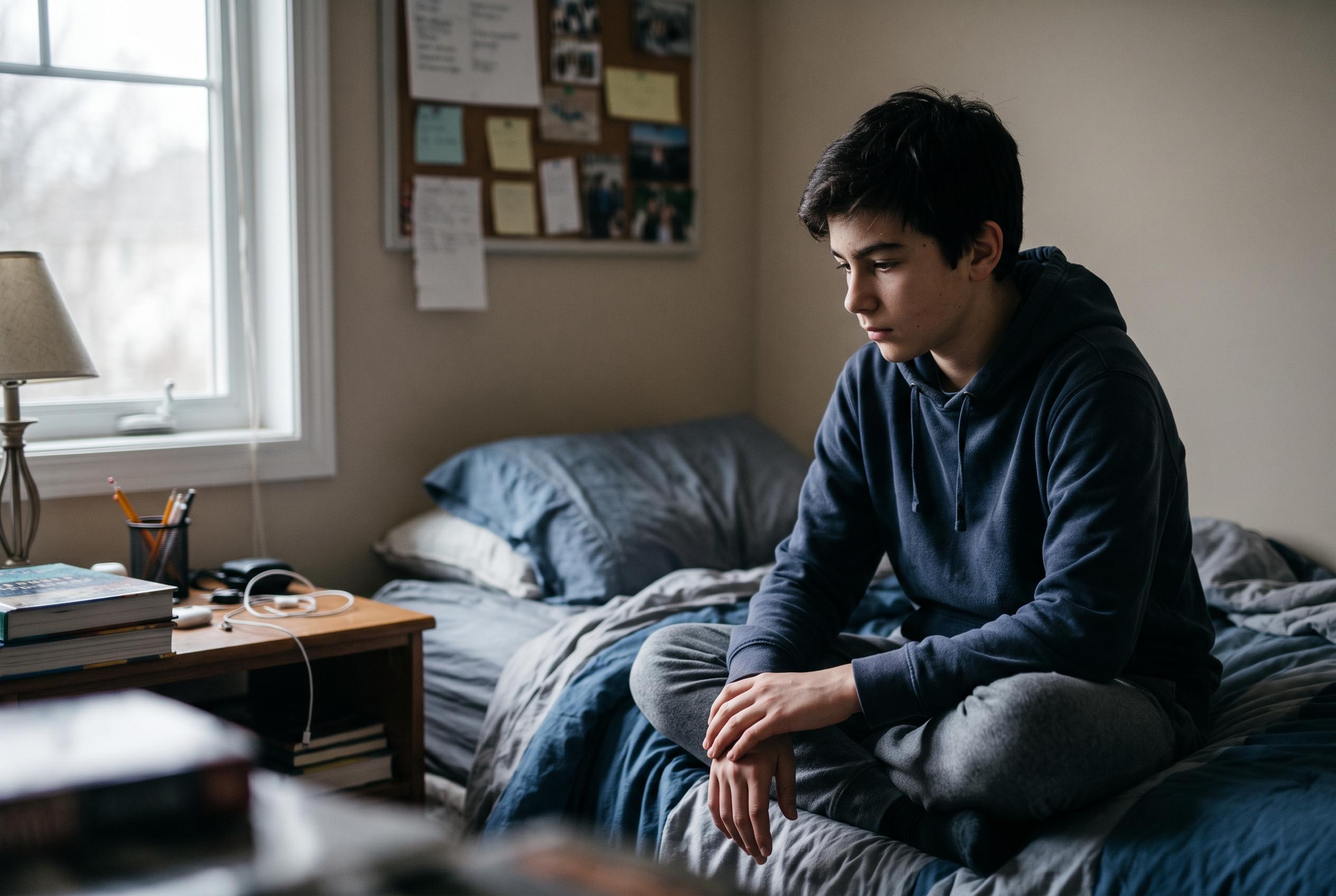

Taiwanese research suggests depressive symptoms and disrupted sleep may help explain why boys exposed to family dysfunction are more likely to show aggressive behaviour in late adolescence.
Research led by the National Taiwan University College of Public Health suggests that family breakdown in early childhood can cast a long shadow over boys’ behaviour in late adolescence, with depressive symptoms at age 12 appearing to explain part of the link. According to the team’s analysis of Taiwan Birth Cohort Study data, boys who experienced household dysfunction at around five-and-a-half years old, or who faced repeated adversity across childhood, were more likely to show aggressive behaviour at 17 or 18. The findings were reported by People News and supported by a related study abstract indexed on PubMed.
The researchers defined household dysfunction broadly, including parental mental illness, incarceration and not living stably with both parents. In the cohort of 7,800 teenagers, the association was strongest for boys, while no significant pattern was seen among girls, according to the PubMed summary of the study. The analysis also suggested that depressive symptoms in early adolescence accounted for roughly one-fifth to one-third of the total link between childhood adversity and later aggression, pointing to depression as one pathway through which early stress may shape later conduct.
Zhang Ling-yin of National Taiwan University said boys may be more likely than girls to respond to childhood stress with sleep loss and outward behaviour problems, rather than keeping distress internal. She said children who become aggressive should not be viewed only through the lens of discipline, but also assessed for emotional difficulties and the family circumstances behind their behaviour. That message fits with earlier research on adolescent aggression, which found that young people involved in aggression, whether as perpetrators, victims or both, face higher risks of both internalising and externalising problems.
A second analysis from the same research group looked at sleep in 16,666 children from six months to 12 years old and found that adversity, including household dysfunction and peer bullying, was linked with shorter sleep duration. The effect was most visible between ages three and eight, and was more pronounced in boys. The researchers said this stage of development may be especially vulnerable because the brain and emotional regulation systems are still maturing. Du Yu-kang, dean of the NTU public health college, said sleep problems can be an important outward sign of hidden trauma, adversity or psychological strain when children are unable to explain what they are going through.
The team also found that children with greater resilience generally slept longer, but that protection weakened when adversity was severe. Zhang said this means adults should not rely solely on a child’s ability to cope, because the wider environment matters just as much. The researchers recommended paying attention to sleep, family situation and emotional or behavioural changes from pre-school onwards, and urged schools, healthcare workers and social services to use trauma-informed approaches that take account of what may lie behind a child’s reaction. Yen Tung-liang, professor emeritus at the same college, said the aim should be to spot children in difficulty earlier and give families more support, not to blame parents, teachers or the children themselves.
Disclaimer: This content is for informational purposes only and is not intended to be a substitute for professional medical judgment, advice, diagnosis, or treatment.



