

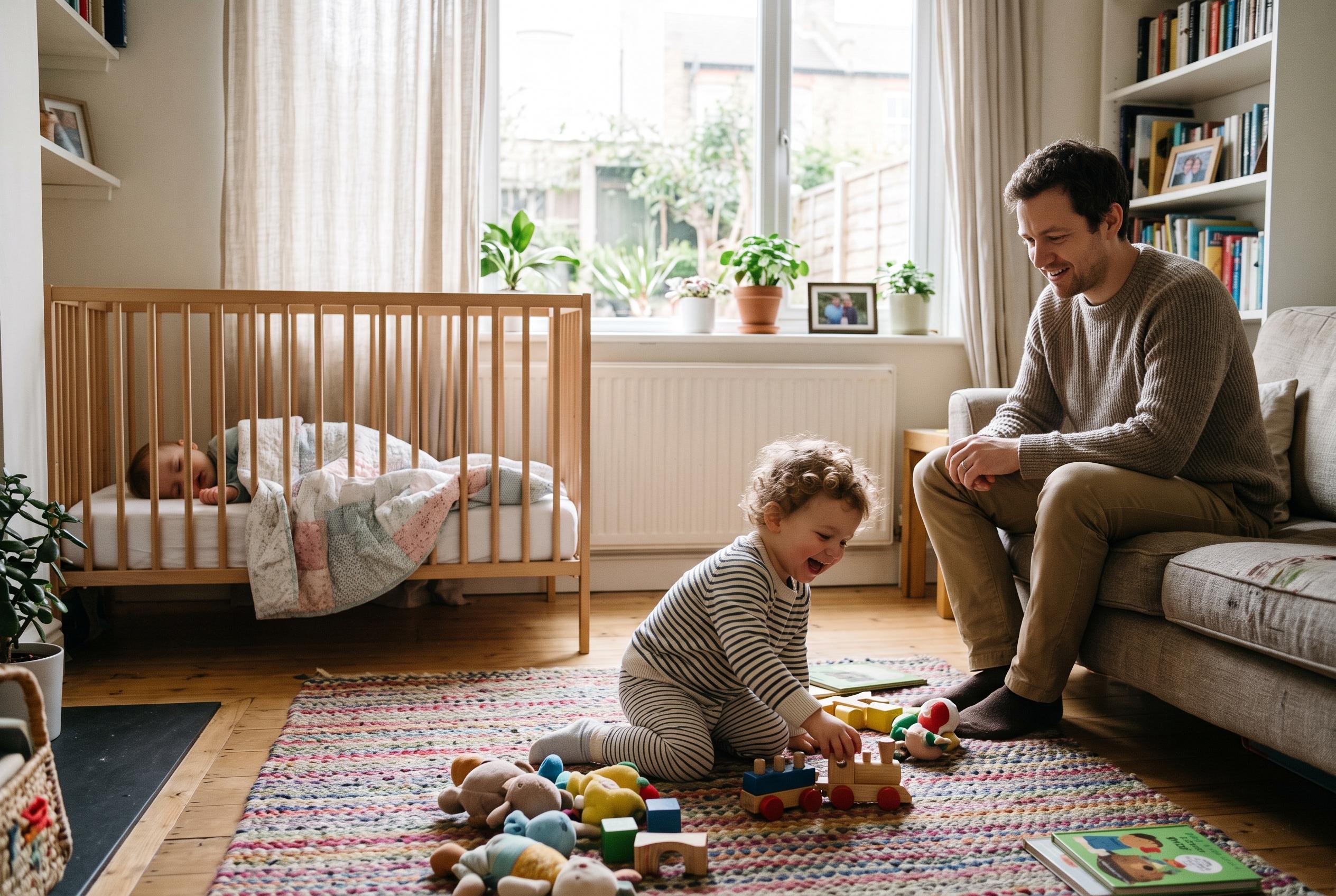

A first national assessment of children under five finds strong levels of physical activity and sleep, but just one in four meets all three early-years movement guidelines.
Canada’s youngest children are starting life with relatively strong habits around movement and sleep, but a national report says screen time remains a weak point. In the first assessment of its kind focused on children under five, ParticipACTION found that 67% of children met the physical activity recommendation and 80% met the sleep target set out in Canada’s 24-Hour Movement Guidelines for the Early Years. Far fewer, however, stayed within screen time limits, and only 25% met all three recommendations.
The report, led by Valerie Carson, a University of Alberta researcher and chief scientific officer behind the project, is intended to establish a benchmark for a group that has drawn less attention than school-age children. According to the University of Alberta, Carson said the early years are a crucial period for brain development, speech, muscle growth and emotional health, and that healthy movement patterns at this stage can help shape lifelong habits. She also said screen time has become a particular concern, even as physical activity and sleep show encouraging signs.
The guidelines used in the report are age-specific. They call for 12 to 17 hours of sleep, including naps, for babies under one year old; 11 to 14 hours for children aged one to two; and 10 to 13 hours for three- and four-year-olds. They also recommend at least 30 minutes of tummy time for babies, 180 minutes of activity a day for toddlers and preschoolers, and at least an hour of energetic play for older preschoolers. Screen time should be avoided entirely for children under two, and kept to no more than one hour a day for those aged two to four.
The report also points to uneven access to healthy activity. Children in lower-income households were found to have less access to recreation facilities, playgrounds, parks and green spaces, while children in rural areas and those from racial and ethnic minority communities were less likely to take part in structured activities such as swimming lessons and soccer. ParticipACTION said just 22% of Canadian communities have a formal physical activity and sport plan, even though 41% of young children take part in structured activity. The findings also suggest room to strengthen child care settings: 78% offer facilities and equipment that support movement, but only 53% provide staff training on physical activity, sedentary behaviour and sleep.
The report argues that child care, educator training and community planning could all help close those gaps. It also underscores the public health stakes, noting that physical inactivity costs Canada C$3.9 billion a year in avoidable health care spending. Carson said building a healthier nation starts early, and that helping young children move more, sit less and sleep well can support stronger, more resilient communities in the years ahead.
Disclaimer: This content is for informational purposes only and is not intended to be a substitute for professional medical judgment, advice, diagnosis, or treatment.



