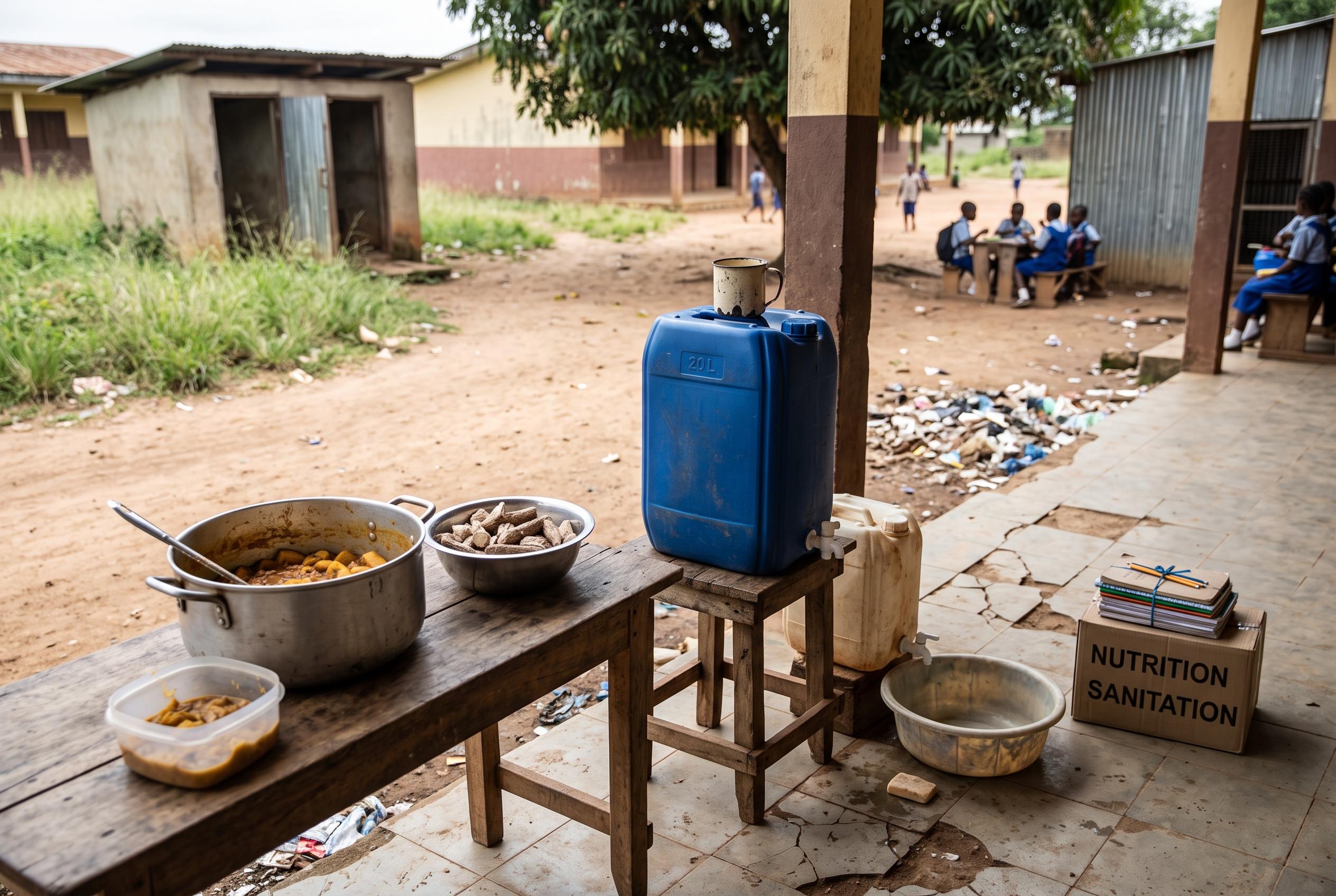

As Cameroon prepares for the new school year, experts warn that lacking policies on child health, nutrition, and sanitation threaten educational outcomes and long-term development amid a growing health crisis.
As schools across Cameroon prepare to reopen, Dr Albert Ze is pressing a question that has, in his view, been ignored for too long: what is the state’s concrete policy for protecting pupils’ health? In a recent intervention, the health economist argued that the country’s education debate has centred on administration and financing while the health needs of children have remained secondary.
Ze’s warning lands against a troubling public-health backdrop. The 2018 Demographic and Health Survey found that 29% of Cameroonian children were stunted, 57% were anaemic and 11% were affected by childhood obesity. UNICEF Cameroon says malnutrition remains a major challenge, with more than 1 million children under 5 stunted, a condition that can damage development and later educational performance. The agency also says 60% of infants under 6 months are not exclusively breastfed, while 8% are not breastfed at all.
School feeding remains far from universal. According to figures cited by the FAO in Cameroon, only 2.8% of primary pupils receive a hot, free meal at school, even as the National School Feeding Strategy seeks to link canteens to local farm production. The United Nations in Cameroon warned in January 2026 that more than 52,000 children faced the risk of losing daily school meals because of funding gaps, with the World Food Programme saying it still needed US$9.9 million to keep its school-feeding operations going this year.
The wider school environment is also part of the problem. UNICEF Cameroon says around half of schools have access to clean water and only 30% have proper sanitation, while open defecation remains an issue, especially in rural areas. A study in north Cameroon found similar shortcomings in schools in Garoua. Researchers have also linked poor sanitation to anaemia and malnutrition among primary pupils in the Tiko health district. For Ze, these gaps show that health at school is not a side issue but a basic condition for learning, and one he believes the state has yet to treat with the urgency it deserves.
Disclaimer: This content is for informational purposes only and is not intended to be a substitute for professional medical judgment, advice, diagnosis, or treatment.