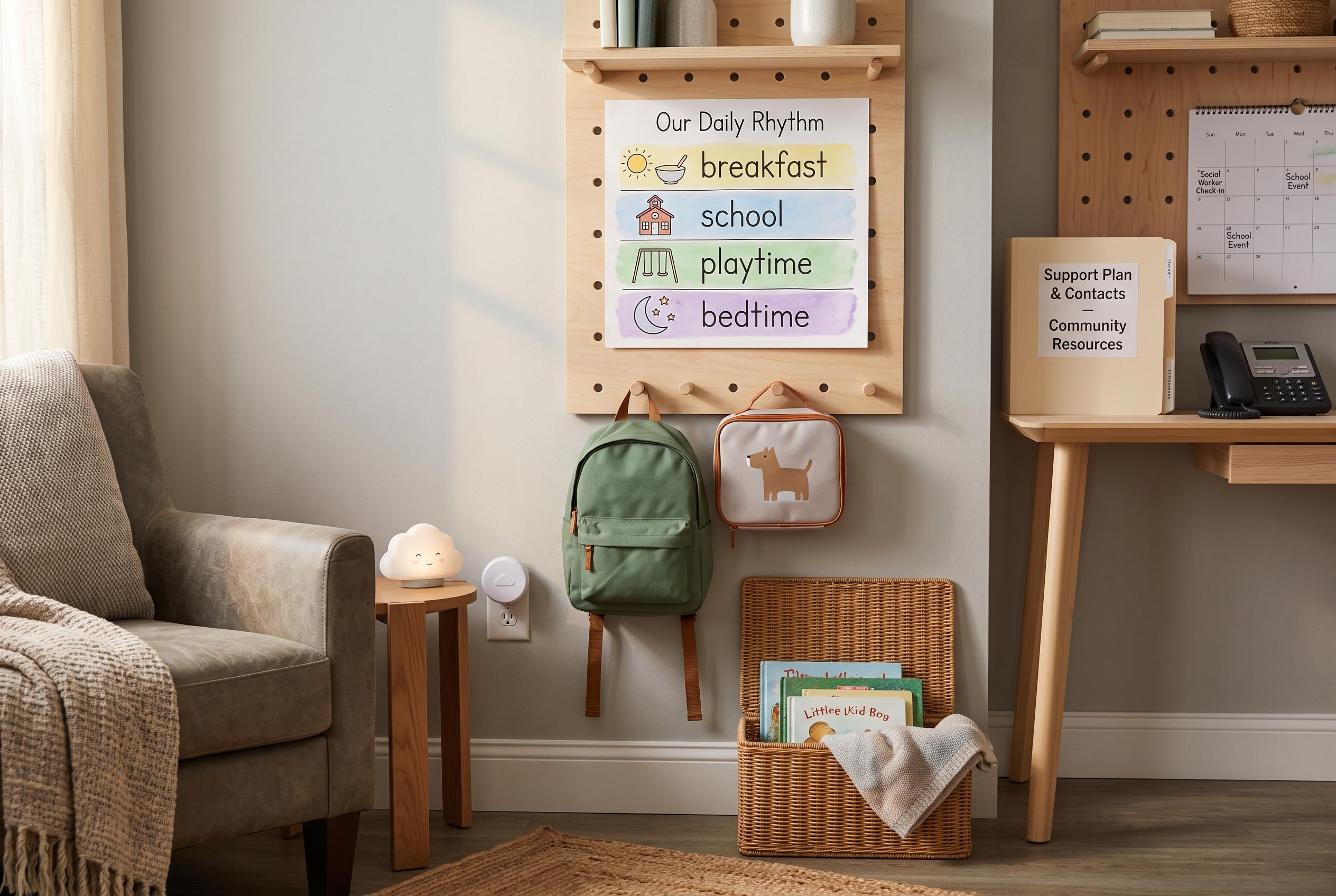

Simple, predictable routines and a calm environment are crucial in helping foster children feel safe and secure, with support from wider networks enhancing placement stability and emotional wellbeing.
Foster children often arrive in a new home carrying grief, fear and uncertainty, so the first task for carers is not perfection but predictability. A steady routine, clear expectations and calm responses can help a child begin to feel safe after upheaval, especially when they have already experienced instability. According to guidance from fostering organisations, even simple steps such as showing a child where they will sleep, explaining the house rules and preparing them for what happens next can reduce anxiety and build trust.
A predictable home does not need to be complicated. Regular meal times, consistent bedtimes and advance warning about appointments or visits can make daily life feel far less overwhelming. Lorimer Fostering says a calm environment can also support emotional regulation, particularly when adults respond steadily rather than react to difficult behaviour. The physical space matters too: a child who knows where their belongings are kept, and who can see that the home is organised and safe, is more likely to settle in.
Caregivers are also not expected to do everything alone. Support from schools, health professionals, counsellors, social workers and fostering networks can make a major difference, both for the child and for the adults caring for them. Hanna’s FFA notes that placement stability improves when carers draw on wider support, communicate appropriately with teachers and make space for help with school, family contact and day-to-day challenges. That support matters for carers’ own wellbeing as well, because fostering can be demanding even when things are going well.
Trust usually grows slowly, especially with children who have learned to expect disappointment. Experts cited by Lorimer Fostering and Foundation Fostering say children often settle best when adults listen without pressure, avoid promises they cannot guarantee and invite participation in family life without forcing it. Shared activities such as cooking, walks or watching a film can help a child feel included while still leaving them room to adjust at their own pace. Respecting a child’s culture, religion, hair care, name and family ties is also part of helping them feel seen rather than absorbed into someone else’s idea of normal.
What children need most is not a perfect home, but a steady one. Consistent routines, honest communication and a respectful welcome can help a foster child begin to feel valued and secure. According to Centrestone, practical safety measures also matter, from working detectors to a home that is comfortable and ready for a child’s arrival. Together, those small details can create the foundation for belonging.
Disclaimer: This content is for informational purposes only and is not intended to be a substitute for professional medical judgment, advice, diagnosis, or treatment.