

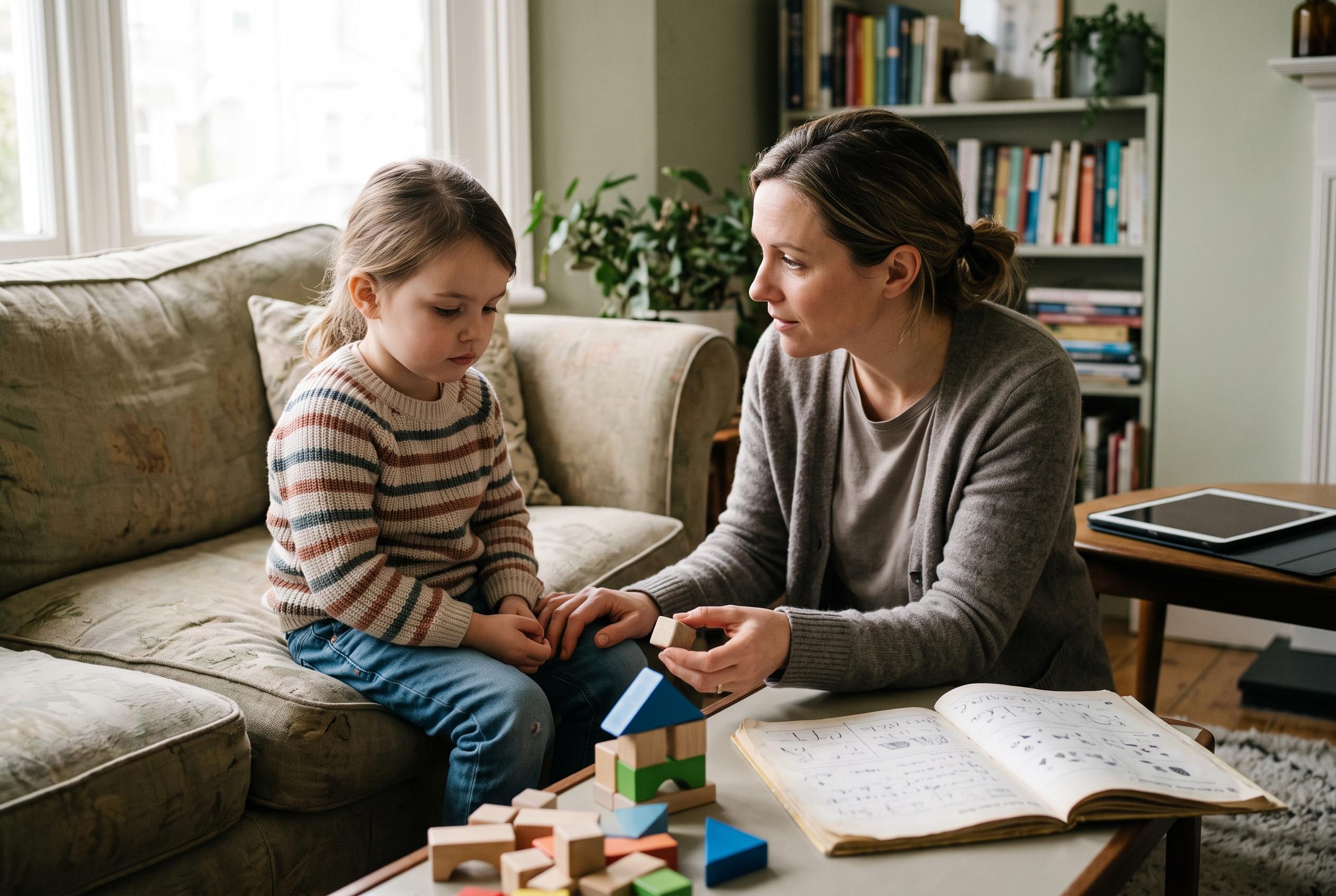

Contrary to the common perception of resilience as never wobbling, expert Richard Hogan emphasizes that true resilience involves recovery, adaptation, and learning from setbacks. Recent research underscores the importance of family relationships and early digital exposure in shaping children’s capacity to cope with life’s challenges.
Resilience is often treated as a kind of superpower, as if it means never wobbling, never doubting and never feeling overwhelmed. But as columnist Richard Hogan argues, that is not what the word really means. Real resilience is less about being untouched by difficulty than about recovering, adapting and continuing when life becomes hard.
That distinction sits at the heart of Hogan’s long-running concerns about children and young people. Writing about a study he carried out in 2018 for his first book, “Parenting The Screenager”, Hogan said he interviewed more than 500 primary and secondary school pupils about technology, resilience and pornography. He said the findings shocked him, particularly the number of younger children who had encountered deeply inappropriate sexual images, and he used that as part of a wider warning about the impact of online content on children’s minds.
Hogan’s account of resilience was also closely tied to the language children use with themselves. In his study, he said, the more resilient pupils were more likely to frame setbacks as temporary and manageable. A missed penalty became something to improve next time; an argument with a parent became a disagreement that could be repaired later; a poor exam result was treated as a setback rather than a verdict on their ability. By contrast, children with weaker resilience were more likely to turn a single disappointment into a sweeping judgement about themselves, saying they were useless at sport, stupid, unloved or permanently unhappy.
That emphasis on self-talk is consistent with wider research on children’s development. A 2024 study published in BMC Pediatrics found that a strong father-child attachment could strengthen ego resilience, which in turn was linked with less screen time. Separate research indexed by PubMed found that positive mother-child interaction and an authoritative parenting style in infancy were associated with lower screen use later in early childhood. Together, those studies suggest that resilience is not only an individual trait but something shaped by the quality of family relationships and the day-to-day atmosphere at home.
Other recent studies point to the long reach of early digital exposure. Research published in Children in 2025 found that screen exposure at age four was linked with lasting dysregulation through age 12, with knock-on effects on academic progress and the ability to tolerate being alone. Another study, published in a peer-reviewed journal and drawn from a nationally representative sample, linked higher resilience in children with better health behaviours, including more physical activity and improved sleep. Hogan’s broader point is that parents should help children practise discomfort while the stakes are still low, whether that means trying out for a team, speaking up for a role or recovering from a setback.
His own approach is to keep that message simple and repetitive: children should be encouraged to aim high, accept disappointment when it comes and try again. That, he argues, is how young people learn that failure is not final and that feelings, however heavy they seem in the moment, are not permanent. In an age when many adults worry that young people are less equipped for ordinary setbacks, his message is a reminder that resilience is built less by shielding children from difficulty than by helping them understand they can move through it.
Disclaimer: This content is for informational purposes only and is not intended to be a substitute for professional medical judgment, advice, diagnosis, or treatment.



