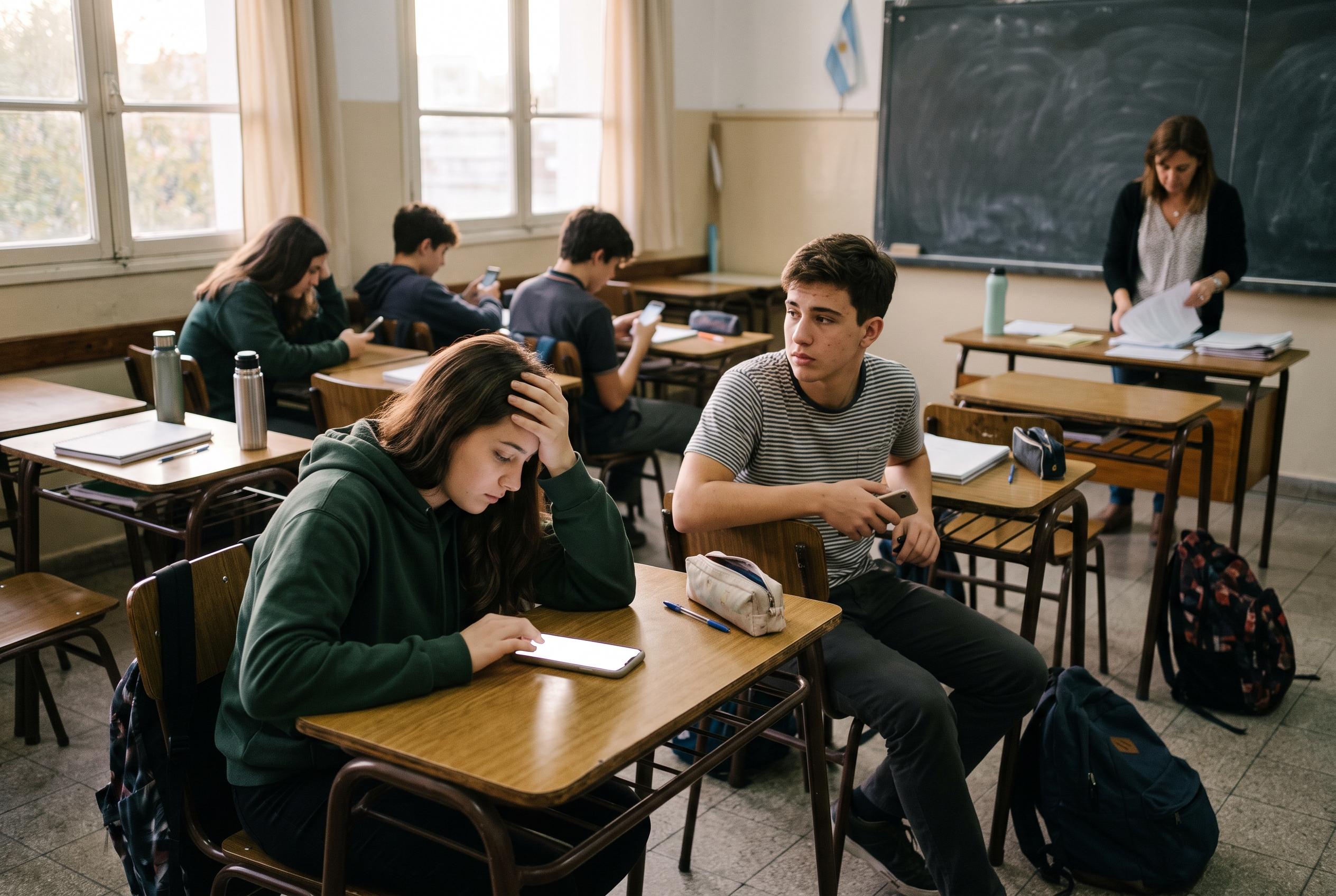

A new study in Buenos Aires reveals teenagers average over six hours daily on their mobile phones, with significant impacts on mental health, particularly among girls and vulnerable groups, prompting calls for tighter regulation and increased face-to-face interaction.
Buenos Aires secondary school students are spending an average of 6 hours and 10 minutes a day looking at their mobile phones, according to a study by the city’s education ministry and the Buenos Aires Institute of Technology, or ITBA. That is roughly a quarter of the day and adds up to about 92 days a year.
The research also found that four in 10 teenagers showed at least one warning sign linked to emotional wellbeing, including anxiety, depression, daytime sleepiness or problematic technology use. The findings suggest that while overall screen exposure is high, the most significant factor affecting young people’s wellbeing is not time alone but the way the phone is being used.
The survey was carried out between April and July and included 3,261 students. It used objective measurements from iOS and Android systems, rather than relying only on self-reporting. According to the city government’s own summary of the project, the aim is to build evidence on how mobile devices, artificial intelligence and reading habits affect mental health, cognition and academic performance.
The results showed clear gaps by age, income and gender. Older students spent more time on their phones, with fourth-year pupils averaging 6 hours and 35 minutes a day, 51 minutes more than first-year students. In the most extreme cases, usage topped 11 hours a day.
There was also a marked divide by socio-economic background. Teenagers from the most vulnerable households spent about an hour and a half longer on their screens each day than those in the highest income group. Girls also recorded heavier use than boys, averaging 30 minutes more per day, and showed the highest levels across the mental health indicators, particularly anxiety and depression.
TikTok emerged as the most commonly used platform. Among students who identified it as their main app, average daily screen time rose to 6 hours and 34 minutes. The study used internationally validated questionnaires, including tools designed to detect anxiety, depression, daytime sleepiness and problematic smartphone use.
Among the findings, 38% of students showed signs of depression, 37% daytime sleepiness, 31% generalised anxiety and 25% problematic phone use. Students with depressive symptoms spent as much as 49 minutes longer on screens than their peers. Buenos Aires mayor Jorge Macri said the city needed to “recover attention in the classroom, encourage face-to-face socialising during breaks and ensure technology is used only for planned educational purposes”. Education minister Mercedes Miguel said the administration’s restrictions in schools, along with its family engagement programme, were meant to curb excessive screen use at home and push children towards art, sport and nature.
Disclaimer: This content is for informational purposes only and is not intended to be a substitute for professional medical judgment, advice, diagnosis, or treatment.