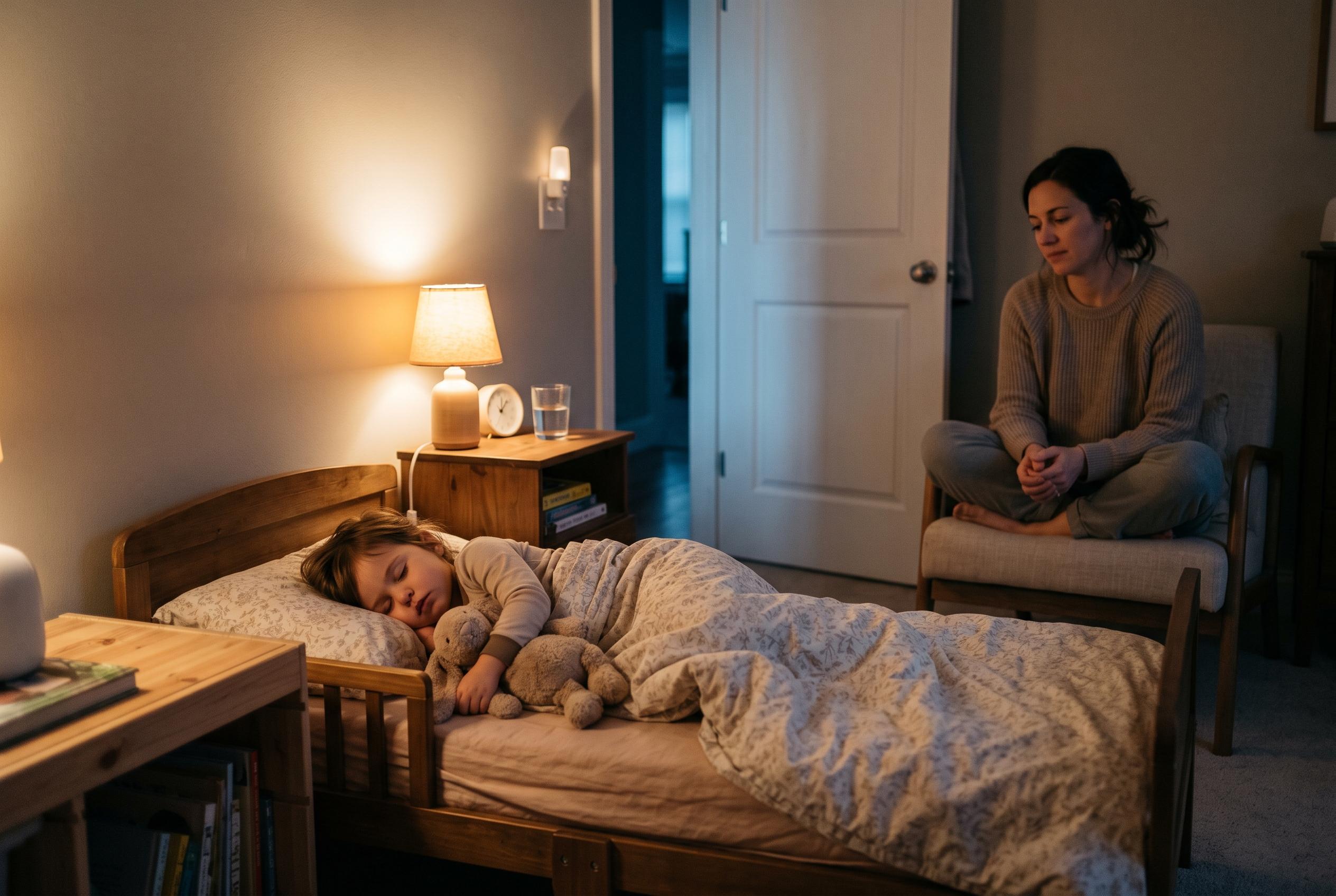

Paediatric sleep experts highlight the importance of fostering independence in bedtime routines to reduce night wakings, with new strategies offering hope for restless toddlers and exhausted parents.
Night wakings in toddlers are common, but they become a real problem when a child cannot get back to sleep without help. Paediatric sleep specialists say the issue is often not the waking itself, but the fact that the child has learned to rely on a parent, rocking, feeding or another bedtime cue to drift off in the first place. Once that pattern is established, the child may call for the same help again after each normal overnight arousal. According to Nationwide Children’s Hospital, the key difference is whether a child can settle independently after waking.
That is why sleep-onset associations matter so much. A toddler who falls asleep while being held, nursed, rocked or lying beside a parent may struggle when those conditions are absent later in the night. The Child Sleep Site and other sleep specialists note that these associations can lead to repeated waking, early rising and fragmented rest for both child and caregiver. In many cases, teaching a child to fall asleep on their own at bedtime is the most effective way to reduce the pattern within a short period.
Not every screaming wake-up is the same problem, though. Night terrors are different from ordinary night wakings because the child is not truly awake and is usually impossible to comfort. They tend to happen out of deep non-REM sleep, often earlier in the night, and usually pass on their own. By contrast, a child with a sleep association may calm quickly with the familiar bedtime routine, which is exactly why the cycle keeps repeating.
Parents should also consider temporary triggers before assuming the issue is behavioural. Illness, teething discomfort, hunger, room noise, a new sibling, travel or changes in schedule can all disturb sleep. A child who is sick, congested or in pain may need extra comfort for a few nights, but specialists warn that repeatedly bringing a child into bed or resuming night feeds can accidentally create a new sleep association.
The practical takeaway is straightforward: if a toddler needs a parent to fall asleep at bedtime, they are likely to need that same help again overnight. The longer that pattern continues, the more entrenched it can become. If a child already falls asleep independently, the next step is to look for other causes, such as medical problems, environmental disruption or an age-appropriate schedule that no longer matches the child’s sleep needs.
Disclaimer: This content is for informational purposes only and is not intended to be a substitute for professional medical judgment, advice, diagnosis, or treatment.