

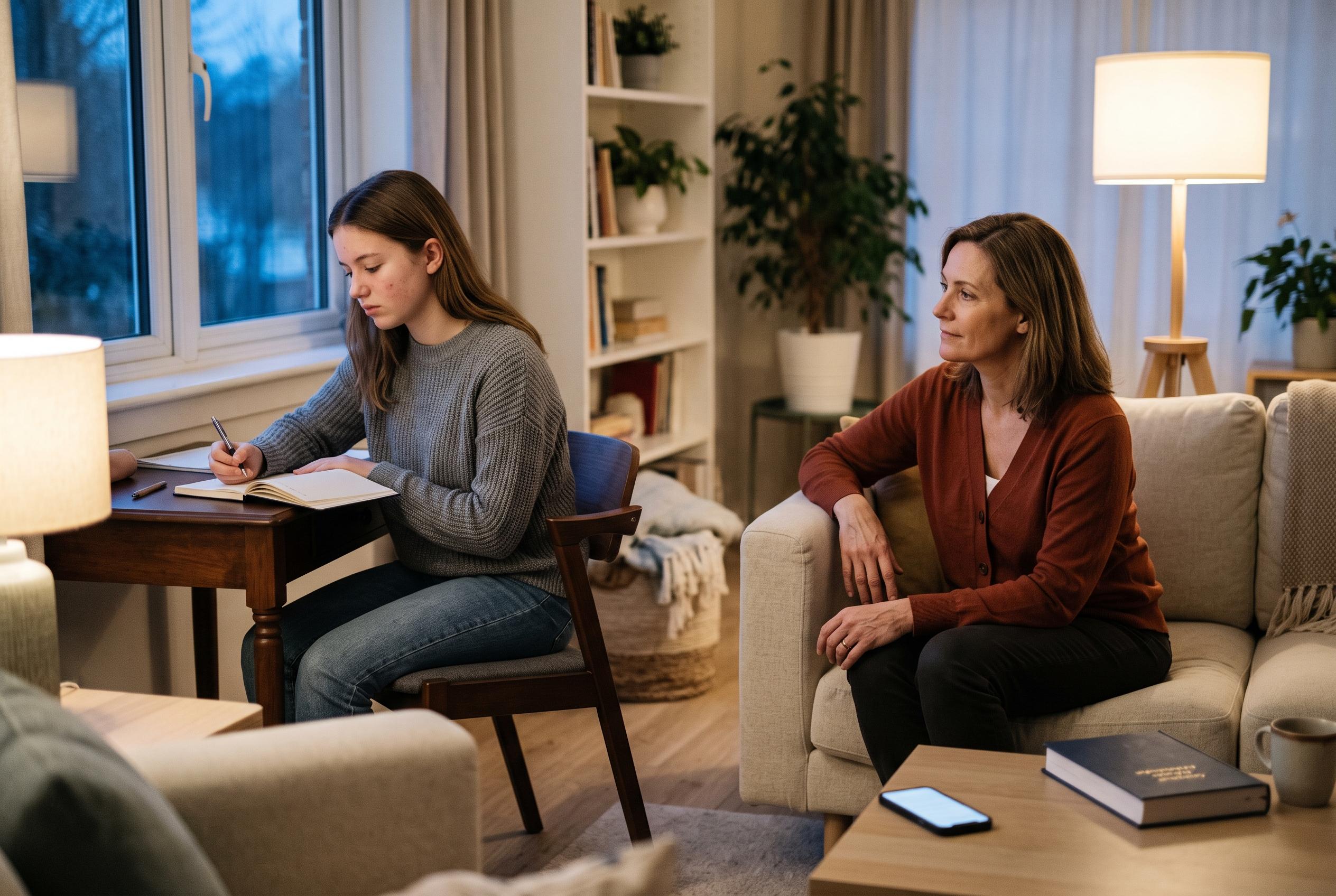

Parents of anxious teenagers are encouraged to shift from reassurance and avoidance to supportive strategies that foster independence, with therapies like SPACE showing promising results in reducing family accommodation and promoting resilience.
Parents of anxious teenagers often find themselves trapped in a cycle that feels compassionate in the moment and exhausting in the long run. They answer the same worries repeatedly, check things that would otherwise be left alone, change plans to avoid distress and step in before their child has to face uncertainty. According to Ginny Jones, that instinct is understandable: when a teenager is overwhelmed, a parent naturally wants to restore a sense of safety. But the same habits that soothe in the short term can also keep anxiety alive.
The difficulty is that reassurance usually works only briefly. A teenager may feel calmer after being told everything is fine, then return minutes later with the same fear and the same need for certainty. The same pattern can emerge around avoidance, whether that means skipping a party, sleeping in a parent’s room, avoiding the bus or having a parent handle schoolwork that feels intimidating. Over time, the whole family can begin organising itself around the teenager’s anxiety, often without meaning to.
Mental health specialists describe this as accommodation: the ways family members alter their behaviour in response to a child’s anxiety or compulsions. The International OCD Foundation says these changes can include repeated reassurance, checking, helping the child avoid feared situations and participating in rituals. Those responses may look like caring parenting, and often they are, but they can also teach a teenager that anxiety must be removed before life can continue.
That dynamic is especially clear in obsessive compulsive disorder, where repeated questions and requests for checking can become part of the problem itself. The OCD Center of Los Angeles notes that SPACE, or Supportive Parenting for Anxious Childhood Emotions, was developed to help parents reduce accommodation without requiring the child to sit in therapy. The approach, created by Eli Lebowitz at Yale Child Study Center, aims to help young people tolerate discomfort and build independence.
The International OCD Foundation says SPACE is a parent-based treatment for childhood and adolescent anxiety and OCD that focuses on reducing accommodation while increasing supportive responses. Clinical material from the OCD Center of Los Angeles adds that trials have found SPACE to be comparable with traditional cognitive behavioural therapy for children, and often quicker to reduce family accommodation. Other providers describing the model say the treatment helps parents become less reactive to anxious behaviour and more confident in supporting their child through uncertainty.
That distinction matters because parents are not being asked to stop caring. The article by Ginny Jones argues that an anxious teenager still needs warmth, connection and a steady adult presence. What changes is the parent’s role in trying to eliminate fear. Instead of promising that nothing bad will happen, parents can acknowledge distress while reinforcing a more realistic message: fear is not the same as danger, and discomfort can be survived.
Research-based descriptions of SPACE also suggest that the parent does not need the child’s full cooperation for change to begin. The OCD Center of Los Angeles and the International OCD Foundation both emphasise that the therapist works with parents, not necessarily with the young person, which can be especially useful when a teenager refuses treatment or resists talking about anxiety. In practice, that means parents can begin shifting the family pattern even before the teenager is ready to participate directly.
For many families, the hardest part is not knowing how much support is enough. Jones argues that parents do not need to become perfectly calm or perfectly consistent to help their child. They need to notice when care has slipped into over-functioning, when reassurance has turned into a ritual and when fear is quietly dictating the family routine. That awareness, combined with a willingness to tolerate some discomfort, can help restore a healthier balance: supportive, but not controlled by anxiety.
Disclaimer: This content is for informational purposes only and is not intended to be a substitute for professional medical judgment, advice, diagnosis, or treatment.



