

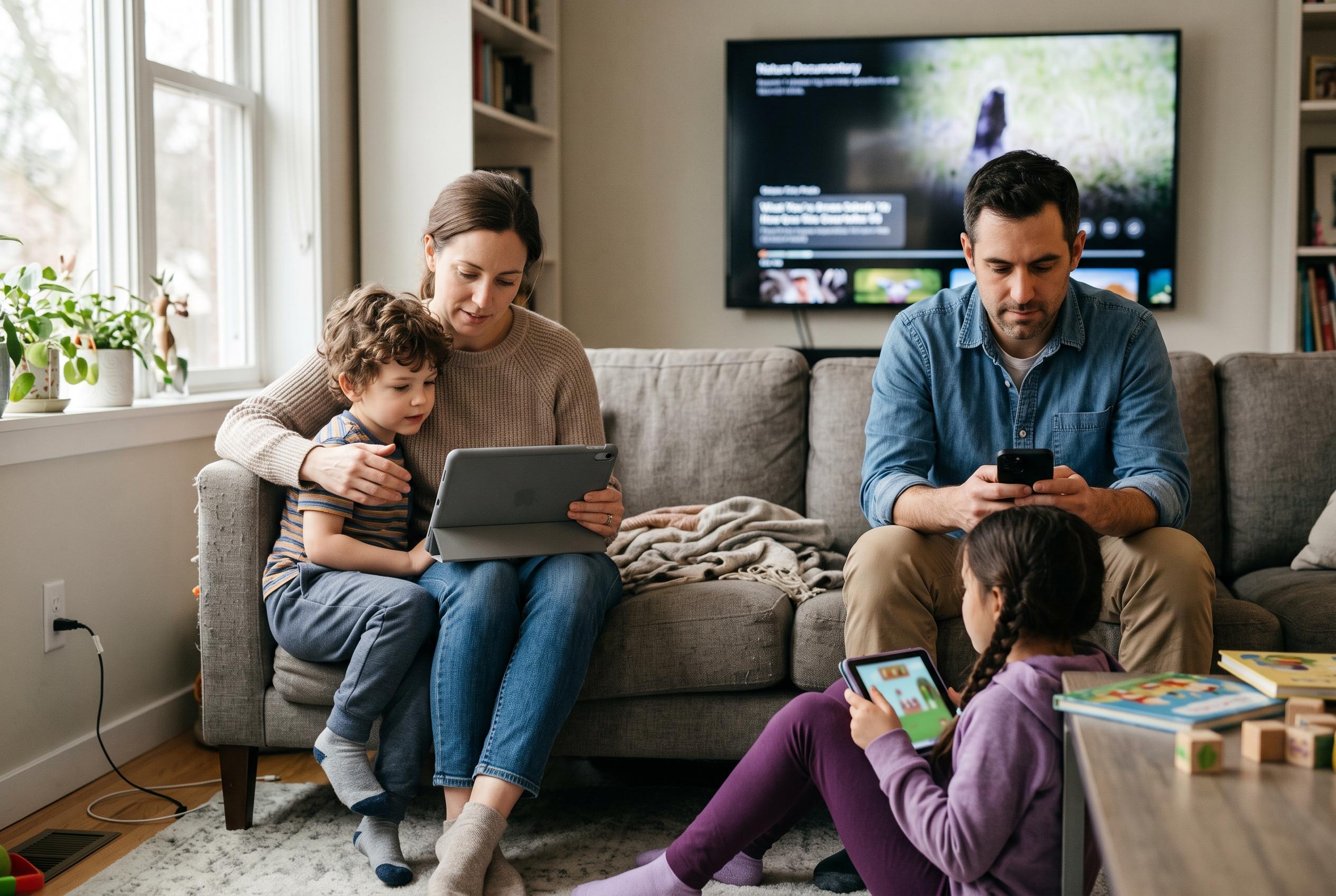

As guidance shifts from simple time limits to rules about content, timing and context, research suggests families are being left with more guilt and confusion than clarity.
Parents trying to make sense of children’s screen use are being asked to navigate advice that is increasingly detailed, and increasingly hard to reconcile. Guidance that once focused mainly on how long children should spend in front of a screen has expanded into a far more complicated set of rules about when, how and even why they should use digital media. That shift, according to research by a Melbourne-based academic writing in The Siasat Daily, is leaving many families feeling more anxious rather than better informed.
For years, the broad message was simple: avoid screens for children under two, then keep use tightly limited after that. But the research says that older framework has been widely criticised for treating all screen use, and all children, as though they were identical. It also overlooks the ways screens can support play, communication and social connection. Reviews from children’s health and medical organisations suggest the picture is more nuanced: excessive use can be linked with problems in attention, language, behaviour and sleep, yet technology can also have educational value when it is used carefully and does not crowd out physical activity or other healthy routines. According to the Siasat article, the debate has moved well beyond a simple clock-watching model.
The newer advice is far more specific. Parents are now routinely told to avoid screens at mealtimes and before bed, to keep them out of the background during other activities and to favour slower-paced, predictable content. Some guidance also distinguishes between “active” and “passive” use, encouraging adults to watch with children, talk through what is happening and ask questions as programmes unfold. The article says this style of messaging is now appearing not only in official guidance from governments and health bodies, but also in news coverage, online advice and social media content.
Yet the very breadth of this advice can make family life harder, not easier. The research found that parents are caught between messages that some screen time is acceptable and others warning that any screen use could damage brain development or motor skills. Even apparently practical advice can become muddled: families are told to avoid “high stimulation” programmes, but there is little agreement online about what that label actually means. The result, the article argues, is a form of guidance that can feel exhausting and guilt-inducing, especially when it asks parents to judge timing, pace, educational value and setting all at once.
The research also suggests that one-size-fits-all rules often fail to reflect the realities of family life. Parents have different values, routines and levels of support, and children themselves react differently to the same content. Among the families interviewed for the study, some parents found solo viewing helpful and even necessary, particularly in homes where a screen could buy a few calm minutes or make daily logistics manageable. The article’s main message is not that all advice is useless, but that families may do better by focusing less on whether a rule is universally correct and more on whether screen use is working in their own home: whether it is affecting sleep, play, learning and mood, and whether it leaves room for the rest of childhood to unfold.
Disclaimer: This content is for informational purposes only and is not intended to be a substitute for professional medical judgment, advice, diagnosis, or treatment.



