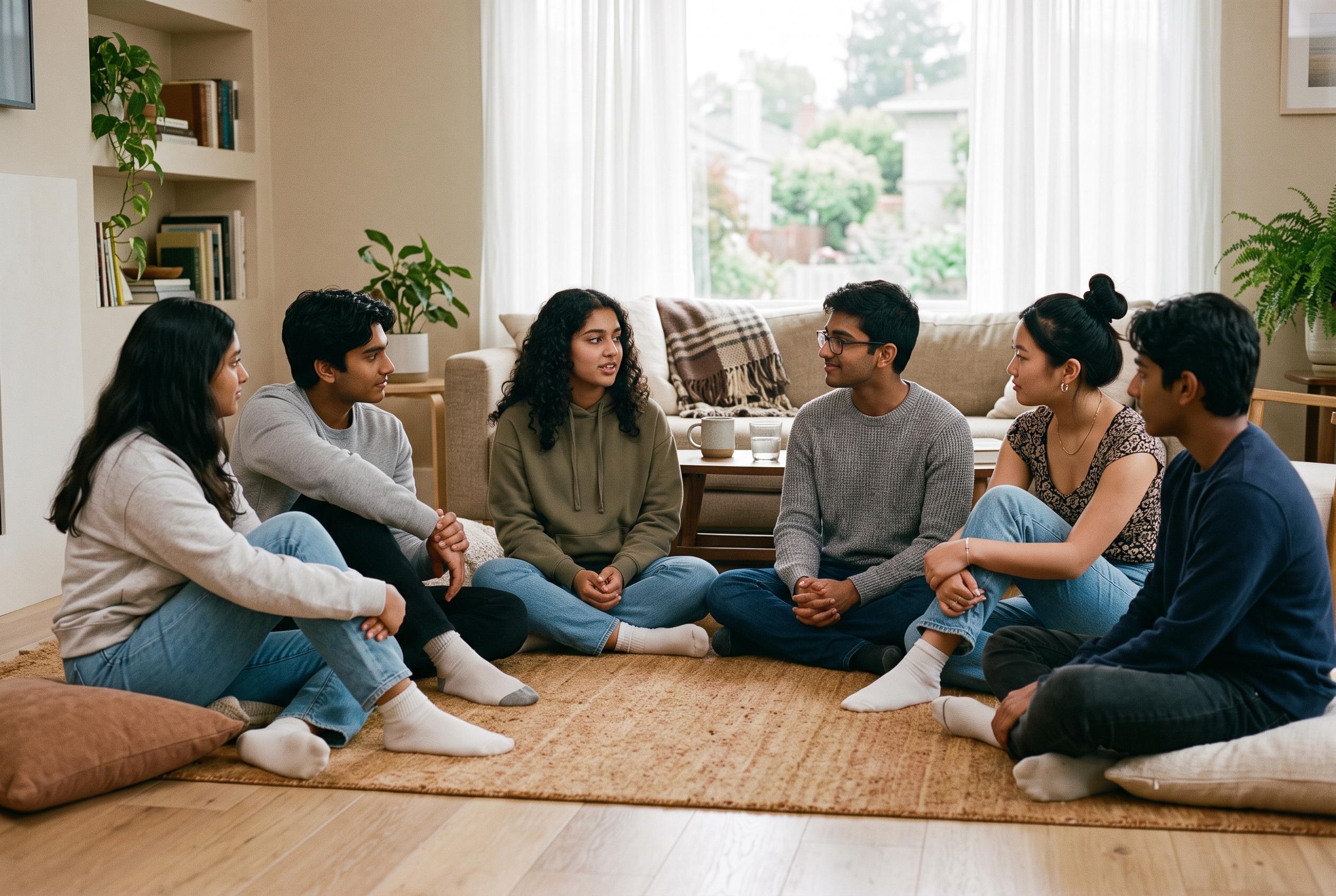

In Silicon Valley, young South Asians are using podcasts, art, and peer discussion to normalise mental health and challenge cultural stigma, with new programmes aimed at early intervention and community-led support.
For many South Asian teenagers in Silicon Valley, the lesson at home has long been the same: keep going, stay quiet and do not make a scene. In families shaped by immigration, status pressure and the fear of public shame, mental distress has often been pushed aside even when young people are struggling. A Journal of Adolescent Health study cited by India Currents found that 45% of adolescents with moderate to serious psychological distress believed they did not need help, a gap that Bay Area psychiatrist Hari Nair says is reinforced by the model-minority myth and the habit of describing emotional pain as physical symptoms instead. At the same time, California agencies and community groups are expanding youth-facing support, including digital tools, peer advocacy and school-linked services.
That silence is beginning to crack. In the Bay Area, teenagers are using podcasts, art and peer discussion to make mental health sound less like a crisis and more like part of ordinary life. India Currents reported on Shreyas Jay, Seerat Dang and Devika Eby, three teen leaders working with the South Asian organisations Taarika and Rcoz. Jay, 18, turned his own experience with depression into advocacy. Dang, 15, has hosted dozens of podcast episodes. Eby, also 15, uses breathing exercises and reframing techniques in her own high-pressure life as a chess player. The organisations say the point is to create “backdoor entries” into wellness, with creative, low-pressure formats that feel safer than formal counselling.
The stakes are high. India Currents reported that research cited by Leena Khanzode, who founded Taarika after seeing growing anxiety and depression in her clinical work, shows suicide rates among Indian American adults aged 20 to 24 are more than twice those among Indian American teenagers. Nair, who advises Rcoz, said many South Asian families wait until problems have become severe before seeking care, which means the true need is likely hidden. That pattern, he said, has helped keep Indian American and other Asian youth undercounted in public data, leaving them less visible when schools and counties decide where to direct prevention money.
Both Taarika and Rcoz are built around the same idea: peers can often reach young people in ways adults cannot. Rcoz says its youth programmes are designed to help young people become community leaders and challenge stigma, while YouthFirst at Jewish Family and Children’s Services in the Bay Area also centres teen peer advocates and mental health education for adults. California’s Health and Human Services Agency, meanwhile, says its youth resources hub offers free, confidential support through mobile apps and links to 988 and CalHOPE. The wider system remains fragmented, but these efforts show how peer-led models can lower the barrier to entry.
For the teens involved, the message is personal as well as practical. Jay said opening up helped him move from guilt to acceptance, while Dang described the pressure to build a “Ferrari engine” without proper “brakes”. Eby has helped with mindfulness and family workshops, part of Taarika’s effort to make mental health a shared household habit rather than a private defect. Khanzode has also pushed the organisation beyond prevention and into intervention, training youth in mental health first aid and exploring peer-supervision models. In a culture where parents often want to solve everything, these programmes are teaching something simpler: sometimes the most powerful help is being heard.
Disclaimer: This content is for informational purposes only and is not intended to be a substitute for professional medical judgment, advice, diagnosis, or treatment.