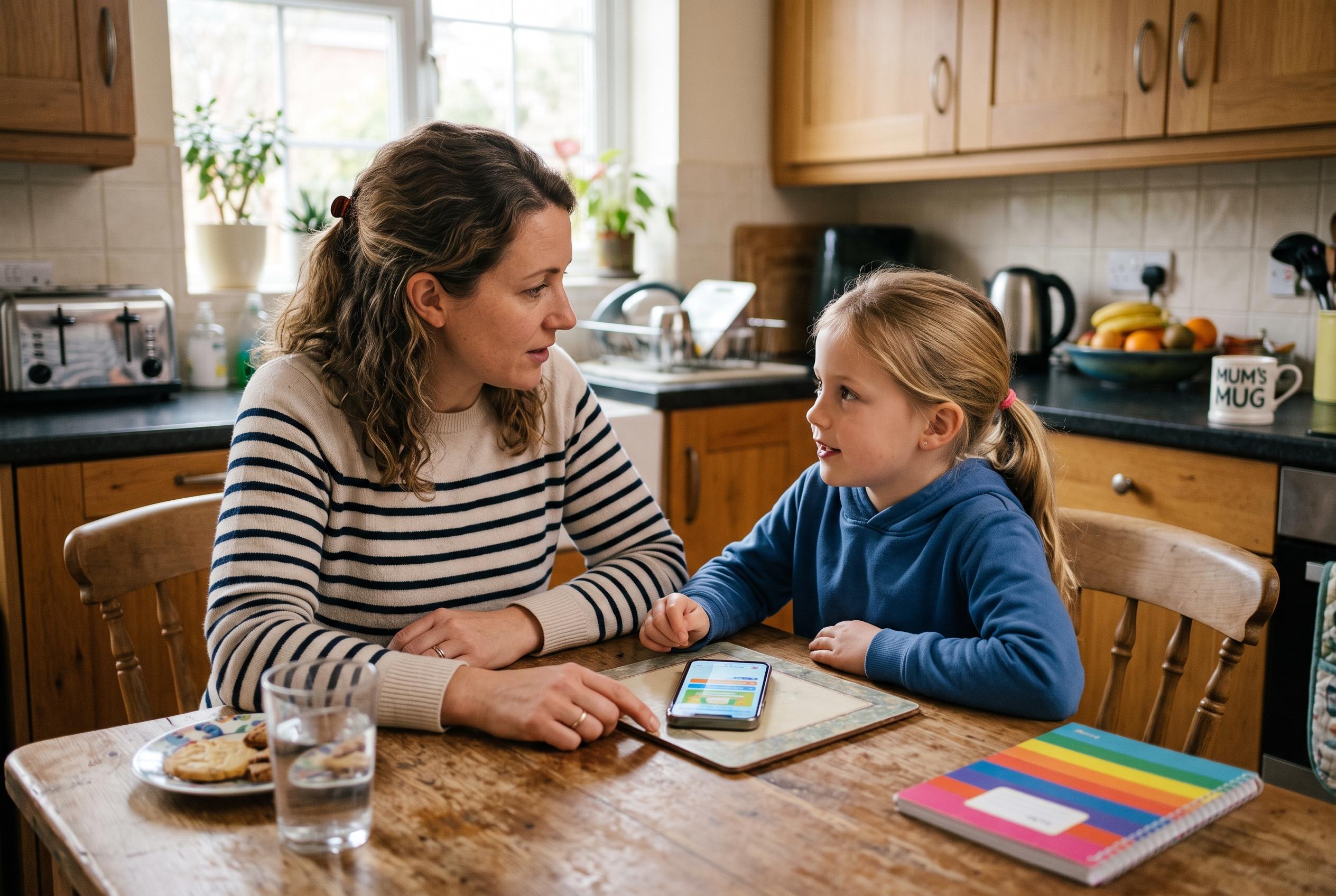

The American Academy of Pediatrics urges parents to foster trust and conversations rather than surveillance when supervising children’s smartphone use, emphasizing online safety and gradual independence.
The American Academy of Pediatrics says parents should check in on what their children do on phones, but it favours open supervision over covert monitoring. In guidance published in Pediatrics, the group argues that the digital world now shapes children’s lives through social media, apps, advertising and algorithms, so parents cannot afford to treat a smartphone as just another toy. The key, it says, is to stay involved without turning family life into surveillance.
That approach builds on a long-running AAP message: media use should be guided by age, maturity and family habits. Earlier policy statements urged parents to limit screen exposure for very young children, keep devices out of bedrooms and make room for offline activities. For school-age children and teenagers, the academy has encouraged a family media plan tailored to the child’s development rather than a one-size-fits-all rule.
AAP’s newer guidance also reflects the changing risks online. Children may encounter cyberbullying, strangers, harmful content, scams and privacy breaches. At the same time, platforms are designed to keep users engaged for as long as possible, which can make it harder for young people to step away. In that setting, the academy says, occasional parental review of phone use can be appropriate as part of care, not as a sign of mistrust.
The preferred method is conversation. Rather than opening messages in secret, parents are advised to ask what apps their children use, what they watch and whether anyone new has contacted them. The point is to create a home environment in which children feel safe reporting problems online. The AAP says that kind of trust is more useful than a sudden search of a handset after something has already gone wrong.
Technology can help, too, but only as a support. The academy recommends parental-control tools for younger children to limit screen time, block unsuitable content and require approval before new apps are installed. HealthyChildren.org, the AAP’s family advice site, also says there is no single right age for a first phone and suggests parents weigh a child’s readiness, behaviour and the family’s values. As children grow older, supervision should ease gradually, giving them more independence while keeping clear rules in place.
Disclaimer: This content is for informational purposes only and is not intended to be a substitute for professional medical judgment, advice, diagnosis, or treatment.