

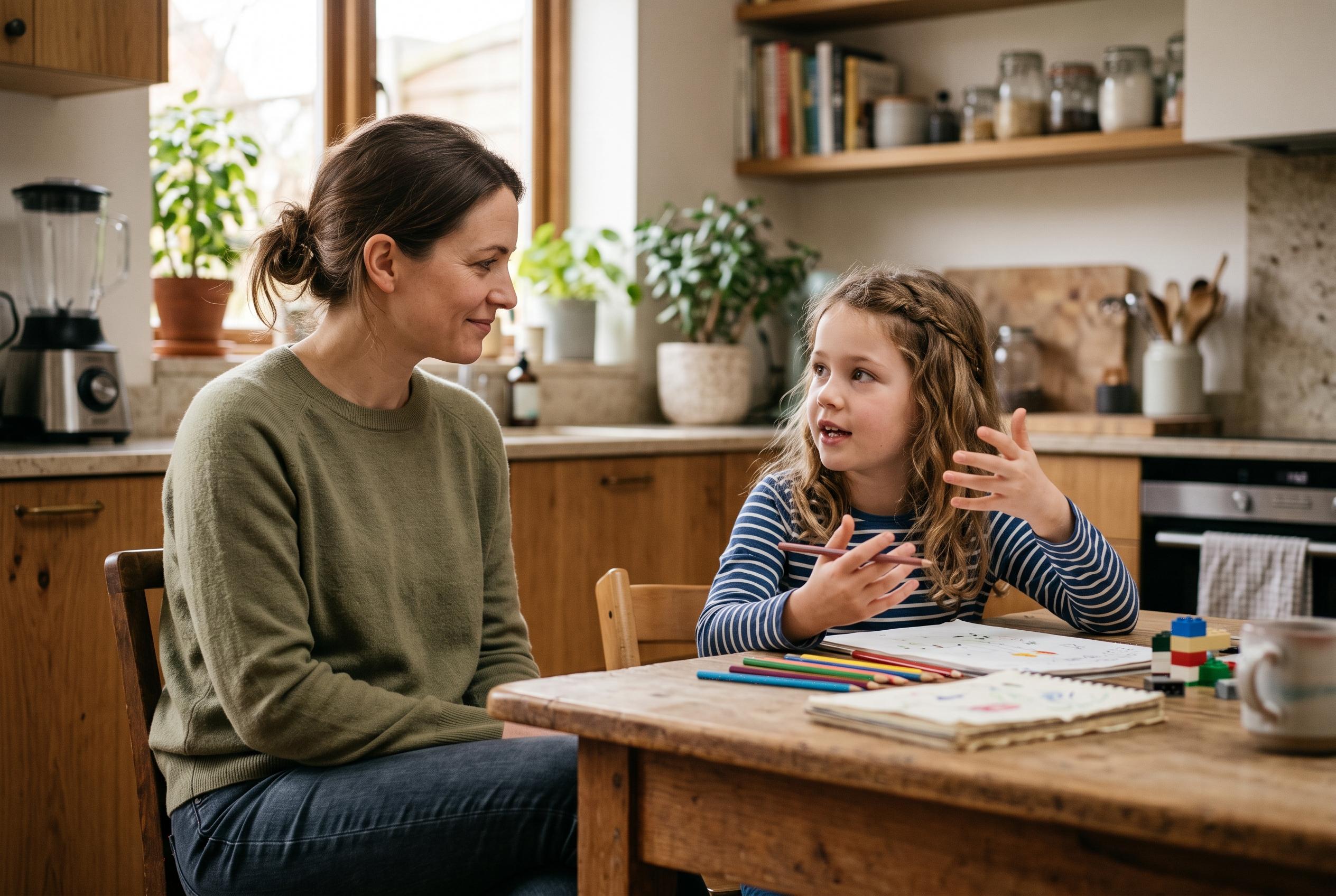

Experts say parents can nurture independent thinking by pausing before they intervene, listening to children’s reasoning and treating mistakes as part of learning.
Parents often want their children to grow into confident decision-makers, yet independence is usually built in small moments rather than grand lessons. Claire Lerner, a child development and parenting expert quoted in Media Indonesia, argues that the process begins much earlier than many adults expect, even in infancy. The aim is not to leave children to struggle alone, but to give them enough room to think, try, revise and try again.
One of the simplest ways to encourage independent thinking is to resist stepping in too quickly. Stephanie Irby Coard, a professor of human development and family studies at the University of North Carolina Greensboro, says this kind of learning should be adjusted to a child’s age, but it starts early. When a toddler cannot fit a shape into the right hole, or a child is wrestling with a puzzle, the adult instinct is often to take over. Yet several parenting guides, including advice from Alodokter, say children benefit more when parents pause, offer a gentle hint and let them work towards the answer themselves.
Children also learn by watching how adults make choices. Coard recommends that parents talk openly about their own reasoning, whether they are deciding on a household matter, a social plan or a family value. Lerner says that when children challenge a decision or suggest another option, their ideas should be acknowledged rather than dismissed. This helps them see that thoughtful decision-making is a process, not a fixed answer handed down by adults.
Listening before advising is another important habit. Coard says parents should hear what children think and where their reasoning is going before offering guidance. That matters because independence grows when children feel their opinions are worth hearing. Education websites including IDN Times make the same point, stressing that children become more capable when parents allow them to solve problems on their own, make age-appropriate choices and explain their thinking rather than simply following instructions.
Age-appropriate challenges can strengthen that process. For younger children, this may mean encouraging them to try standing up, dressing themselves or finishing a simple task before an adult steps in. For older children, Coard suggests using hypothetical questions to prompt reflection: what would they do in a difficult social situation, and why? That kind of conversation helps them practise judgement without pressure. Lerner also says mistakes should be treated as part of learning, not as proof that a child cannot cope. When parents stay calm, explore what went wrong and avoid rushing in to fix everything, they send a clear message: children can think for themselves, and support is there if they need it.
Disclaimer: This content is for informational purposes only and is not intended to be a substitute for professional medical judgment, advice, diagnosis, or treatment.



